




DEBRECEN, Hungary — Ireland secured a commanding 3-0 victory over Israel in their Nations League clash on Sunday, though the sporting result was overshadowed by an atmosphere of intense geopolitical tension and official diplomatic condemnation.
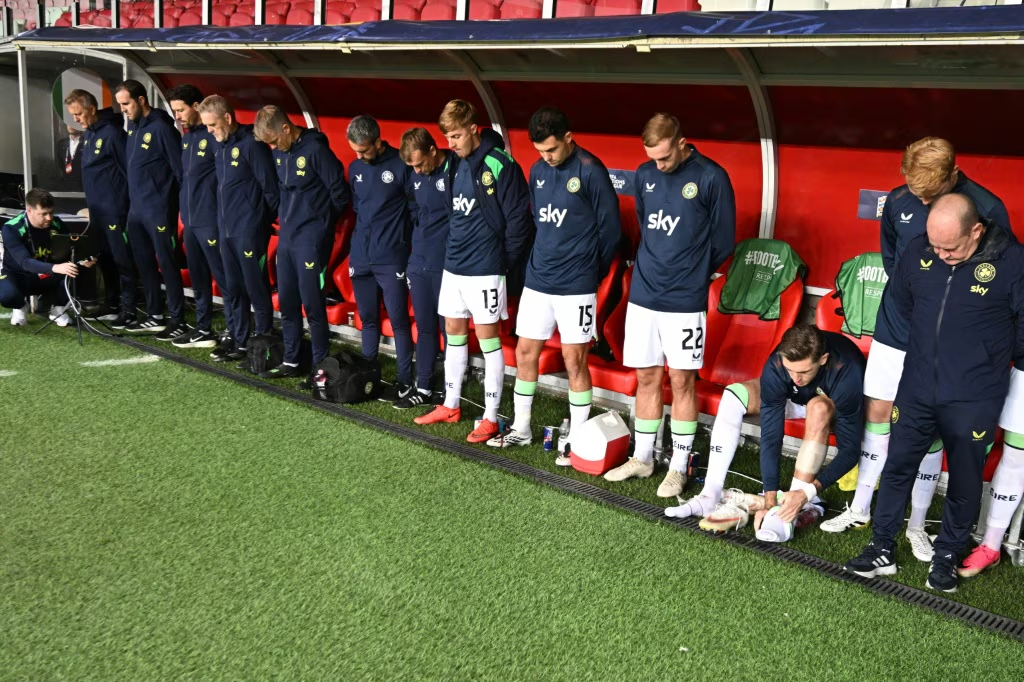
The fixture, held in the Hungarian city of Debrecen with Israel serving as nominal hosts, took place before a near-empty stadium. The mood was distinctly somber from the outset; Irish players emerged onto the pitch wearing black armbands, a gesture they stated was in mourning for lives lost in the ongoing war in Gaza. As the Israeli national anthem played, the Irish squad stood with heads bowed. Further breaking with tradition, the two teams opted to skip the customary pre-match handshakes and the exchange of commemorative pennants.
Despite the heavy atmosphere, Ireland dominated on the pitch. Troy Parrott opened the scoring in the 14th minute, celebrating with a heart sign directed at the cameras. Jack Moylan added a third goal in the 25th minute, marking the moment by kissing his team badge and pointing to his black armband.
The display prompted an immediate and scathing rebuke from Israeli Foreign Minister Gideon Saar. In a lengthy post on the social media platform X, Saar accused Ireland of being “on the wrong side of history.” He drew historical parallels to the 1939 match in Bremen where the Irish team performed the Nazi salute, and invoked Ireland’s wartime neutrality, including the condolences offered by then-Prime Minister Éamon de Valera following the death of Adolf Hitler.
“Almost 90 years have passed,” Saar wrote. “Ireland’s unique talent for finding itself on the wrong side of history remains intact.”
The match itself had been shrouded in uncertainty throughout the week. Following intense pressure from advocacy groups in Ireland to boycott the fixture, the Irish squad held a vote, ultimately deciding to fulfill their obligations. However, the internal dissent was clear: goalkeeper Gavin Bazunu withdrew from the squad, publicly declaring that it would be “wrong to participate” in the match or the upcoming return fixture in Serbia on October 4, citing the “killing of innocent people” in Gaza.
Ireland has historically been one of Europe’s most vocal supporters of the Palestinian cause, a stance often attributed to the nation’s own history of colonial struggle under British rule. In 2024, the Irish government formally recognized the state of Palestine alongside Spain and Norway, and it has consistently leveled harsh criticism at Israel regarding its military operations in Gaza.
Israel, meanwhile, has maintained its defense, consistently and strongly rejecting international allegations that its conduct in the Gaza conflict constitutes genocide. As the fallout from Sunday’s match continues, the political ramifications threaten to linger far longer than the final scoreline, further straining diplomatic relations between Dublin and Jerusalem.
Disclaimer: This content is auto-generated for informational purposes only.
Source: Read Original News