





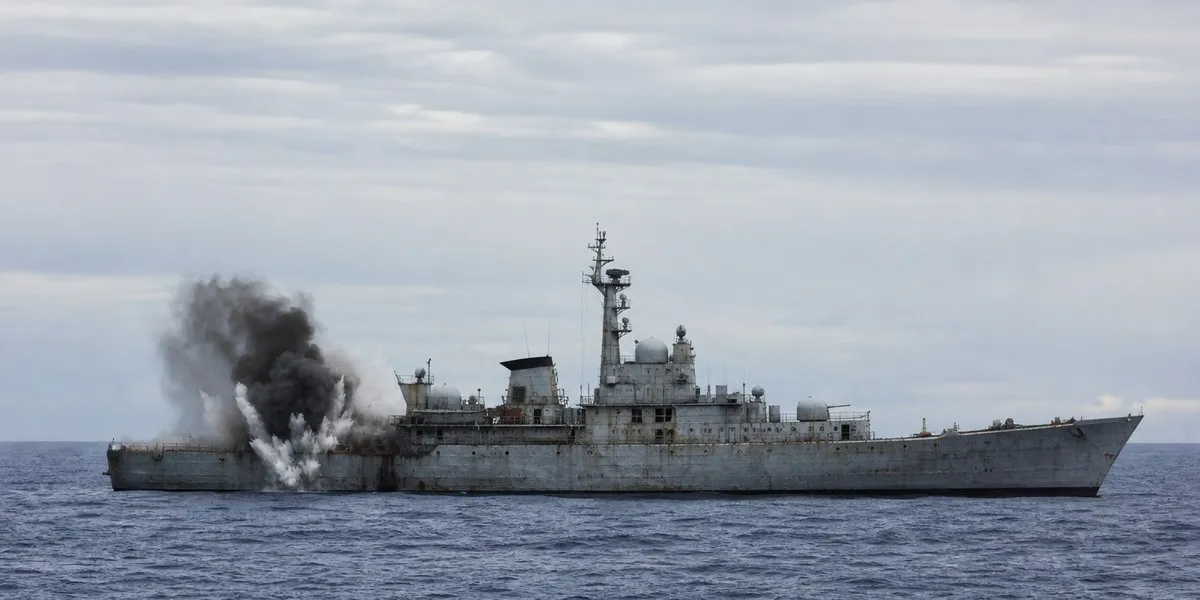
NORTH ATLANTIC — In a sophisticated display of maritime power, the United States Navy, alongside the United Kingdom’s Royal Navy and Royal Air Force, successfully concluded “Atlantic Thunder 2026,” a comprehensive ship-sinking exercise (SINKEX) held in the North Atlantic. The maneuvers, which took place from September 14 to 25, culminated in the destruction of the decommissioned guided-missile frigate USS Klakring.
The exercise served as a critical live-fire test for a multi-layered array of modern naval munitions. According to reports from Breaking Defense, one of the key milestones of the operation involved the USS Paul Ignatius, an Arleigh Burke-class destroyer, which launched an SM-6 missile. This test was specifically designed to evaluate the weapon’s capability to strike surface targets at maximum operational ranges, though Captain Kelechi Ndukwe, commander of Task Force 65 of the US 6th Fleet, opted not to disclose the precise distance of the engagement.
The tactical scenario progressed systematically, beginning with high-altitude, long-range strikes before transitioning to shorter-range systems. Among the diverse arsenal deployed against the Klakring was the UK’s new Sea Venom missile, fired from a Royal Navy Wildcat helicopter, and the highly capable Naval Strike Missile. The final blow to the decommissioned vessel was dealt by the Virginia-class fast-attack submarine USS Massachusetts, which utilized an Mk 48 Advanced Capability Torpedo to finish the target.
Beyond the raw firepower, Atlantic Thunder 2026 was a deeply analytical undertaking. Before the live-fire phase commenced, specialists from the Naval Surface Warfare Center Carderock and the Naval Information Warfare Center Pacific outfitted the Klakring with an array of sensitive instrumentation. These sensors captured high-fidelity data on blast impact, structural damage, and weapon efficacy. Naval engineers are expected to spend the coming months analyzing this data to refine future strike tactics and weapon technical specifications.
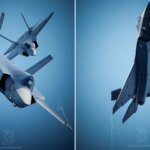
The scale of the operation extended well beyond the ships firing the weapons. The maneuvers involved a wide coalition of naval and aerial assets, including the British frigate HMS Portland, US and UK P-8 maritime patrol aircraft, and US Air Force F-15E Strike Eagle fighters. These assets coordinated to maintain continuous surveillance and intelligence gathering throughout the exercise.
The success of Atlantic Thunder 2026 underscores a deepening integration between US and UK naval forces in the North Atlantic. By utilizing a decommissioned frigate as a high-value testing platform, the coalition has gathered invaluable insights into how modern, long-range munitions perform against hardened naval targets. As global maritime threats evolve, the data collected from the Klakring’s final voyage is expected to play a vital role in the modernization of allied naval strategies and, ultimately, ensure that combined forces maintain a decisive edge in potential future conflicts.
Disclaimer: This content is auto-generated for informational purposes only.
Source: Read Original News