








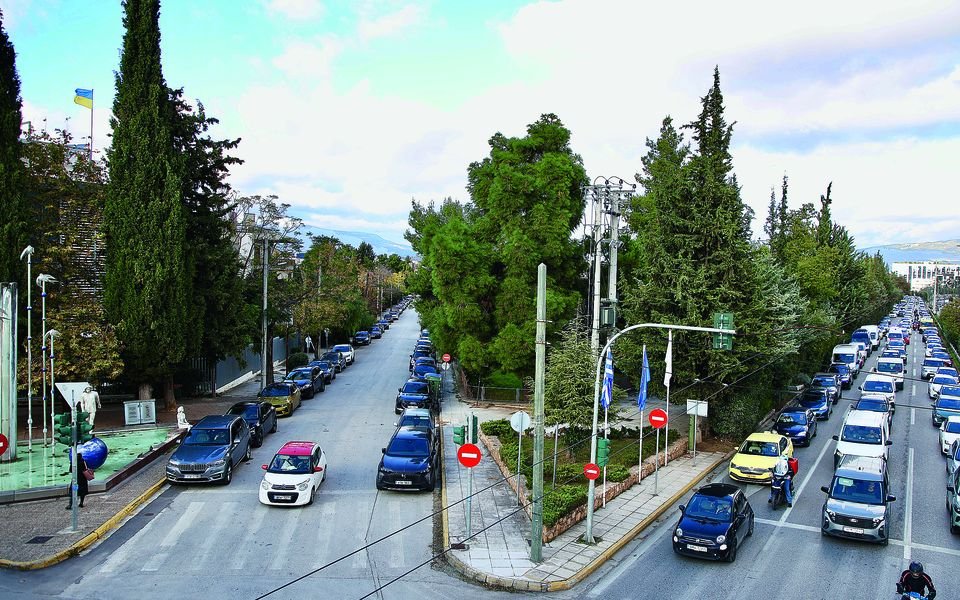
A proposed urban redevelopment plan for Athens’ Kifissias Avenue has sparked a fierce debate over the future of the city’s affluent northern suburbs. The plan, which seeks to significantly increase building density in the neighborhoods of Psychiko and Filothei, has put local authorities and urban planners at odds, highlighting the ongoing tension between modern infrastructure demands and the preservation of historic residential character.
The controversy centers on a study currently under public consultation, which proposes the establishment of two “density-reception zones” along a one-kilometer stretch of Kifissias Avenue. These zones are designed to allow for the transfer or increase of building coefficients, a mechanism intended to centralize higher-capacity development in specific corridors. Should the proposal move forward, the current building coefficient in these eight blocks would climb from 0.60 to 0.80. Furthermore, the plan includes provisions to permit an additional floor on new structures and increase the total building coverage to 60%.
If implemented, these changes would introduce an additional 22,800 square meters of built space into the area. Proponents of the plan argue that the current urban landscape along the avenue is characterized by inconsistent heights and aging, low-rise properties that fail to utilize the land’s full potential. Planners also suggest that the area possesses significant latent value, citing the presence of ample public green space and the future possibility of a Metro Line 4 station in Filothei as justifications for increased density. The integration of high-capacity transit is often viewed as a catalyst for “transit-oriented development,” which seeks to concentrate population density around public transport hubs to reduce dependency on private vehicles.
However, the proposal faces substantial opposition from local leadership. Mayor Haralambos Bonatsos has emerged as a primary critic, arguing that the intensification of building density threatens to erode the unique residential identity that defines Psychiko and Filothei.
“We are not against development, but we want to protect the suburb and its added value,” Bonatsos stated, emphasizing that the current suburban character is a key asset that must be safeguarded against speculative growth.
One of the central points of contention is the uncertainty surrounding the promised infrastructure. While proponents cite a future metro station as a primary driver for the zoning changes, the station itself remains a speculative project tied to the long-term expansion of the Athens Metro network. Critics contend that basing significant urban densification on a project that has not yet been solidified is premature and creates risk for the local environment and quality of life.
The debate also touches upon broader concerns regarding urban sustainability. While densification is often promoted as a way to curb urban sprawl, residents and local advocates fear that without adequate infrastructure and a preservation-first approach, the increase in floor area ratios will lead to increased traffic congestion, greater pressure on existing utilities, and the loss of the suburban aesthetic that has long attracted residents to these areas.
As the public consultation period continues, the case serves as a microcosm of the challenges facing contemporary Athens: balancing the need for modernization and efficient urban expansion with the preservation of neighborhoods that have historically maintained a distinct, low-density character. With both the local government and urban planners standing their ground, the outcome of this decision will likely set a precedent for how the city approaches development along its major arterial roads in the years to come.
Disclaimer: This content is auto-generated for informational purposes only.
Source: Read Original News