








India Rejects Pakistan-China Boundary Commission, Asserts Sovereignty Over Occupied Territories
New Delhi | Sep 17, 2026
The Indian government has issued a sharp rebuke to the recent convening of the Pakistan-China Boundary Joint Commission, dismissing the move as a provocative attempt to provide a facade of legality to the illegal occupation of Indian territories. The commission, which held its inaugural meeting in Islamabad earlier this week, was outrightly rejected by New Delhi, which labeled the exercise as devoid of any legal standing or merit.
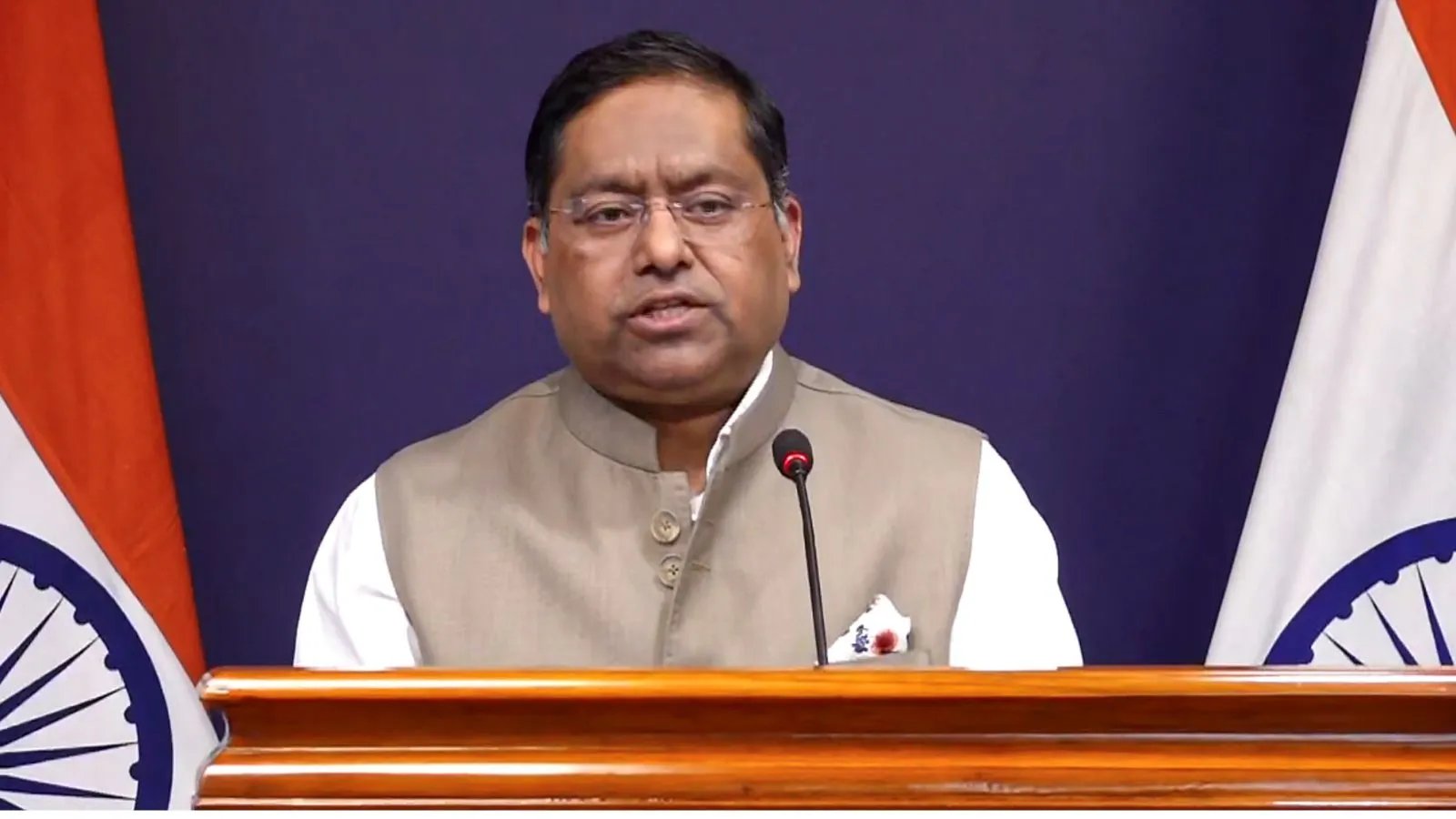
Ministry of External Affairs (MEA) spokesperson Randhir Jaiswal addressed the development during a media briefing, reiterating India’s long-standing position that any cooperation between Beijing and Islamabad concerning territories in Jammu and Kashmir and Ladakh is fundamentally invalid.
A Legacy of Illegal Territorial Cessions
At the core of India’s objection is the 1963 “boundary agreement” between Pakistan and China, a pact that saw Pakistan illegally cede the Shaksgam Valley—a region historically part of the princely state of Jammu and Kashmir—to Chinese control. New Delhi has consistently maintained that Pakistan had no jurisdiction to enter into such an arrangement, as the territory remains a part of the Indian Union.
“We have never recognized the so-called ‘China-Pakistan Boundary Agreement’ of 1963 and have consistently maintained that it is illegal and invalid,” Jaiswal stated. He emphasized that the convening of a joint commission to delineate boundaries based on these disputed territories is a violation of international norms and an infringement on India’s sovereignty.
Reasserting Sovereignty over PoK and Ladakh
The Indian government used the platform to reinforce its territorial claims over the entirety of the Union Territories of Jammu & Kashmir and Ladakh. By engaging in these bilateral exercises, both Islamabad and Beijing are attempting to alter the status quo of regions that have been under Pakistan’s forceful occupation for decades.
India’s opposition is not limited to the boundary commission alone; it also encompasses the China-Pakistan Economic Corridor (CPEC), a flagship infrastructure project of China’s Belt and Road Initiative. Large portions of the CPEC pass through Pakistan-occupied Kashmir (PoK), which India views as a direct challenge to its territorial integrity. The Ministry underscored that any attempt to legitimize these regions through collaborative projects or diplomatic commissions will have no bearing on India’s sovereign rights.
The Call for Immediate Vacation of Occupied Areas
The diplomatic tension comes at a time when the geopolitical landscape in South Asia remains fraught with friction. India has made it clear that “theatrics” by neighboring nations will not distract from the reality on the ground.
Rather than engaging in unilateral boundary delineations, the MEA called upon Pakistan to take tangible steps toward regional stability. “Instead of engaging in such theatrics, we call on Pakistan to immediately vacate areas under its illegal and forcible occupation,” Jaiswal added.
As both China and Pakistan continue to deepen their strategic partnership, the boundary commission is being viewed by analysts as a calculated move to formalize their hold over the contested border regions. However, New Delhi’s unambiguous stance serves as a reminder to the international community that the status of these regions is not open for bilateral negotiation between third parties, and that India’s claim remains absolute and non-negotiable.
Disclaimer: This content is auto-generated for informational purposes only.
Source: Read Original News