







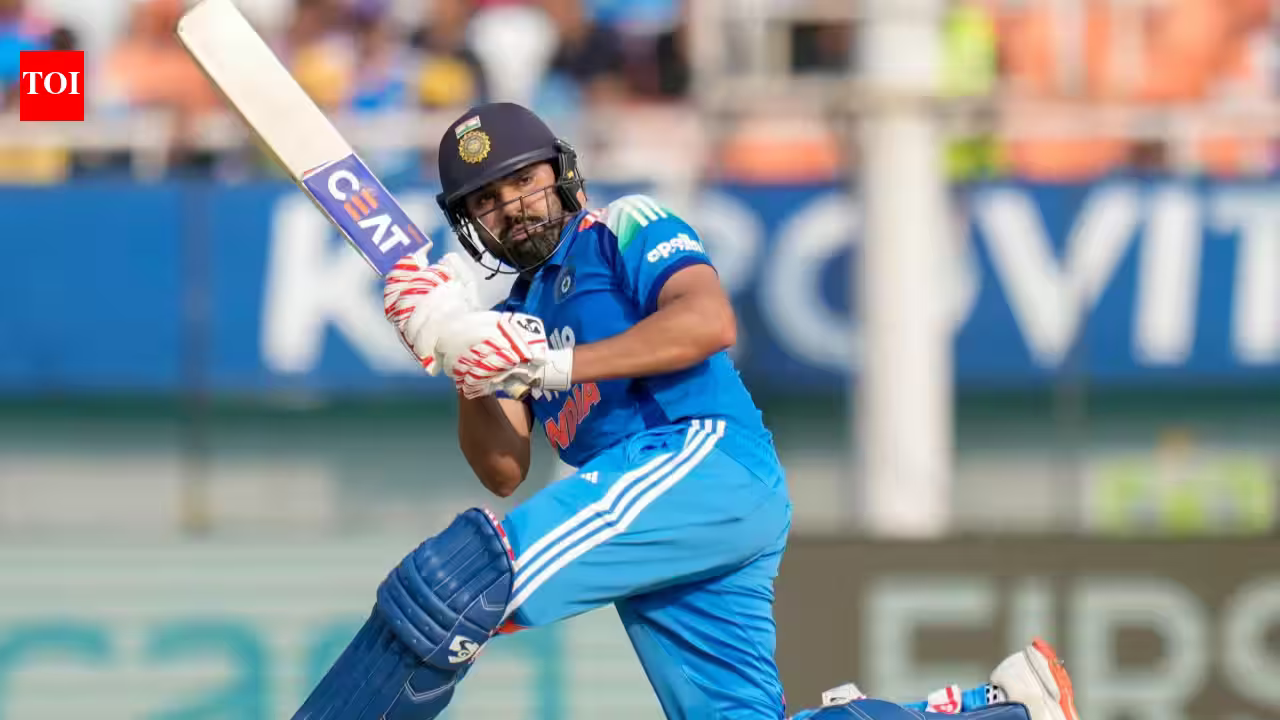
CHANDIGARH — In the high-stakes theater of international cricket, where the margin between triumph and collapse is often measured by a single loose shot, Rohit Sharma’s masterclass in the third ODI against the West Indies served as a potent reminder of the value of veteran intuition. Though the elegant opener fell just eight runs shy of a well-deserved century, his 92-run knock at the CA International Cricket Stadium was less about the final tally and more about the clinical blueprint he provided for navigating adversity.
The performance caught the attention of cricketing experts, most notably former India wicketkeeper-batter Dinesh Karthik, who suggested that the innings was a quintessential “World Cup trial run.” According to Karthik, the maturity displayed by Rohit is the exact temperament required if India is to conquer the upcoming 2027 ODI World Cup in South Africa.
A Masterclass in Pressure Management
The Indian innings faced a perilous start that threatened to unravel the entire contest. With captain Shubman Gill and the talismanic Virat Kohli back in the pavilion within the opening three overs, the CA International Cricket Stadium grew quiet as the West Indies pace battery—spearheaded by the sharp and aggressive spells of Jayden Seales and Alzarri Joseph—found immediate assistance from the surface.
For many players, the instinctive reaction to such an early collapse is to strike back in an attempt to shift the momentum. However, Rohit opted for the path of seasoned composure. He buckled down, respecting the conditions and the movement off the pitch, and ground out a testing period where he scored just 20 runs from his first 40 balls. It was a strike rate that would have drawn scrutiny in a shorter format, but in this context, it was an act of tactical brilliance.
“The beauty of having experience is that they have seen this situation a lot before,” Karthik noted during his analysis on Cricbuzz. “If you take Rohit Sharma, he knew he could trust himself, back it up, and get those runs quickly later. He took his time, didn’t allow wickets to fall, and then in the next 40 balls, he went and smashed.”
The transformation was indeed stark. Once the initial danger had been neutralized and the bowlers had been assessed, Rohit shifted gears effortlessly. He vaulted from a defensive posture to an attacking masterclass, moving to 92 off just 85 deliveries. By the time he was dismissed, the total had been stabilized and the foundation for a competitive score was firmly laid.
The “World Cup Weapon” Defined
Karthik is adamant that this specific brand of batting—the ability to “absorb and accelerate”—is the most vital asset a team can possess for a tournament as grueling as a World Cup. In neutral territory like South Africa, where pitches can offer unpredictable bounce and movement, the ability to read the match situation supersedes the ability to simply swing hard.
“He saw Jayden Seales was bowling a good spell; Alzarri Joseph was bowling nice and sharp,” Karthik remarked, highlighting the analytical side of Rohit’s game. “He took time, waited for them to bowl in his areas, and if not, he was happy to defend. To have that courage and conviction in that moment is what experience is. A young Rohit Sharma would have made that mistake [of forcing the issue], but today he has a wealth of experience.”
This approach contrasts sharply with the modern obsession with high-octane, aggressive starts. While modern T20 trends often bleed into the ODI format, the 50-over game demands a more nuanced relationship with the clock. Rohit demonstrated that by keeping his wicket intact during the challenging early overs, he effectively earned the right to dominate the middle and death phases.
Preparing for the 2027 Horizon
Looking ahead to the 2027 ODI World Cup, the conversation around the Indian squad often centers on the transition of leadership and the infusion of youth. However, Karthik believes that the presence of seasoned pillars—Rohit Sharma, Virat Kohli, and Shubman Gill—will be the deciding factor when India faces the spicy tracks of South Africa.
The conditions in South Africa are famously unforgiving, often demanding a “drop-down-a-gear” mentality that can frustrate less experienced batting units. Karthik views the third ODI against the West Indies as a perfect case study for the senior trio.
“The same thing could have happened even in South Africa,” Karthik explained. “And that’s when the experience of a Rohit or Shubman or Virat can come through, where they are able to lower their gears down and say, ‘Okay, I am not going to play big for the moment, and I know I can make up later.'”
For the Indian team management, the takeaway is clear: while talent wins individual matches, the ability to manipulate the flow of a game is what wins championships. Rohit Sharma’s 92 was more than just a near-century; it was a diagnostic of what is required to remain at the pinnacle of the game. If India can continue to balance their explosive natural talent with the calculated patience exemplified by their captain, they will enter the next World Cup not just as contenders, but as masters of the craft.
Disclaimer: This content is auto-generated for informational purposes only.
Source: Read Original News