







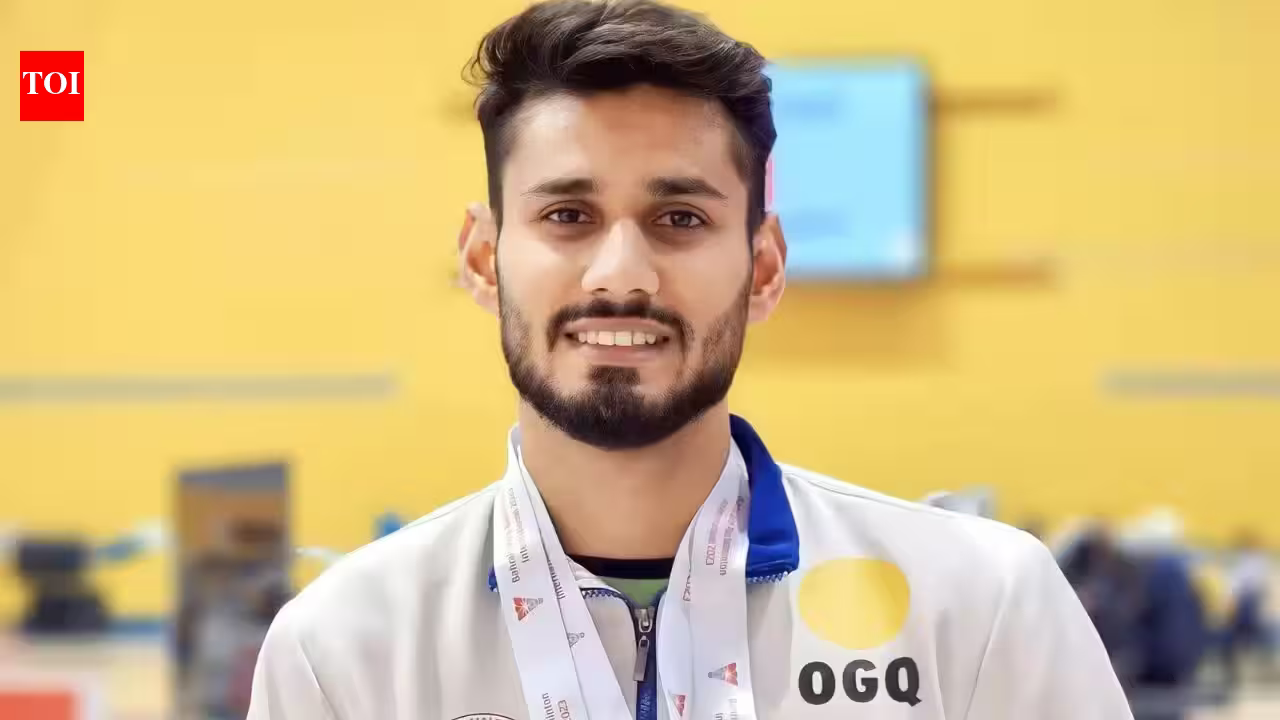
CONTROVERSY has engulfed the Indian para-badminton camp on the eve of the Asian Para Games in Aichi-Nagoya, Japan, as a group of decorated athletes takes their grievances to the halls of justice. Chirag Baretha, a two-time Asian Games medallist with a resume boasting podium finishes at the 2024 World Championships and the 2025 Asian Para Badminton Championships, finds himself not on the court, but in the Delhi High Court, fighting for his right to represent his country.
Baretha, alongside fellow para-shuttlers Shashank Kumar, Ammu Mohan, and Manisha Patel, has filed a formal petition against the Ministry of Youth Affairs and Sports (MYAS), the Paralympic Committee of India (PCI), the Badminton Association of India (BAI), and the Sports Authority of India (SAI). The legal challenge stems from what the athletes describe as an “opaque” and “forced” selection process that has effectively sidelined them despite their meeting official merit criteria.
A Conflict of Merit and Mandates
At the heart of the legal battle is the question of transparency. According to the petition, the athletes clearly met the Sports Ministry’s stringent selection requirements, which mandate that participants must rank within the top six in Asia. Baretha and his partner, Mandeep Kaur, were officially ranked World No. 6 in the SL3-SU5 category as of July 14, 2026—the precise cutoff date set for selection considerations.
Despite these credentials, the petitioners allege that the selection process was manipulated. The petition highlights the inclusion of Rakesh Pandey, who the athletes claim has not secured a single medal in the last 12 months and holds a lower international ranking than the petitioners. Furthermore, the petition points to a cloud of controversy surrounding Pandey, alleging he was previously debarred for four years following a failed anti-doping test.
Forced Pairings and Ignored Consent
The intrigue deepens regarding the assembly of the men’s doubles draw. Regulations issued on August 25 by K. Prabhakar Rao, chairman of para-badminton at the BAI, explicitly required that for a pairing to be valid, both players must submit separate emails nominating each other as their partner.
However, evidence suggests these rules were applied selectively. Umesh Vikram Kumar, who was paired with Rakesh Pandey for the Asian Para Games, explicitly protested his inclusion. In a message sent to team officials, including Rao and coach Venkata Murali Krishna, Vikram stated, “Sir, I have not given consent to participate… How can my name appear in doubles?”
Despite his explicit request to be removed from the doubles event to protect his singles entry, officials allegedly dismissed his concerns, citing that the draw could not be modified. Because tournament rules stipulate that withdrawing from one discipline necessitates an exit from the entire event, Vikram found himself trapped in a pairing he never consented to.
“We Have Been Tricked”
For Baretha, the situation is devastating. “We are fighting on a merit basis. We are medal holders. We are rank holders. We followed the guidelines of SAI,” Baretha stated. “But Mr. Prabhakar Rao has tricked us and affected our career and effort of four years.”
Baretha maintains that his record speaks for itself. “I am Asia No. 6 and have qualified through my ranking. Even if you ignore that, I meet the clause of being a medallist from previous Games, which was applied to others,” he added. The athlete remains convinced of his potential, noting that based on the pre-tournament draw, he was well-positioned to contend for a silver medal for India.
Finger-Pointing and Institutional Silence
When confronted with the allegations, K. Prabhakar Rao denied responsibility, shifting the focus to the Sports Authority of India. “The Badminton Association of India didn’t have a say in this,” Rao told reporters. “We didn’t include or exclude an athlete as per our choices. We got this list from SAI, and we followed it.”
The tension is exacerbated by the reported exclusion of former head coach Gaurav Khanna, who has been instrumental in training top para-athletes like Suhas Lalinakere Yathiraj. Baretha alleges that a faction of senior athletes exerted undue influence, tarnishing the reputation of Khanna’s academy and, by extension, the athletes associated with it.
Attempts by the aggrieved shuttlers to seek resolution through the SAI director (TEAMS Division) and BAI officials have thus far proven fruitless. The frustration within the Indian contingent is not limited to badminton; para-shooters and para-cyclists also staged protests during the team’s official send-off ceremony on October 8, citing similar concerns regarding transparency and fairness.
As the Asian Para Games commence, the focus remains on the 281-member Indian contingent. Yet, for Baretha and his co-petitioners, the heartbreak of missing the Games is compounded by the feeling that the system they served has failed them. With the case currently before the Delhi High Court, the battle for fairness in Indian para-sports continues, raising uncomfortable questions about how selection protocols are interpreted—or ignored—when the stakes are at their highest.
Disclaimer: This content is auto-generated for informational purposes only.
Source: Read Original News