








Supreme Court Upholds Ban on Reservation for Religious Converts in Tamil Nadu
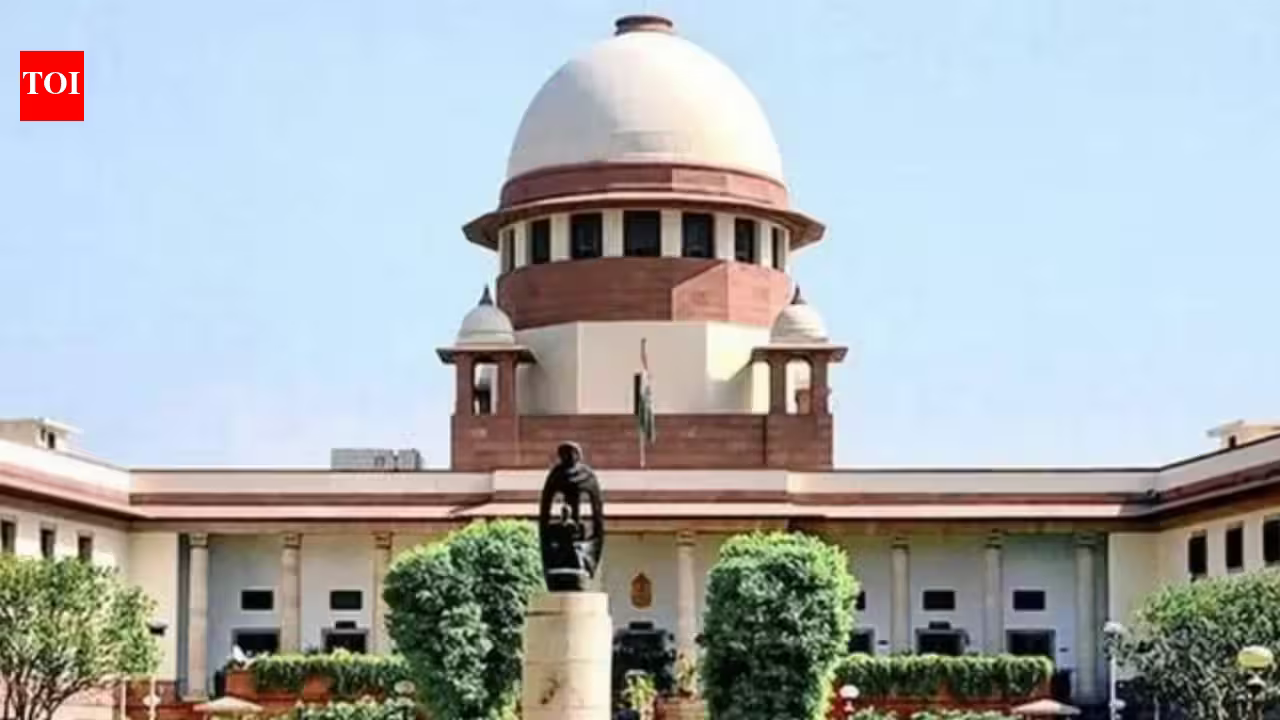
The Supreme Court has delivered a significant legal verdict, upholding a Madras High Court ruling that prohibits the Tamil Nadu government from extending reservation benefits to individuals who convert to Islam based on their pre-conversion status. The legal dispute centered on a March 2024 government directive that had enabled individuals transitioning from Backward Classes (BC), Most Backward Classes (MBC), Denotified Communities, or Scheduled Castes (SC) to be categorized under one of seven Muslim sects designated as backward for the purpose of obtaining community certificates. With the apex court’s decision, the state’s move to permit such carry-over of reservation status has been firmly struck down.
Data Sheds Light on Conversion Trends
While the legal battle has sparked intense debate, broader demographic data provides necessary context. A comprehensive study conducted by the Pew Research Center between late 2019 and early 2020, surveying nearly 30,000 adults across India, indicates that religious conversion remains an extremely infrequent phenomenon. The survey revealed that fewer than 2% of respondents identified with a religion different from the one in which they were raised. Although this study offers a national perspective, researchers caution that specific regional trends—such as those within Tamil Nadu—may vary, as localized conversion patterns are not always reflected in national averages.
Social Stratification Across Religions
The intersection of caste and religious identity remains a complex subject in Indian policy, particularly regarding reservations. Although there is no administrative registry that maps individual caste status across all religious affiliations, findings from major national surveys, including the 2019-21 National Family Health Survey (NFHS) and the 2023-24 Household Consumption Expenditure Survey (HCES), illustrate distinct patterns.
Data indicates that the proportion of Scheduled Castes (SCs) is virtually non-existent among the Muslim population, while it remains below the national average for Christians and significantly higher among Sikhs. Regarding Other Backward Classes (OBCs), surveys consistently show that their representation among Muslims is proportionately higher than it is within the Hindu community. Consequently, any policy shift regarding the classification of “Muslim OBCs” carries substantial implications for the state’s reservation framework.
Economic Class and the “Creamy Layer”
A recurring theme in the discussion of reservation policy is the “creamy layer,” which excludes affluent members of backward classes from certain benefits. Analysis of the 2023-24 HCES reveals that even when excluding the top 10% of the population based on monthly per capita spending, the proportion of OBCs among Hindus and Muslims remains largely stable.
However, researchers note a disconnect between current survey metrics and policy thresholds. Government surveys typically rely on consumption expenditure, whereas the “creamy layer” exclusion for central government jobs is determined by an annual income threshold of ₹8 lakh. For instance, the top 10% of households in the recent HCES reported an annual per capita spending level that, for a typical family, falls well below the government’s official income-based cutoff. As the legal landscape regarding reservation eligibility for converts settles, the discrepancy between spending-based data and income-based policy criteria continues to be a point of interest for demographers and policymakers alike.
Disclaimer: This content is auto-generated for informational purposes only.
Source: Read Original News