








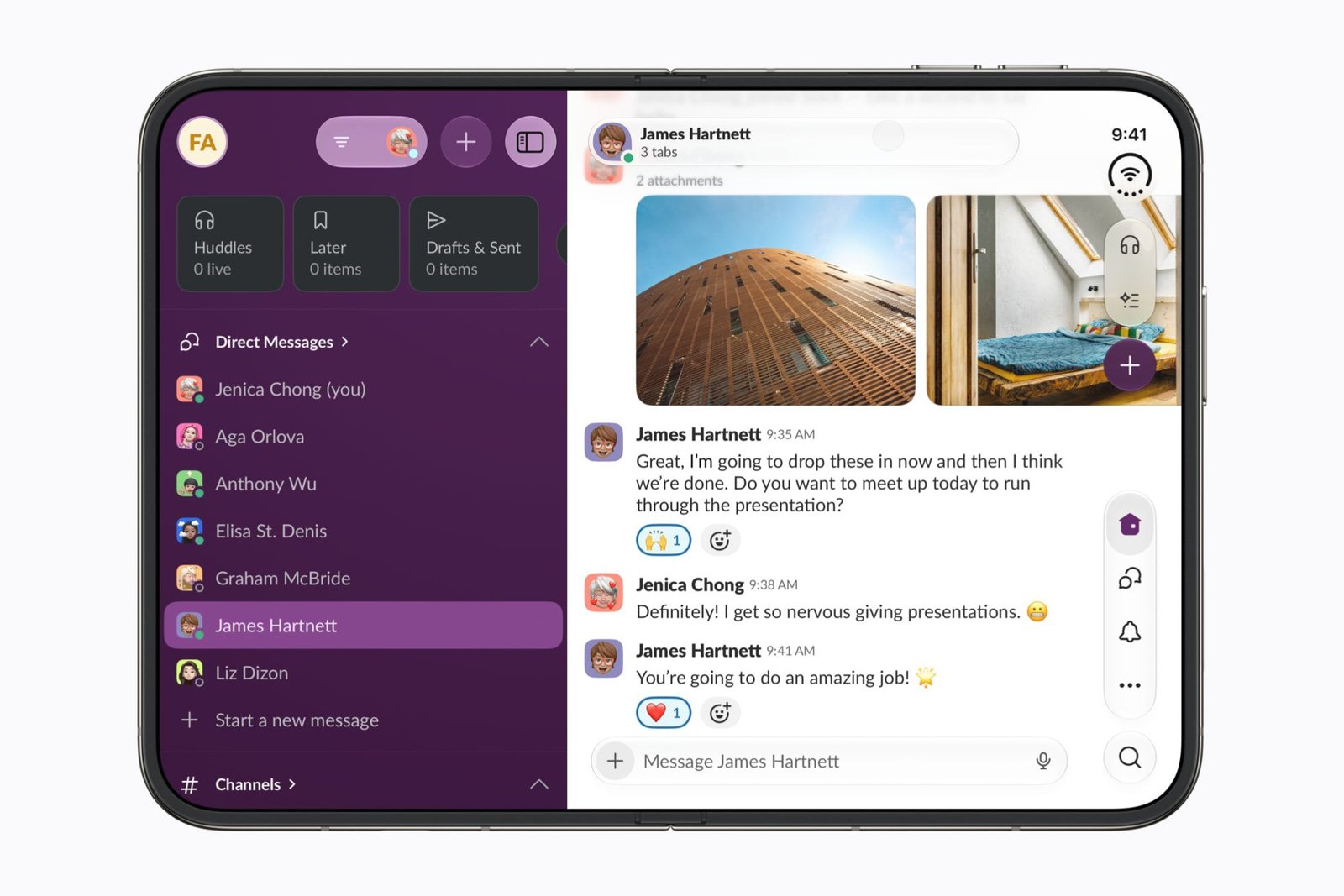
Expanding the Ecosystem: iPhone Duo App Submissions Open
The mobile computing landscape is entering a transformative period as Apple officially opens the App Store to submissions specifically optimized for the iPhone Duo. Following the recent unveiling of the company’s first foldable handset, developers now have the necessary tools to ensure their applications leverage the unique hardware architecture of the device. With a release date slated for Friday, October 23, the rush to update software infrastructure has reached a critical stage for the global developer community.
The iPhone Duo introduces a dual-screen design that connects into a single, seamless frame. While the device maintains compatibility with the existing library of millions of iOS applications, the user experience differs significantly between legacy apps and those purpose-built for the foldable form factor. Apple has mandated that only applications compiled with the iOS 27.1 SDK or later possess the capability to utilize the full breadth of the inner display. For users, this means the difference between a high-fidelity, expansive digital workspace and a centered application constrained by static black borders.
Leveraging Xcode 27.1 for Dynamic Resizing
At the center of this transition is the release of Xcode 27.1. This development environment serves as the primary conduit for integrating “Duo-awareness” into existing applications. The core challenge for developers lies in fluid layout management. Because the device functions as both a compact smartphone and an expansive, tablet-like surface, the software must be capable of dynamic resizing without crashing or losing data states.
Apple has provided comprehensive documentation to guide developers through the nuances of the iOS 27.1 SDK. The framework introduces updated view-controller logic that allows an application to detect changes in the device’s physical orientation and display state. By implementing these new API calls, developers can ensure that text, imagery, and interactive elements reorient themselves instantly when the device is folded or unfolded. This functionality is not merely aesthetic; it is essential for maintaining the productivity standards that high-end Apple hardware dictates.
Optimizing the Dual-Display User Experience
The primary advantage of the iPhone Duo is its ability to provide a larger, immersive screen while retaining the portability of a traditional smartphone. For enterprise and creative software, this is a significant shift in utility. Developers are encouraged to move away from static, single-pane designs in favor of adaptive UIs that utilize multiple columns when the device is open.
In a technical sense, this involves utilizing the expanded horizontal pixel density to display side-by-side content—such as an email inbox on the left and the message body on the right—effectively transforming the mobile experience into a desktop-class interaction. Apple’s guidance notes emphasize that apps should prioritize consistency; a user should be able to transition from a closed state to an open state without a jarring refresh or content loss. The goal is a “fluid” hardware-to-software bridge that masks the physical folding mechanism, creating the perception of a single, continuous, and responsive surface.
Addressing Challenges in Legacy App Compatibility
It is important to clarify that the App Store will remain fully functional for users who do not adopt the iPhone Duo immediately. Legacy apps will continue to operate via standard compatibility modes. However, these applications will be letterboxed to fit the traditional iPhone aspect ratio. While this preserves functional integrity, it undermines the hardware advantages of the foldable screen.
For developers, the incentive to update is driven by user retention and performance metrics. Apps that do not support dynamic resizing will appear dated, potentially leading to lower engagement rates among early adopters of the new hardware. The process of updating requires a rigorous review of auto-layout constraints and image assets to ensure they scale correctly to the higher resolution of the inner display. Apple’s approval process for these submissions will prioritize apps that demonstrate stable behavior across both folded and unfolded orientations, ensuring that the transition remains error-free under heavy processing loads.
The Broader Impact on Mobile Productivity
The arrival of the iPhone Duo and the corresponding SDK updates represent a fundamental shift in how Apple views mobile-first software. By forcing a divergence in how apps interact with different screen geometries, Apple is essentially creating a new tier of “foldable-ready” software. This move is expected to influence the broader industry, prompting competitors and third-party developers to treat foldable displays as a standard architectural requirement rather than a niche hardware curiosity.
As the October 23 launch approaches, the App Store will likely see a surge in updates. Developers who invest in the iOS 27.1 SDK now are positioning their software for a future where the rigid constraints of a single-screen device are no longer the industry benchmark. This evolution in the iOS ecosystem signifies a move toward more flexible, task-oriented computing, where the device shape is subordinate to the requirements of the task at hand. For the end user, this heralds a new era of digital versatility where the hardware adapts to the workflow, rather than the workflow being restricted by the hardware.
Disclaimer: This content is auto-generated for informational purposes only.
Source: Read Original News