








Vantara Animal Rescue Centre Announces Strategic Pivot Amid Global Scrutiny
The Vantara animal rescue centre in Jamnagar, Gujarat, has announced a significant shift in its operational philosophy. Following years of sustained criticism regarding its acquisition practices and the scale of its exotic animal collection, the facility—spearheaded by Anant Ambani, the youngest son of Reliance Industries Chairman Mukesh Ambani—is moving away from the mass importation of wildlife.
A New Direction in Conservation
Vantara, which translates to “Star of the Forest,” has long operated as an expansive sanctuary spanning 3,500 acres adjacent to a Reliance oil refinery. While the centre has prided itself on providing sanctuary for over 150,000 animals, it has recently faced intense pressure to justify its methods.
Vivaan Karani, CEO of Vantara, confirmed that the institution is recalibrating its approach to animal welfare. According to Karani, the centre’s leadership has concluded that the most effective way to protect wildlife is to bolster conservation efforts directly within the animals’ native countries rather than relocating them to India. By pivoting resources toward international wildlife protection and habitat preservation in the countries of origin, Vantara aims to address the root causes of displacement and endangerment.
To facilitate this transition, the centre has engaged a team of international experts tasked with overhauling its operational standards. This move is part of a broader commitment to transparency that the centre pledged to uphold in August, promising to meet public and activist criticism with evidence and dialogue rather than legal action.
Addressing Historical Concerns
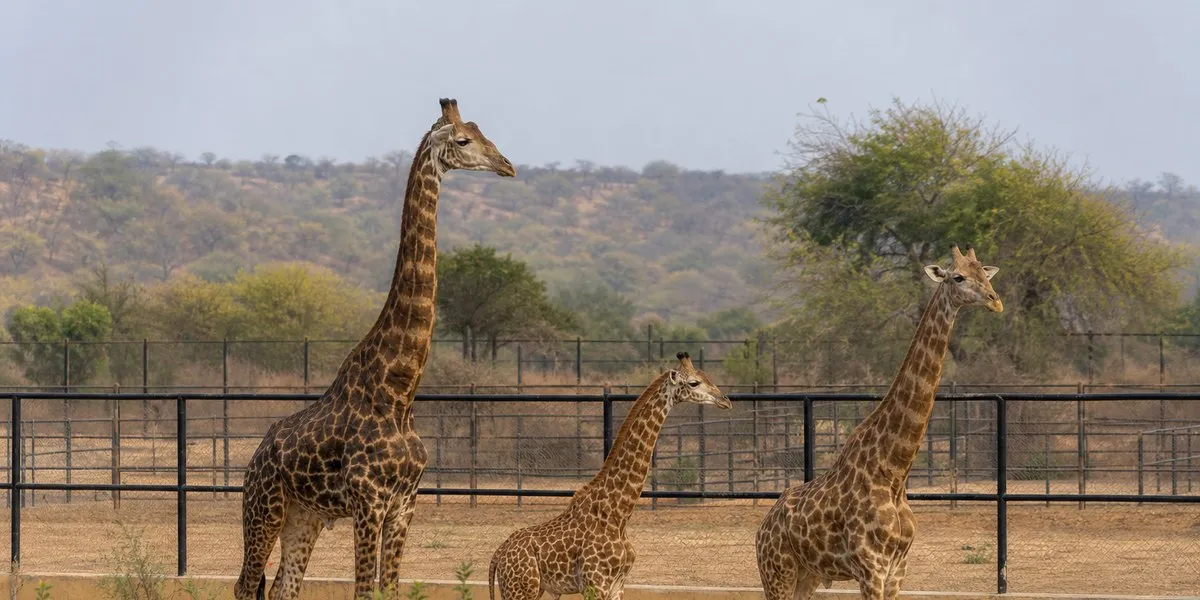
The controversy surrounding Vantara has largely centered on the provenance of its inhabitants. Currently, the facility houses an immense menagerie, including approximately 200 lions, 200 cheetahs, and 150 tigers, along with a diverse range of elephants, giraffes, and primates. However, activists have frequently pointed to discrepancies between the centre’s marketing claims and the figures reported in official annual documents, calling for greater clarity on how these animals were acquired.
The international community, specifically the Convention on International Trade in Endangered Species of Wild Fauna and Flora (CITES), has also flagged the centre. Last year, CITES expressed concerns that animals documented as “captive-bred” may have been sourced from the wild, raising the alarm that the centre’s demand could inadvertently encourage the illegal wildlife trade. While a review conducted under the mandate of the Indian Supreme Court previously cleared the facility of wrongdoing, the mounting international pressure appears to have been a catalyst for the current policy overhaul.
Future of the Facility
As it stands, Vantara remains a closed environment, generally inaccessible to the public. By shifting its focus toward global conservation partnerships, the administration hopes to silence the debate surrounding its legitimacy. The decision to stop importing animals marks a milestone in the project’s evolution, reflecting a global trend in conservation that emphasizes in-situ protection over the maintenance of massive captive populations. Whether this pivot will satisfy international observers and wildlife advocates remains to be seen, but it signals a new, more cautious chapter for one of India’s most ambitious private conservation initiatives.
Disclaimer: This content is auto-generated for informational purposes only.
Source: Read Original News