









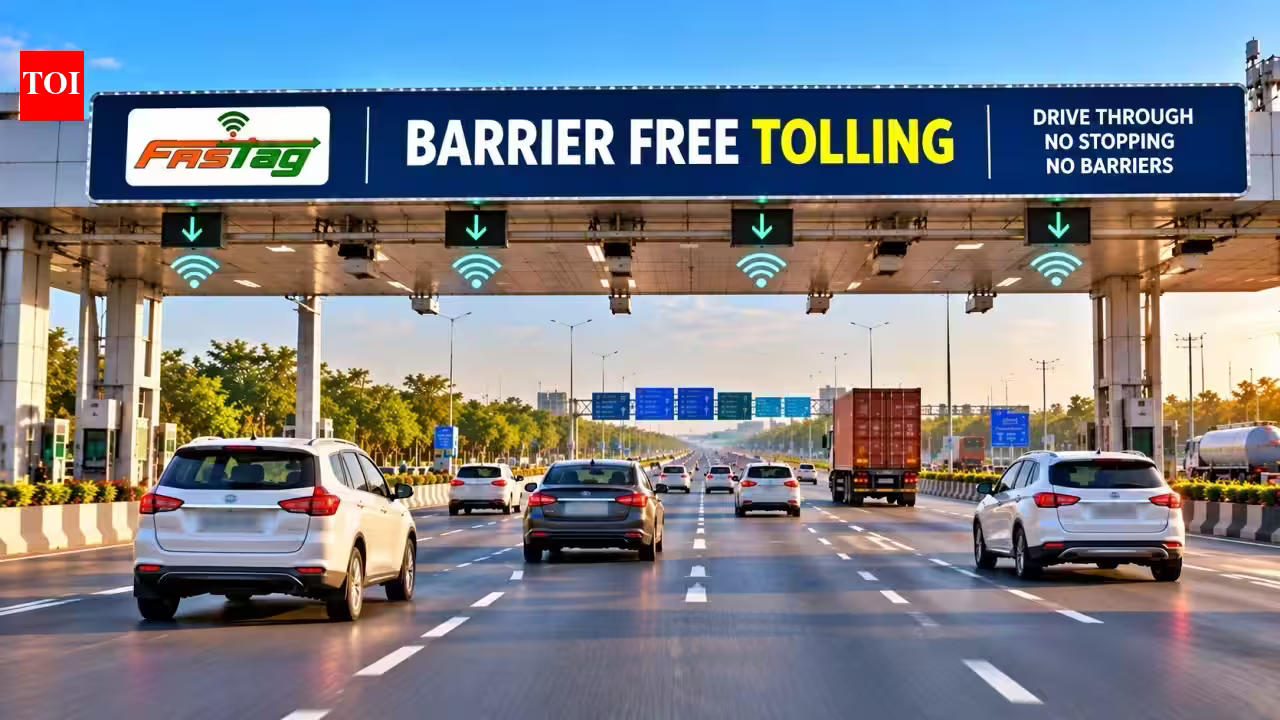
The Evolution of India’s Road Infrastructure
The landscape of Indian logistics and personal transport has undergone a tectonic shift over the last decade. Following the successful nationwide adoption of FASTag, which transitioned toll collection from a manual, cash-heavy process to a digital, electronic framework, the Ministry of Road Transport and Highways is now pushing toward the next frontier: Multi-Lane Free Flow (MLFF) tolling. With over 98% of user-fee collection currently routed through FASTag, the government is leveraging this existing infrastructure to implement a barrier-free system.
The objective is to eliminate the physical bottlenecks that continue to plague national highways. Despite the speed of digital payments, current toll plazas still require vehicles to decelerate and navigate through specific lanes. The shift to MLFF is designed to remove these constraints, allowing traffic to maintain highway speeds of 80–85 kmph while transit fees are deducted instantaneously. Government targets are ambitious, with the goal of making toll booths barrier-free across national highways by March 2027.
Technological Mechanics of Barrier-Free Tolling
The MLFF system represents a convergence of several advanced technologies. It operates primarily through a combination of Automatic Number Plate Recognition (ANPR) cameras, high-precision sensors, and the existing FASTag electronic toll collection backend. As a vehicle approaches and crosses a designated gantry or toll point, the system captures the vehicle’s unique registration plate and simultaneously communicates with the embedded FASTag chip.
This process occurs in milliseconds, ensuring that the toll is deducted from the linked digital wallet without requiring the vehicle to slow down or enter a restricted lane. The technical transition moves the focus of highway operations from managing physical queueing to managing real-time data flow and digital enforcement. For the user, the interaction remains seamless, provided the account balance is maintained. If a vehicle passes without a valid tag or sufficient funds, the system does not cause a physical halt; instead, it triggers an automated process that issues an e-Notice, ensuring that the revenue collection cycle remains uninterrupted while maintaining high traffic throughput.
Economic and Operational Implications
The economic benefits of migrating to a barrier-free system are significant. The government projects that full-scale implementation could result in annual benefits worth Rs 20,000 to 25,000 crore to the exchequer. These gains stem from a combination of reduced operational costs and systemic efficiency. Currently, toll plazas demand extensive physical infrastructure, manual supervision, and electricity, all of which contribute to high overheads. By transitioning to automated, gantry-based systems, the government expects to lower the operating costs of toll collection from approximately 15% to 3–4%.
Beyond direct fiscal gains, the environmental and logistical impact is substantial. The reduction in idling time at toll plazas leads to improved fuel efficiency for heavy commercial vehicles and passenger cars alike. Projections indicate a potential reduction in annual fuel consumption by 250 crore liters and a decrease in carbon emissions by approximately 81,000 tonnes. By transforming highways into high-speed corridors with minimal friction, the system facilitates a faster turnover of goods, thereby supporting the broader economic goals of the “PM Gati Shakti” national master plan for infrastructure development.
Navigating Compliance and Enforcement
A critical pillar of the MLFF initiative is the shift in how the government handles non-payment. Because the barriers are removed, the system relies on digital enforcement. Users are granted a 72-hour window to clear pending tolls via the official highway fee portal if their primary payment mechanism fails. Failure to do so leads to a penalty—typically doubling the original fee—and potential blacklisting of the vehicle on the VAHAN database, which can restrict access to other vehicle-related services.
Early data from pilot projects, such as the one at the Chorayasi Toll Plaza in Gujarat, provides insight into the transition. Reports show that while there is an initial learning curve for users, the efficacy of the system tends to improve over time. Specifically, as the technology matures, the percentage of collections required to be recovered through e-notices has shown a downward trend, suggesting that users are becoming more accustomed to maintaining account balances. This shift demonstrates that the success of MLFF relies not just on hardware deployment, but on fostering a culture of automated digital compliance.
Strategic Transition for Industry and Governance
For stakeholders in the infrastructure sector, the transition to MLFF signifies a profound shift in the mandate of the National Highways Authority of India (NHAI). Industry experts observe that the organization is evolving from its traditional role as a “Highway Builder” into a sophisticated “Highway Manager.” This shift entails a move toward data-driven governance, where traffic flow patterns are monitored in real-time, and congestion management is handled through predictive analytics rather than reactive physical management.
This transition also carries implications for private concessionaires who operate these stretches. As the reliance on manual staff decreases, the focus for these private entities will shift toward the maintenance of digital infrastructure, the integrity of ANPR sensors, and the sophistication of their backend enforcement software. While the initial capital expenditure for implementing MLFF is higher due to the need for advanced sensing hardware, the long-term sustainability is driven by the reduction in recurring operational expenses.
Future Outlook for Indian Transit
As India continues to expand its network of four-lane and high-speed corridors, the scalability of the MLFF system will be tested. The government’s timeline, which anticipates widespread deployment by 2027, suggests a high level of confidence in the current technology stack. The integration of FASTag with AI-driven visual recognition offers a robust dual-layer of verification that is difficult to bypass, ensuring revenue protection for the state.
The success of this transition will ultimately be measured by the reduction in travel time and the reliability of the system under heavy load. If the pilot trends hold, the barrier-free model will become the global gold standard for how India manages its massive infrastructure assets. By removing the physical barriers that have historically defined highway travel in the country, the government is not only improving the daily commute but is also laying the groundwork for a more efficient, digitally integrated logistics network that can support the demands of a growing economy. As the rollout accelerates, the focus will remain on balancing technological adoption with rigorous enforcement to ensure that these modern highways remain profitable and free-flowing for all users.
Disclaimer: This content is auto-generated for informational purposes only.
Source: Read Original News