






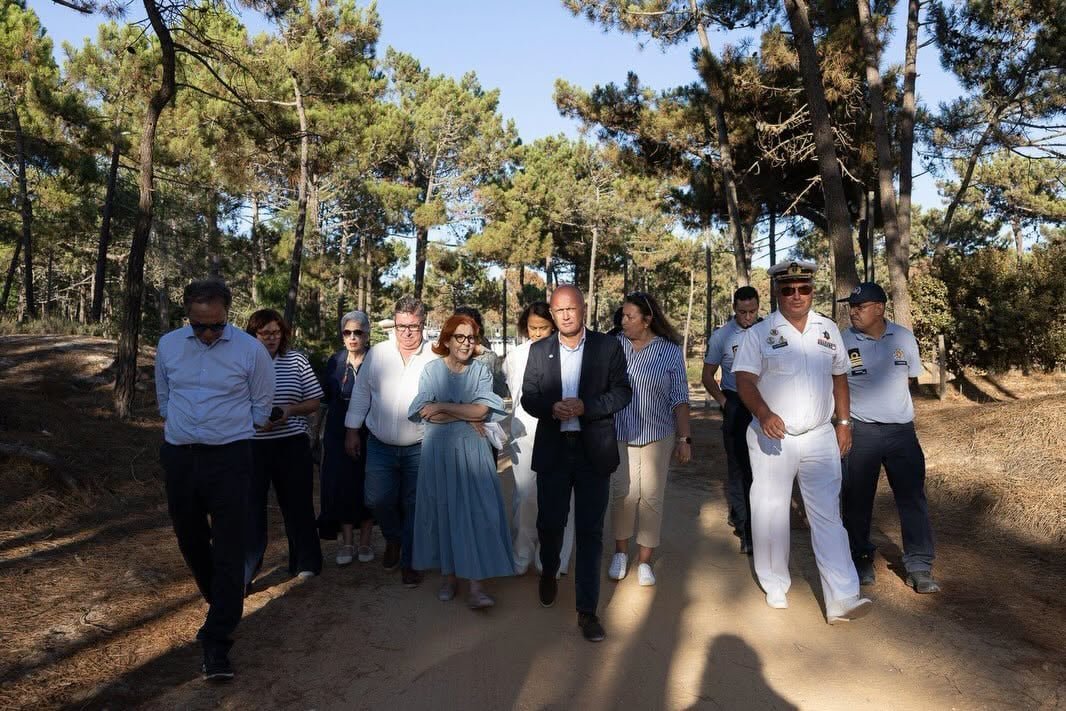
The ongoing and increasingly contentious debate surrounding the encroachment of private resorts and exclusive developments on Portugal’s public beaches has reached a fever pitch this week. The controversy was significantly amplified by an incident involving the Minister for Environment and Energy, Maria da Graça Carvalho, during her recent visit to a beach situated within the highly sought-after “gilded Alentejan stretch” that encompasses Tróia, Melides, and Comporta. This region, known for its pristine coastline and high-end properties, has become a flashpoint in the broader discussion about public access to natural resources.
According to detailed reports from local media outlets, the Minister’s progress was unexpectedly obstructed by a turnstile, a physical impediment that she unequivocally declared “not to be in keeping with the spirit of a public beach.” Her statement underscores a fundamental principle of Portuguese law, which mandates that all beaches within the country are freely accessible to the public. The presence of such a barrier, therefore, represents a direct challenge to this established legal framework and the underlying ethos of public enjoyment of coastal areas.
The incident has garnered significant attention from national media, which has diligently followed the unfolding narrative. There is a palpable sense that the legal provisions safeguarding public access have, for too long, been disregarded or circumvented by certain developments. The Minister’s resolute stance suggests that these apparent oversights are now due for a comprehensive and decisive rectification. The message is clear: the government is prepared to equip these “deaf ears” with the equivalent of “state-of-the-art hearing aids” to ensure compliance.
Minister Carvalho articulated her unwavering position, stating, “This issue will be resolved, they cannot be blocking access.” She further elaborated on the specific context of the current dispute, clarifying that the site in question is not a large-scale development, as has been erroneously reported by some television channels. Instead, it is a campsite, and the justification provided for the turnstile was a concern for the security of campers’ belongings and a desire to monitor who enters the premises. However, the Minister firmly reiterated, “beaches in Portugal are public and have public access.” This statement leaves no room for ambiguity regarding the legal status of the coastline.
Consequently, this incident may mark a pivotal moment, potentially signaling the year when long-standing restrictions on public access to beaches will finally be forcibly lifted. The government appears determined to enforce existing laws and ensure that the natural beauty and recreational opportunities of Portugal’s coastline remain available to all citizens, rather than being confined to the privileged few.