






Revolutionary API Manufacturing: European Consortium Validates New Continuous-Flow Platform
The global pharmaceutical landscape is witnessing a paradigm shift as a specialized European consortium—comprising De Dietrich, Alysophil, Bruker, and Novalix—successfully validates a next-generation platform for the continuous manufacturing of active pharmaceutical ingredients (APIs).
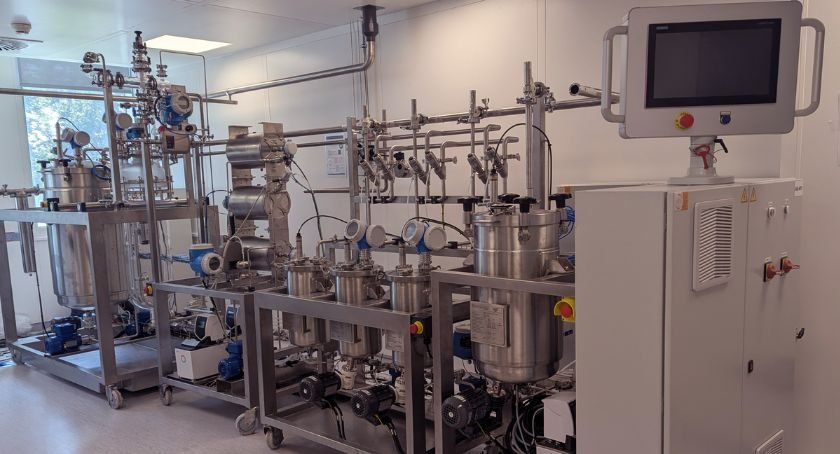
The successful trial of the PIPAC (Platform for Integrated Pharmaceutical Active Compounds) project marks a significant departure from traditional batch-processing methods, which have long defined the industry. By integrating continuous-flow chemistry, real-time analytical monitoring, and autonomous artificial intelligence, the consortium has effectively modernized the way essential therapeutic compounds are produced.
A New Standard in Production
The consortium chose a rigorous benchmark to prove the efficacy of their technology: the production of fentanyl. As one of the pharmaceutical industry’s most potent and stringently regulated substances, fentanyl requires precision and absolute control. The platform’s ability to successfully and safely synthesize this compound demonstrates its high level of robustness and its potential to handle complex manufacturing environments.
Unlike traditional batch manufacturing—where producers must often wait for large-scale quality assessments after the process is complete—continuous manufacturing allows for the constant assessment of product quality. This real-time monitoring enables immediate intervention, drastically reducing the risk of failures, minimizing waste, and accelerating the timeline from laboratory development to industrial-scale production.
A Collaborative Technological Triumph
The platform’s success is the result of a specialized division of labor among the four partners:
- Novalix: Designed and implemented the continuous-flow synthesis route.
- Bruker: Provided cutting-edge analytical instrumentation, allowing for continuous, real-time measurement of the process.
- Alysophil: Developed AlchemDrive, an autonomous, AI-driven process-control platform that interprets data and adjusts manufacturing parameters instantaneously.
- De Dietrich: Engineered the industrial hardware and automation architecture, creating a scalable environment designed for future deployment.
Rethinking Supply Chain Sovereignty
Beyond technical efficiency, the platform addresses systemic industry challenges. By moving toward smaller, modular, and highly automated production units, the PIPAC technology could enable decentralized manufacturing. This could prove critical for nations looking to strengthen regional pharmaceutical production capabilities and improve supply-chain resilience in an era of global volatility.
Frédéric Guichard, Group Executive Director of De Dietrich, emphasized the necessity of this evolution: “For decades, pharmaceutical manufacturing has relied on production models that were designed for a different era. Today, the industry faces new challenges: supply-chain resilience, production sovereignty, faster industrialization and greater flexibility.”
He added that this project proves it is possible to fundamentally rethink how the industry operates. Through this continuous API manufacturing approach, the consortium believes they have created a scalable blueprint that will transform the production of critical medicines in the years to come.
As the industry continues to search for ways to increase agility while maintaining the highest safety standards, the validation of the PIPAC platform offers a compelling vision for the future of pharmaceutical manufacturing.