








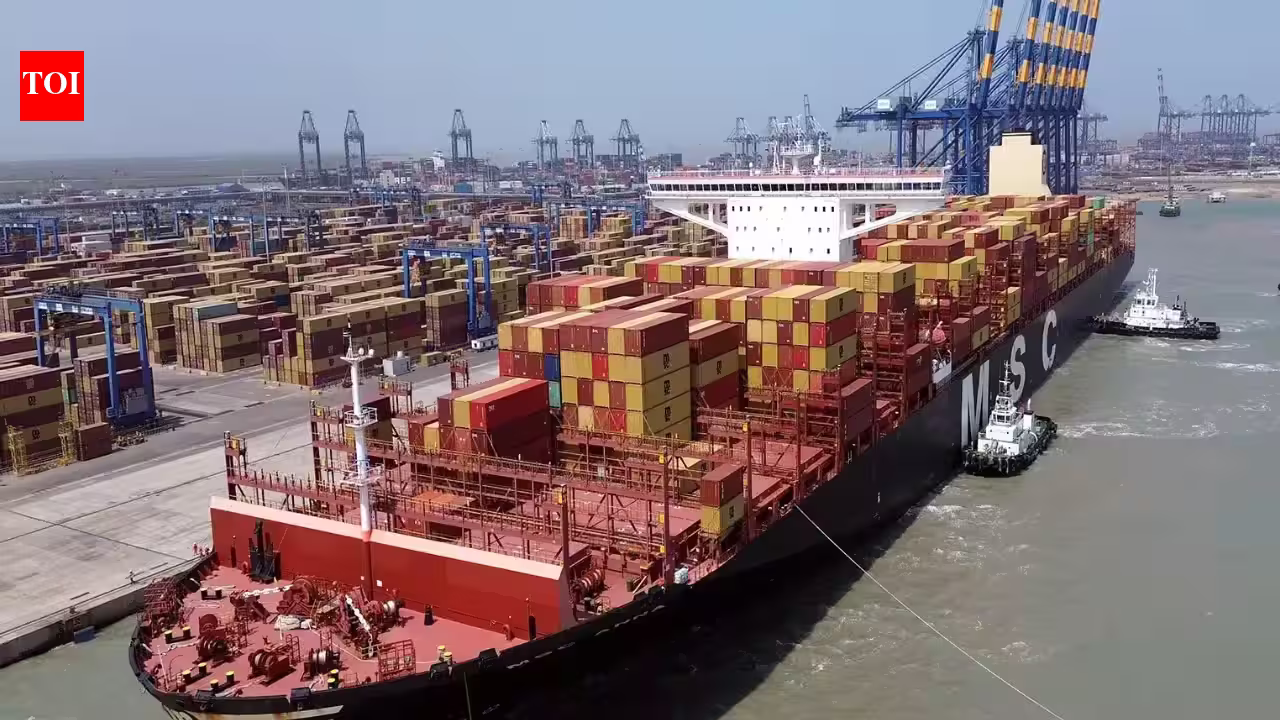
Analyzing the Surge in Indian Export Performance
The latest trade data released by the Department of Commerce signals a transformative phase for the Indian economy. With goods exports surging by 26% to $43.8 billion in August, India has achieved its fastest rate of expansion in over four years. This performance is not merely a statistical anomaly but a reflection of structural shifts within the domestic manufacturing ecosystem. For an economy striving to position itself as a global supply chain hub, this growth trajectory in high-value sectors provides a significant boost to industrial confidence.
The underlying strength of these figures lies in the composition of the export basket. The surge is primarily attributed to a massive uptick in electronics, engineering goods, and petroleum products. The 90% growth in electronics shipments is particularly noteworthy, suggesting that government-led initiatives, such as the Production Linked Incentive (PLI) schemes, are finally maturing. As global corporations diversify their manufacturing footprints away from traditional hubs, India’s ability to scale high-tech assembly operations is proving to be a competitive advantage.
The Dynamics of the Trade Deficit and Import Patterns
While export performance has garnered headlines, the management of the trade deficit remains a critical barometer of macroeconomic health. In August, the trade deficit narrowed to $26.9 billion, marking a five-month low. This contraction is largely credited to the volatility in gold imports, which plummeted by 58% to $2.3 billion. In the Indian context, gold imports have historically acted as a drain on foreign exchange reserves. A moderation in this category, coupled with robust export performance, provides the Reserve Bank of India with greater flexibility in managing the rupee and maintaining balance of payments stability.
Conversely, the rise in other import categories, such as silver and electronic components, tells a story of industrial appetite. Silver imports more than doubled, while electronics imports rose by 40%. Analysts interpret this as a sign of strong domestic demand and the necessity of importing critical inputs for manufacturing value-added goods. As India scales its internal manufacturing capabilities, the import of intermediate goods—rather than finished products—is a natural byproduct of a growing industrial sector. The current trade profile demonstrates that while the nation is becoming a larger consumer of global technology components, it is successfully offsetting these costs through aggressive expansion in finished goods exports.
Strategic Drivers Behind the Manufacturing Export Boom
The recent export expansion is fueled by both volume and value growth, dispelling the notion that performance is merely a result of currency depreciation. While the Indian rupee has experienced a weakening trend against the dollar, commerce officials have emphasized that volume growth across 40% of major product categories is the primary engine of success. This indicates that Indian exporters are gaining genuine market share rather than relying on price competitiveness alone.
Engineering goods, which remain a cornerstone of India’s export basket, recorded a 25% increase, reaching $12.3 billion. This sector’s growth demonstrates the depth of India’s capital goods and machinery manufacturing base. Simultaneously, the petroleum sector’s 63% jump in exports underscores India’s role as a vital regional refinery hub. By refining crude oil and exporting high-value petroleum products, India leverages its strategic geography and technical refining capabilities to serve markets in Europe and beyond. These developments reflect a concerted effort to move up the global value chain, transitioning from raw material suppliers to producers of sophisticated industrial outputs.
The Role of Services in India’s External Trade
No discussion of India’s trade performance is complete without acknowledging the robust contribution of the services sector. In August, services exports rose by nearly 25% to touch $39 billion. This sector has long been the backbone of India’s export success, and its continued double-digit growth confirms its resilience against global macroeconomic headwinds. While services imports also rose significantly, the net positive contribution of the services trade helps cushion the broader trade account.
The synergy between goods and services is becoming increasingly important. As manufacturing becomes more digitized, the integration of IT and professional services into industrial operations enhances productivity. This “servicification” of manufacturing is helping Indian exporters provide holistic solutions to global clients, moving beyond simple commodity trading. With combined goods and services exports nearing the $400 billion mark for the first five months of the fiscal year, the country is well on track to meet, if not exceed, its annual trade targets.
Future Outlook and Policy Implications
The recent trade data offers a glimpse into a maturing economy. To sustain this momentum, India must address the systemic challenges that often impede export competitiveness. While the logistics sector has seen improvements through better infrastructure development—such as the PM Gati Shakti National Master Plan—the cost of trade finance and the speed of customs clearance remain areas for potential optimization. Policymakers are now focused on reducing the cost of logistics to ensure that Indian engineering and electronic goods remain competitively priced in an increasingly crowded global market.
Furthermore, the focus on “Make in India” must shift toward deeper integration into global value chains. The current data shows that India is succeeding in final assembly, but the next phase of growth will rely on domesticating the production of electronic sub-components. By deepening the manufacturing ecosystem, India can insulate itself from the supply chain vulnerabilities that characterized the post-pandemic period. The government’s continued commitment to ease of doing business and export promotion schemes is likely to remain the catalyst for this long-term transition.
In conclusion, the surge in export growth serves as a powerful validation of the current industrial policy direction. By balancing the need for capital-intensive imports with a strategy to boost high-value exports, India is effectively navigating a complex global trade environment. As the nation continues to expand its footprint in sectors like electronics and engineering, the focus will increasingly shift toward sustaining this growth through technological self-reliance, infrastructure efficiency, and aggressive penetration into non-traditional markets. The path forward remains promising, provided that the current momentum in manufacturing competitiveness is matched by continued efforts to streamline the national trade infrastructure.
Disclaimer: This content is auto-generated for informational purposes only.
Source: Read Original News