





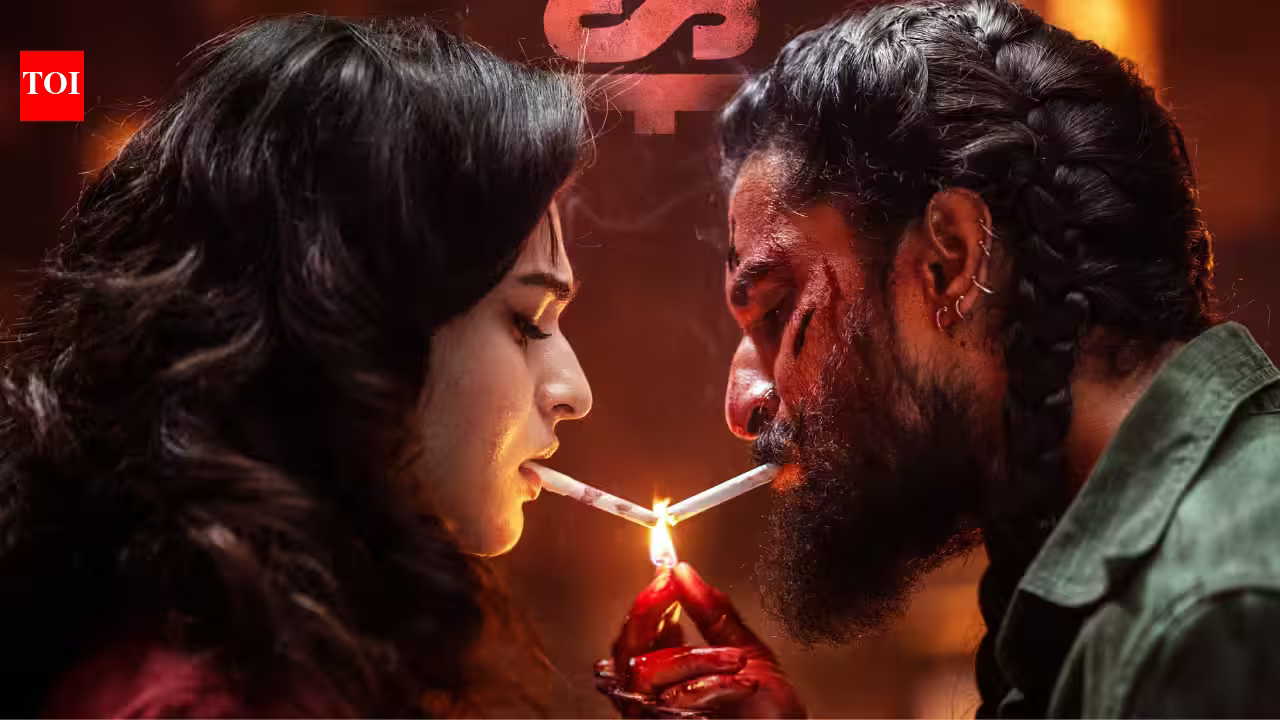
The creative partnership between Nani and director Srikanth Odela has quickly become one of the most exciting collaborations in modern Indian cinema. Following the gritty, raw success of Dasara, which effectively transitioned Nani into the realm of high-stakes, regional action-drama, the duo is returning to the fray with The Paradise. With the film’s release date of September 24 rapidly approaching, the project has officially cleared the Central Board of Film Certification (CBFC) with an ‘A’ certificate, signaling that audiences should prepare for an unflinching, visceral experience.
A Gritty Vision: Why the ‘A’ Certificate Matters
The confirmation of an ‘A’ certificate is rarely just a formality in the current landscape of Indian cinema; it is a creative statement. By securing this rating, Srikanth Odela and his team have signaled that they are not interested in softening the edges of their storytelling. In a market often driven by broad, four-quadrant family appeals, The Paradise seems determined to prioritize authenticity over compromise.
Adding to the buzz is the film’s substantial runtime. Industry reports and confirmations from the production side suggest the final cut sits at approximately 2 hours and 49 minutes (169 minutes). In an era where audiences are increasingly vocal about the “pacing issues” of long movies, a film of this length requires total command of the narrative. Odela, who proved his mettle with Dasara, clearly believes that this expansive runtime is necessary to fully flesh out the complex, socially charged world he has built for this particular story.
Nani’s Toughest Challenge Yet
For an actor like Nani—who has spent 18 years cultivating a reputation for versatility, moving seamlessly between lighthearted rom-coms and intense character-driven dramas—to label a film as his “most tiring” is a significant claim. During recent press interactions, the actor was notably candid about the toll the production took on him.
“If there has been a film for which I have worked very hard in these 18 years of my film career, it is The Paradise,” Nani told reporters. This isn’t the standard PR-speak typically heard on the promotional trail. When an actor of Nani’s stature admits that a project broke him physically and mentally, it suggests a performance that likely pushes the boundaries of his screen persona. Having seen him transform into the rugged Dharani in Dasara, audiences are rightfully bracing themselves for an even more intense, perhaps darker, transformation this time around.
The Strategy of Silence: Why No Trailer?
Perhaps the most intriguing aspect of the The Paradise campaign is what isn’t there. In an age where digital marketing is defined by a relentless barrage of teasers, trailers, and social media clips, the makers have opted for a bold, unconventional path: they are not releasing a traditional trailer.
This “no-trailer” strategy is a massive gamble in the high-stakes world of multilingual tentpole films. However, it also serves to heighten the sense of mystery. By withholding the typical montage of high-octane action shots and dialogue hooks, the team is forcing the audience to walk into the theater with a clean slate. It avoids the pitfall of “trailer fatigue” and ensures that the film’s themes and visual language are experienced in their intended context. It’s a move that suggests immense confidence in the final product—a belief that the film’s quality will speak louder than any pre-release marketing campaign could.
A Tribal Odyssey: The Heart of the Narrative
Beyond the star power and the action, The Paradise appears to be a deeply rooted social drama. The plot centers on a tribal community living in the shadow of systemic exclusion, denied basic rights and long-standing justice. When a new leader emerges from within their ranks, the struggle shifts from silent suffering to active resistance.
This thematic backbone moves the film away from being a mere “commercial actioner” and places it squarely in the tradition of epic social narratives. With the inclusion of a sprawling cast—including Kayadu Lohar in the female lead, alongside industry veterans like Mohan Babu and character actors like Raghav Juyal and Sampoornesh Babu—the film aims to represent a broad spectrum of perspectives. It is a story not just of a hero, but of a community’s collective defiance against an oppressive system.
Global Ambitions: The Reach of ‘The Paradise’
What makes the release on September 24 particularly unique is the scale of its distribution. The film is hitting screens in an expansive list of languages: Telugu, Hindi, Tamil, Kannada, Malayalam, Bengali, English, and even Spanish. This is an aggressive play for a global footprint, bolstered by the pulsating score of Anirudh Ravichander, whose involvement is often a harbinger of high-production quality and sonic intensity.
Anirudh, currently at the pinnacle of his career, brings a certain “prestige” factor to the project. When you pair an unconventional narrative, a seasoned performer pushed to his absolute limits, and a world-class composer, the result is usually something that demands to be seen on the biggest screen possible.
As September 24 draws near, the lack of a trailer has done nothing to quell the anticipation; if anything, it has amplified it. The Paradise isn’t asking for the audience’s attention through noise—it is waiting to capture it through the weight of its storytelling. Whether or not it will surpass the legacy of Dasara remains to be seen, but one thing is certain: Nani and Srikanth Odela are not looking for a safe success. They are looking to make a mark.
Disclaimer: This content is auto-generated for informational purposes only.
Source: Read Original News