







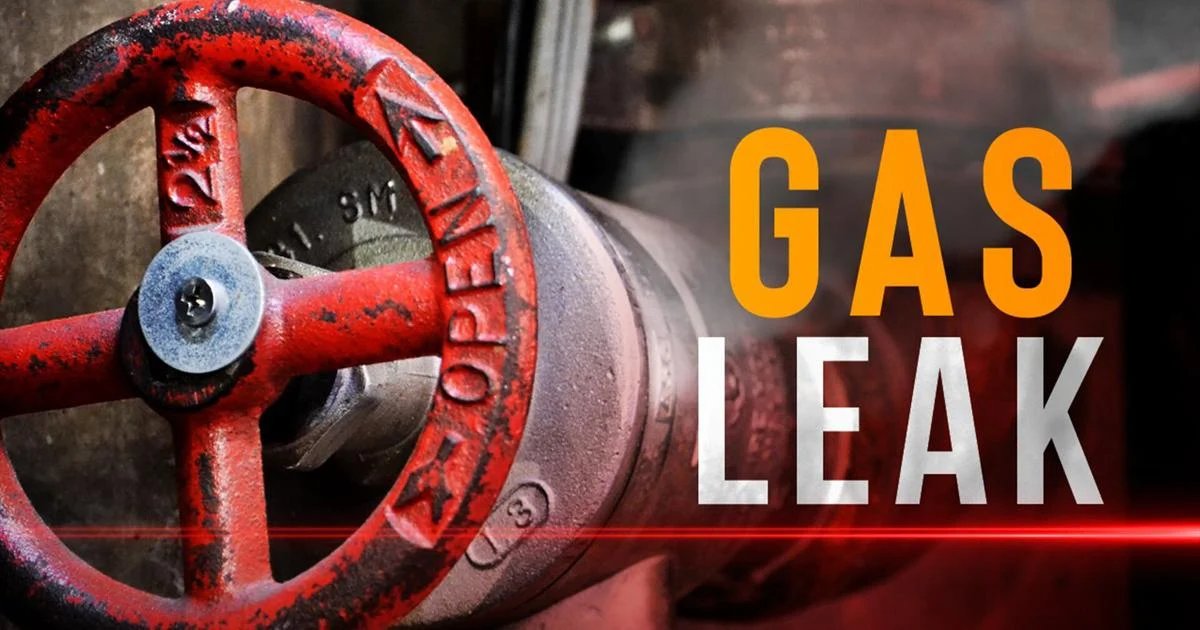
WASHINGTON, Iowa — A significant gas leak near the busy intersection of Main Street and Iowa Avenue triggered emergency evacuations on Tuesday, disrupting local commerce and prompting a coordinated response from municipal authorities. The Washington Fire Department arrived on-site shortly after the reports, prioritizing the containment of the leak while police personnel established a safety perimeter around the downtown corridor.
As the situation unfolds in Washington, local residents and business owners are navigating a world where rapid information dissemination—often powered by real-time data integration and AI-driven platforms—has become essential to public safety.
The Role of Real-Time Data and Navigation Technology
In scenarios like the gas leak in Washington, the importance of digital infrastructure and real-time mapping tools cannot be overstated. As first responders cordoned off major intersections, tools like Google Maps began reflecting updated traffic conditions. This integration of municipal reporting and digital mapping serves as a critical safety feature, allowing commuters to navigate around high-risk zones without delay.
The technology powering these updates relies on a blend of crowdsourced data and official information feeds. When a municipality reports an emergency or a road closure, systems powered by sophisticated machine learning algorithms process that data to reroute traffic automatically. For the people of Washington, the ability to receive these alerts on their mobile devices ensures that the physical danger is contained not just by police tape, but by the digital rerouting of thousands of vehicles, preventing congestion that could hinder the emergency response.
AI and Predictive Public Safety
The incident serves as a reminder of how the tech industry is increasingly focusing on “smart city” initiatives. Beyond simply notifying users of a road closure, the broader integration of AI into urban management is evolving. Future iterations of safety response systems—currently being tested by major tech firms—utilize predictive AI to model how gas leaks might spread based on local atmospheric data, building ventilation schematics, and population density.
While the Washington Fire Department is currently utilizing boots-on-the-ground assessment to repair the damage, the broader tech industry is moving toward a future where sensors embedded in city infrastructure automatically report gas concentration levels to a centralized hub. This data would then feed into AI-driven dashboards, allowing fire departments to visualize the scale of a hazard before they even arrive on the scene. By leveraging these advancements, departments can deploy resources more efficiently, effectively turning public safety into an information-driven discipline.
The Importance of Staying Informed via Digital Hubs
During active emergencies, residents often turn to search engines and news aggregators to clarify the scope of the danger. Google News and similar platforms utilize advanced Natural Language Processing (NLP) to aggregate local reports from credible sources, ensuring that residents receive the most accurate information. When information is fragmented, AI models work to identify the most relevant details—such as which businesses are affected or how long the street closure is expected to last—and present them in a concise summary.
As repairs continue in Washington, the synergy between local responders and digital technology remains a vital link in the chain of public safety. While the Washington Police Department focuses on the physical security of the intersection, the digital architecture of the modern web ensures that the surrounding community stays informed, safe, and away from the restricted zone. Residents are encouraged to monitor local news feeds and rely on integrated navigation services to avoid the downtown area until the Washington Fire Department officially declares the scene clear.
For now, the focus remains on the critical repair work, with authorities urging the public to exercise patience and caution while crews work to secure the leak.
Disclaimer: This content is auto-generated for informational purposes only.
Source: Read Original News