






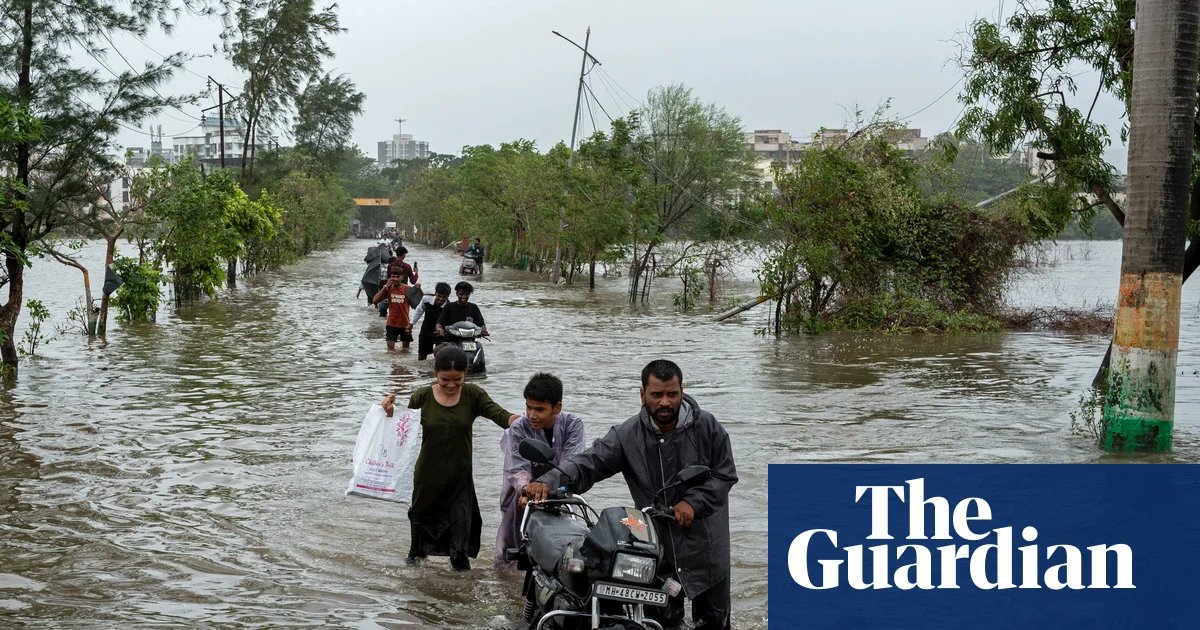
Global Heating to Breach 1.5C Limit: UN Report Warns of “Unavoidable” Climate Overshoot
The world is on an irreversible trajectory toward crossing the 1.5C global warming threshold, a landmark goal established by the 2015 Paris Agreement. A sobering new report from the United Nations Environment Programme (UNEP) confirms that, even under the most optimistic projections, global heating will reach at least 1.8C within the next few years.
The report, titled Limiting Overshoot, serves as a stark warning to world leaders: there are no “good outcomes” above the 1.5C limit. Every fraction of a degree in additional temperature rise threatens to trigger catastrophic, long-term consequences, including accelerated glacier melt, widespread ecosystem collapse, and the potential submersion of island nations and coastal cities.
A Fork in the Road
The findings have ignited immediate alarm among leaders on the front lines of the climate crisis. Surangel Whipps Jr, President of Palau, described the report as “a fork in the road moment for the planet.”
“It is hard to overstate the depth of emotion for those of us living on the frontline after having fought so hard to put the 1.5C limit at the heart of the Paris agreement,” Whipps said. “We need to see an urgent and unprecedented increase in political will and investment in a climate-safe future.”
Young activists are equally vocal. Vishal Prasad, representing Pacific Island Students Fighting Climate Change, emphasized the legal imperative of climate action. “Keeping to 1.5C is not a choice, it is a legal obligation,” Prasad stated. “Your corporate profits cannot be allowed to extinguish our future.”
The Reality of “Overshoot”
The UNEP report highlights that while the 1.5C target is now likely to be surpassed, humanity’s best hope for survival lies in an “overshoot, peak and decline” pathway. This strategy requires immediate, drastic cuts to greenhouse gas emissions alongside large-scale carbon dioxide removal—such as the creation of vast new forests—to eventually lower global temperatures back toward 1.5C by the end of the century.
However, the authors warn that this recovery is only possible if warming is kept below approximately 1.8C. If the planet continues to heat beyond that point, nature’s natural capacity to sequester carbon—such as through healthy forests and oceans—will diminish, creating a vicious feedback loop.
“The Rules of the Game are Changing”
Prof. Debra Roberts, a co-chair of the Intergovernmental Panel on Climate Change (IPCC) and an author of the report, noted that current climate governance is no longer sufficient.
“The rules of the game are now changing,” Roberts said. “Existing approaches are no longer fit for purpose. We now have to reconfigure our climate governance around dealing with an overshoot pathway.”
The report outlines the devastating economic and environmental stakes of failure. By 2100, warming of 3C could see glaciers lose over a quarter of their mass, driving sea-level rises of up to 13cm. Simultaneously, global food production is at risk of declining by as much as 14% by 2050 without significant adaptation strategies.
A Global Call for Action
UNEP executive director Inger Andersen underscored that the climate crisis is already manifesting in real-time, pointing to the record-shattering heatwaves and wildfires that have plagued the Northern Hemisphere. “We have to act with urgency and determination,” Andersen said. “Every fraction of a degree avoided… will save lives, will protect ecosystems, and reduce economic losses.”
While the report provides a roadmap, some policy experts argue it lacks sufficient focus on the necessary phase-out of fossil fuels. Bill Hare, CEO of Climate Analytics, criticized the report for not explicitly detailing how to achieve “real zero” emissions across economic sectors by mid-century.
As the international community grapples with this [new report](https://www.theguardian.com/environment/2026/sep/02/global-heating-warming-1-8c-best-case-scenario-un-united-nations-environment-programme-report” target=”_blank” rel=”nofollow), the message from scientists and advocates is clear: the era of incremental change is over. Without a rapid and fundamental transformation of global energy systems and a commitment to protecting vulnerable communities, the path toward a stable climate may soon be closed forever.