








New Road Safety Norms: Government Moves to Curb High-Beam Glare and Enhance Night Visibility
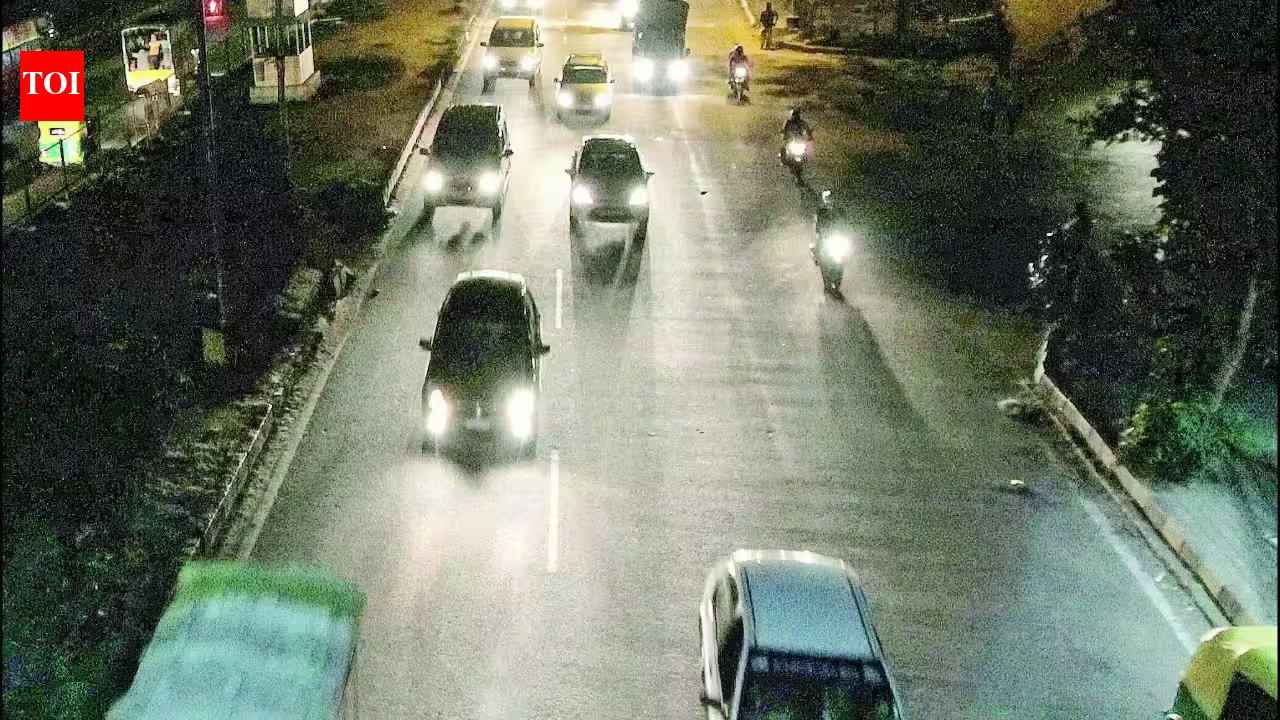
NEW DELHI: In a significant move to reduce nighttime road accidents and improve overall driving safety, the Union Ministry of Road Transport and Highways has unveiled a set of draft amendments to the Central Motor Vehicles Rules. These proposed regulations, set to take effect from April next year, aim to tackle the persistent issue of “blinding” high-beam glare and standardize lighting intensity across all vehicle categories.
Curbing the High-Beam Menace
For years, the misuse of high-beam headlamps in urban areas has been a leading cause of visual discomfort and accidents on Indian roads. To combat this, the government has proposed a shift in how Automatic Headlamp On (AHO) systems function for two-wheelers.
Currently, AHO systems allow for both high and low beam modes. Under the new rules, headlamps on new two-wheelers will automatically default to the passing (low) beam. While existing vehicles will not be affected, all new models will be required to comply with this technical constraint to prevent the accidental or unnecessary use of high beams in well-lit city streets.
Smart Alerts for Urban Driving
Beyond automatic settings, the ministry is introducing a “smart” audio alert system designed to influence driver behavior. If a motorist manually switches to high beam while driving in urban conditions, the vehicle will emit a warning prompt, encouraging the driver to shift back to low beam.
To ensure this technology remains practical, the system will be speed-sensitive. Vehicles traveling at speeds above 60 kmph—typically on highways where high beams are necessary for safety in poorly illuminated areas—will not trigger the warning, ensuring that the new mandates prioritize urban safety without compromising visibility on open roads.
Standardizing Intensity and Color
The draft amendments also introduce strict caps on light intensity and color temperature to mitigate the “white-out” effect caused by high-intensity discharge lamps. Key technical changes include:
- Reduced Luminous Intensity: The maximum permissible intensity for two-wheeler headlamps has been lowered from 1.5 lakh candela (cd) to 1 lakh cd. For four-wheelers, the limit has been reduced from 2.25 lakh cd to 1.5 lakh cd.
- Color Temperature Control: To prevent excessive glare from blueish-white LEDs, the maximum permissible color temperature for headlamps and front fog lamps has been restricted to 6,500 Kelvin (K).
- Mounting Symmetry: The ministry has proposed that the mounting height of main-beam headlamps be strictly aligned with that of passing-beam headlamps to ensure a uniform distribution of light on the road.
Enhanced Visibility for Heavy Vehicles
The safety overhaul is not limited to passenger vehicles. Buses and heavy commercial vehicles will soon be required to use genuine reflective tapes, ensuring they remain visible to other road users during the night and in adverse weather conditions, such as fog or heavy rain.
As the government pushes for these new vehicle rules, officials emphasize that the primary goal is to foster safer driving habits. By moving away from purely advisory measures—which have largely failed to change driver behavior—to technology-driven enforcement, the government hopes to significantly reduce the number of crashes caused by impaired visibility and headlight glare.