







Inside the Massive, Immersive World of Grand Theft Auto VI
For nearly 27 minutes last month, the boundaries between digital art and reality seemed to blur inside Rockstar North’s headquarters in Edinburgh. As the studio revealed an extended look at Grand Theft Auto VI, a panoramic vision of modern American life unfolded—ranging from the high-octane tension of a botched drug deal in a seedy tower block to the hedonistic excess of a party for “coked-out” entrepreneurs.
The demonstration was a visceral display of technical and creative ambition, showcasing everything from bayou boating and skydiving to nightclub dancing and the series’ signature balletic violence. For those who have followed the saga since Grand Theft Auto V arrived in 2013, the anticipation is palpable. Having sold 230 million copies, the franchise has transcended the gaming medium to become a true monocultural event, likened by Geoff Keighley, creator of the Game Awards, to a blockbuster with an “opening decade.”
A New Scale of Interactive Fidelity
Set to launch on November 19, Grand Theft Auto VI represents an evolutionary leap for Rockstar. The game’s map, centered on “Vice City”—an alluring, sprawling reimagining of Miami—is twice the size of the Grand Theft Auto V landscape and three times as large as the playable area in Red Dead Redemption 2.
Rob Nelson, who oversees Rockstar North, describes the game as an evolution of the systems established in 2018’s Red Dead Redemption 2. The focus is on “interactive fidelity,” where the world reacts to the player with unprecedented nuance. Unlike its predecessors, the environment is acutely responsive: pulling out a weapon in public will likely trigger an immediate call to law enforcement.
“Once we managed to accomplish that level of interactive fidelity in a more sparsely populated version of America 100 years ago,” Nelson said, “we were already imagining what it would be like if we could do that at the scale and density of a modern environment.”
The “Bonnie and Clyde” Dynamic
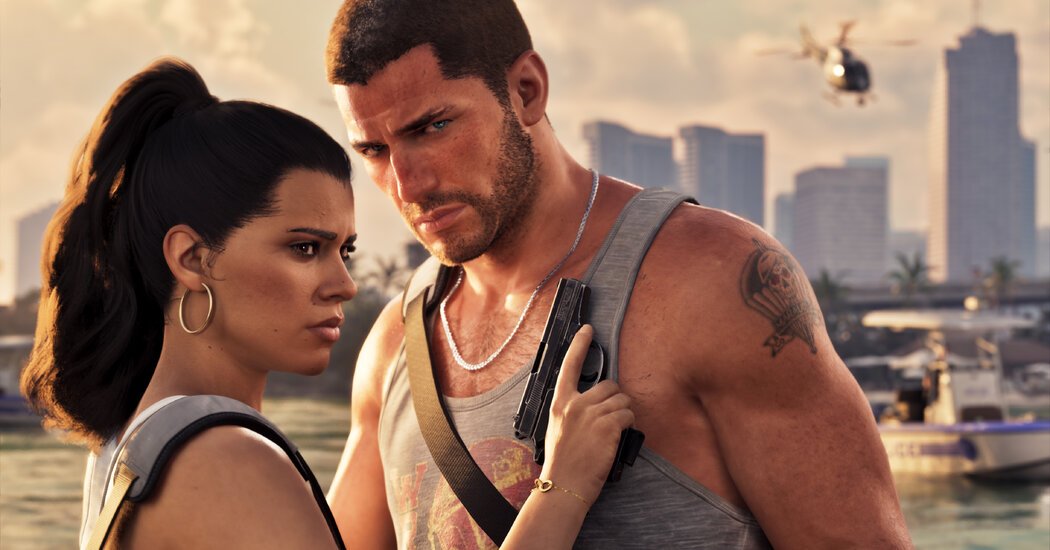
The heart of the experience lies in its two protagonists: Jason and Lucia. Rather than featuring multiple independent characters as in the previous title, Rockstar opted to build the story around a central, dynamic relationship.
The narrative depth is tied to player agency. Whether Jason and Lucia act as lovers or mere accomplices is largely dictated by how the player manages their relationship—responding to texts, hanging out, and navigating criminal life together. “It’s new for G.T.A., this idea of your actions having meaning in terms of how you treat your partner,” Nelson explained.
Bespoke Detail in a Digital Playground
The level of detail is staggering. The game features over 600,000 individual animations, dwarfing the 55,000 found in Grand Theft Auto V. According to art director Aaron Garbut, no shortcuts were taken. Every room, from the decor on the walls to the items on a table, was meticulously “art-directed” to reflect the people who inhabit those spaces.
This commitment extends to the nonplayer characters (NPCs). Eschewing algorithmic, procedural generation, the team hired a dedicated group in Los Angeles to breathe life into the citizens of Vice City, ensuring that every interaction feels intentional and human.
A Mirror to American Culture
While the developers acknowledge that the game captures a “warped version” of the American experience, they have been careful to avoid directly satirizing specific recent political events, preferring to focus on timeless themes like greed, hubris, and human folly.
The result, according to senior vice president of narrative Rupert Humphries, is a project that functions as both a critique and a love letter. As the industry looks on, Grand Theft Auto VI aims to do more than just provide a massive sandbox; it strives to create moments of serendipity—a song on the radio, a sunset hitting a building—that transform the act of playing a game into something deeply personal.
For Rockstar, the goal is clear: to craft a world that doesn’t just feel like a collection of missions, but a living, breathing reality where players can lose themselves for another decade.