








The Strategic Evolution of Global Private Equity in India
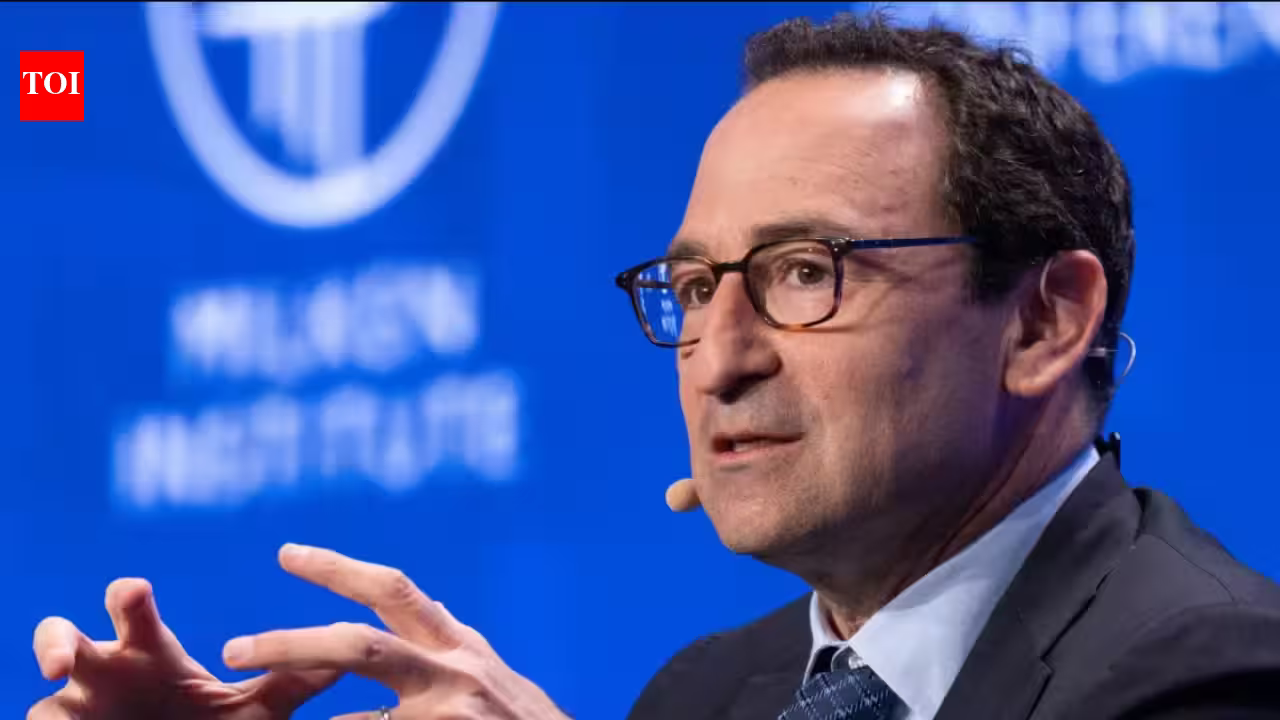
The narrative of India’s economic trajectory is currently defined by a duality: rapid, large-scale growth shadowed by periodic volatility in capital markets. Blackstone, the world’s largest alternative asset manager, serves as a primary bellwether for this landscape. With an existing portfolio of $50 billion in India, the firm operates as a significant corporate entity on par with the country’s largest business houses. The strategic commitment to double its investment footprint over the next five years—spanning private equity, real estate, infrastructure, credit, and growth investing—underscores a profound confidence in India’s long-term economic narrative despite temporary global headwinds.
The current environment, characterized by rising interest rates, geopolitical instability affecting energy prices, and concerns surrounding AI-led disruption, has tempered investor sentiment. However, from an analytical standpoint, these factors represent a market correction rather than a structural failure. For institutional investors, the current valuation reset provides a tactical entry point. As earnings growth for Indian companies continues to demonstrate resilience, particularly in the mid-teen ranges, the fundamentals of the economy remain the primary driver for long-term capital allocation.
Addressing Currency Risk and Macroeconomic Headwinds
Foreign direct investment (FDI) into emerging markets is inherently sensitive to currency fluctuations. For firms like Blackstone, currency depreciation remains the most significant headwind. When domestic assets lose value against the dollar, the threshold for internal rates of return (IRR) increases, necessitating a focus on high-growth sectors that can outpace currency erosion. This shift in strategy favors operational sectors—such as healthcare, financial services, and digital infrastructure—over assets that offer utility-like, flat returns.
India’s proactive stance on structural reforms has been instrumental in mitigating these macro risks. The successful implementation of the Goods and Services Tax (GST), the acceleration of digital payment systems, and significant upgrades to physical infrastructure—ranging from aviation hubs to logistics-heavy warehousing—have created a more investible ecosystem. While international investors often demand further liberalisation, the cumulative effect of these reforms has transitioned India from an opportunistic market to a core strategic priority.
Reforming Capital Markets for Sustainable Growth
One of the most persistent bottlenecks in the Indian market remains the regulatory framework governing corporate ownership and liquidity. Blackstone’s advocacy for easier delisting norms highlights a broader issue in corporate governance. India currently maintains a 90% shareholding threshold for delisting, which is among the highest globally. This creates a friction point that prevents the reorganization of capital and limits the ability of firms to privatize and pivot in response to changing market conditions.
Comparing India’s approach to the recent reforms in Japan, where market liberalization facilitated widespread restructuring, provides a roadmap for growth. By lowering the threshold for consolidation, India could unlock significant trapped value, incentivize better capital allocation, and provide investors with the flexibility required to refresh company strategies. Despite these hurdles, the progress in the Real Estate Investment Trust (REIT) space serves as a testament to what is possible. The rapid maturation of the REIT market has allowed for the efficient movement of capital into high-quality commercial assets, proving that when regulatory frameworks evolve, liquidity follows.
The AI Frontier: Infrastructure as the New Asset Class
As artificial intelligence permeates the corporate sector, the investment thesis for private equity has shifted from mere software adoption to the underlying physical infrastructure required to power the AI revolution. Blackstone’s investment approach views the AI boom not as a speculative bubble, but as a capital-intensive necessity. This includes the development of data centers, neocloud capabilities, and the renewable energy infrastructure required to power the immense computing demands of modern enterprises.
The financial rationale for this investment rests on the long-term nature of the demand. Unlike the telecom infrastructure build-out of the 1990s, which was often speculative and over-leveraged, the current surge in data center capacity is underpinned by long-term contracts with investment-grade hyperscalers. Furthermore, the tangible productivity gains reported by businesses—such as those using AI for high-speed diagnostic or logistical processing—validate the capital expenditure. There is an inherent residual value in this infrastructure; even if specific service providers fail, the physical assets, such as power-connected land and data facilities, retain their value, offering a defensive moat for institutional investors.
Social Dynamics and the Future of Economic Stability
Beyond pure financial metrics, the global rise in social unrest and the increasing cost of living present a complex challenge for long-term capital stability. The proliferation of digital connectivity has made social organizing easier, leading to heightened pressure on governments to manage inflation, housing costs, and energy affordability. In this context, fiscal discipline is not merely a government policy but a necessity for economic continuity.
For the private sector, the path forward requires a renewed focus on regulatory and permitting reform. In many developed and developing economies, the difficulty of building new infrastructure and housing has exacerbated social pressures. Accelerating the deployment of capital into essential services—housing, grid modernization, and transport—will be critical to absorbing the anxieties generated by rapid technological displacement. As India continues to integrate into the global supply chain, its ability to maintain growth while managing these socio-economic tensions will determine the quality and velocity of future foreign capital inflows.
The transition toward a technologically integrated economy, supported by deep infrastructure investment and measured regulatory reform, positions India as a resilient outlier in an otherwise volatile global market. Blackstone’s commitment to double its capital deployment serves as a strong signal to the international investment community that, despite the inevitable cycles of the market, the structural foundation of the Indian economy is robust, scalable, and increasingly transparent.
Disclaimer: This content is auto-generated for informational purposes only.
Source: Read Original News