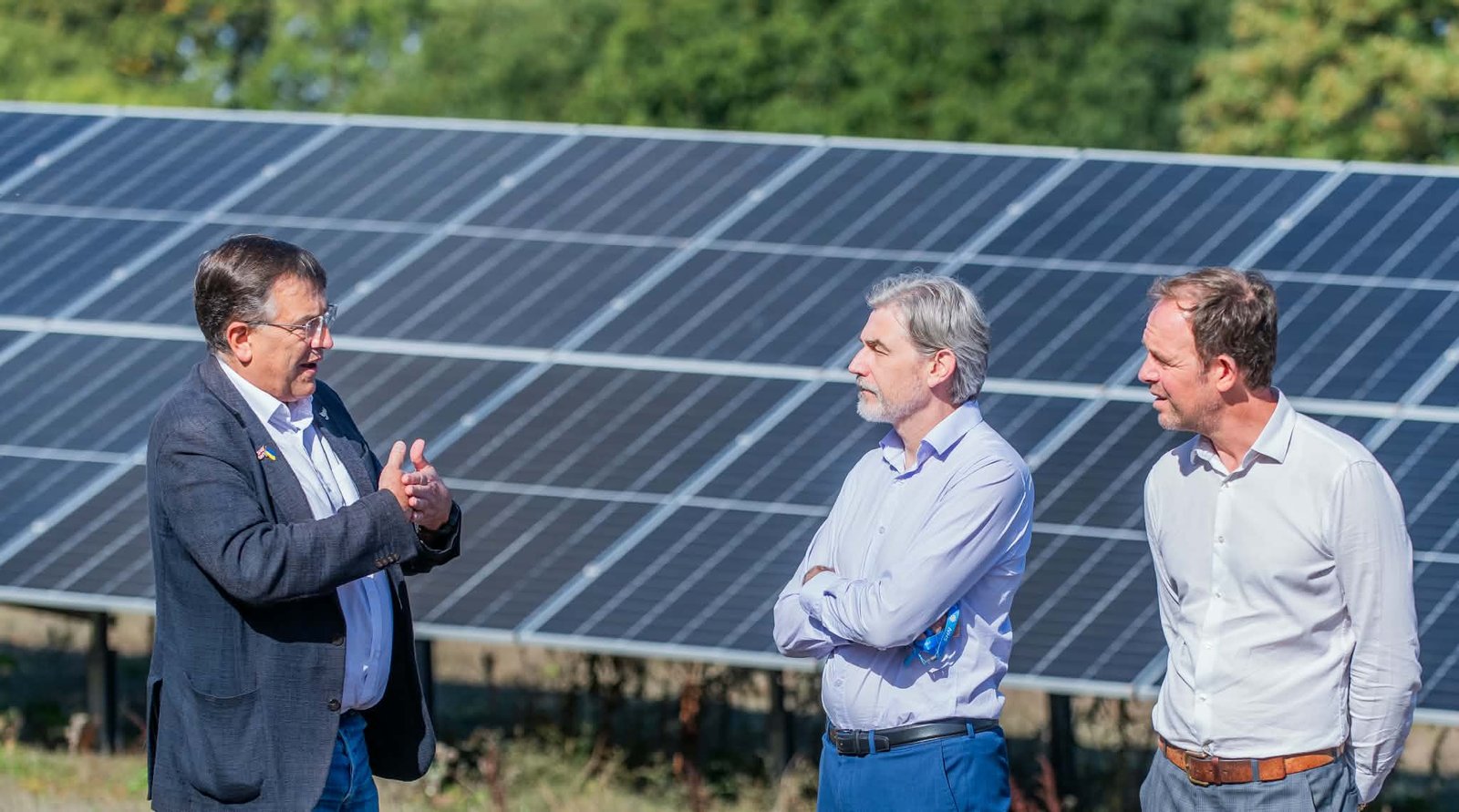










The Green Party of England and Wales is positioning itself as the primary architect of the current political discourse on climate action, claiming that the national government is increasingly pivoting toward policies originally championed by Green leadership. During a recent address, Deputy Leader Zack Polanski asserted that the legislative landscape is shifting in a direction that validates years of environmental advocacy, even as the party continues to push for more aggressive decarbonization targets.
For years, the Green Party has advocated for a transition away from fossil fuels, the expansion of green infrastructure, and a radical rethinking of economic priorities to account for planetary boundaries. According to Polanski, recent government shifts—such as increased investment in renewable energy capacity and public discourse regarding sustainable home heating—represent a delayed but welcome adoption of the Green platform.
“The ideas that were once dismissed as radical or economically unfeasible are now forming the backbone of mainstream political debate,” Polanski stated. “While we maintain that the pace of change remains insufficient to meet the challenges of the climate emergency, the fact that these policy goals are moving from the periphery to the center of government suggests that the intellectual argument has been won.”
However, the Greens remain critical of the government’s implementation strategies. While Polanski acknowledges that the government is “following the lead” in principle, he emphasizes a fundamental divide in the execution. The party argues that the government’s approach often relies on technocratic fixes and market-led mechanisms that fail to address systemic inequality or the necessity for a “Just Transition” for workers currently employed in carbon-intensive industries.
The environmental sector has seen a surge in legislative activity over the past twelve months, fueled by international pressure and the tangible impacts of extreme weather patterns in the UK. Government mandates concerning the phasing out of gas boilers and the transition to electric vehicles are key areas where Green influence is felt. Despite these movements, climate activists and the Green Party remain concerned that the government’s commitments are frequently undermined by the approval of new oil and gas exploration licenses, which they argue contradicts global climate obligations.
Polanski’s comments underscore a broader trend in UK politics where smaller parties are exerting “agenda-setting power” despite limited representation in Parliament. By consistently framing the climate crisis as an existential economic issue rather than merely an environmental one, the Greens have successfully pressured larger parties to integrate sustainability into their manifestos.
The party is now looking toward the next election cycle with a focus on what it describes as “bold, transformative policy.” Key proposals include a nationwide retrofitting program to insulate millions of homes—a move they claim would lower energy bills, stimulate local economies, and reduce carbon emissions simultaneously. They are also advocating for a significant expansion of public transport networks to move away from car dependency, a policy area they argue the current government has failed to resource adequately.
As the political establishment grapples with the dual pressures of economic volatility and environmental decline, the Green Party’s strategy of “influencing from the outside” appears to be gaining traction. Whether the government will continue to adopt these policies as substantive shifts or merely as political window dressing remains a point of contention. For Polanski and his colleagues, the goal is clear: to ensure that the transition to a net-zero future is not only inevitable but rapid enough to avert the most catastrophic consequences of global temperature rise.
As the discourse evolves, the Green Party maintains that they will continue to act as a benchmark, holding the government accountable for the distance between its recent environmental rhetoric and the reality of its ongoing fossil fuel reliance. For now, the party is content to note that when it comes to the trajectory of environmental policy, the rest of the political spectrum is finally catching up.
Disclaimer: This content is auto-generated for informational purposes only.
Source: Read Original News