









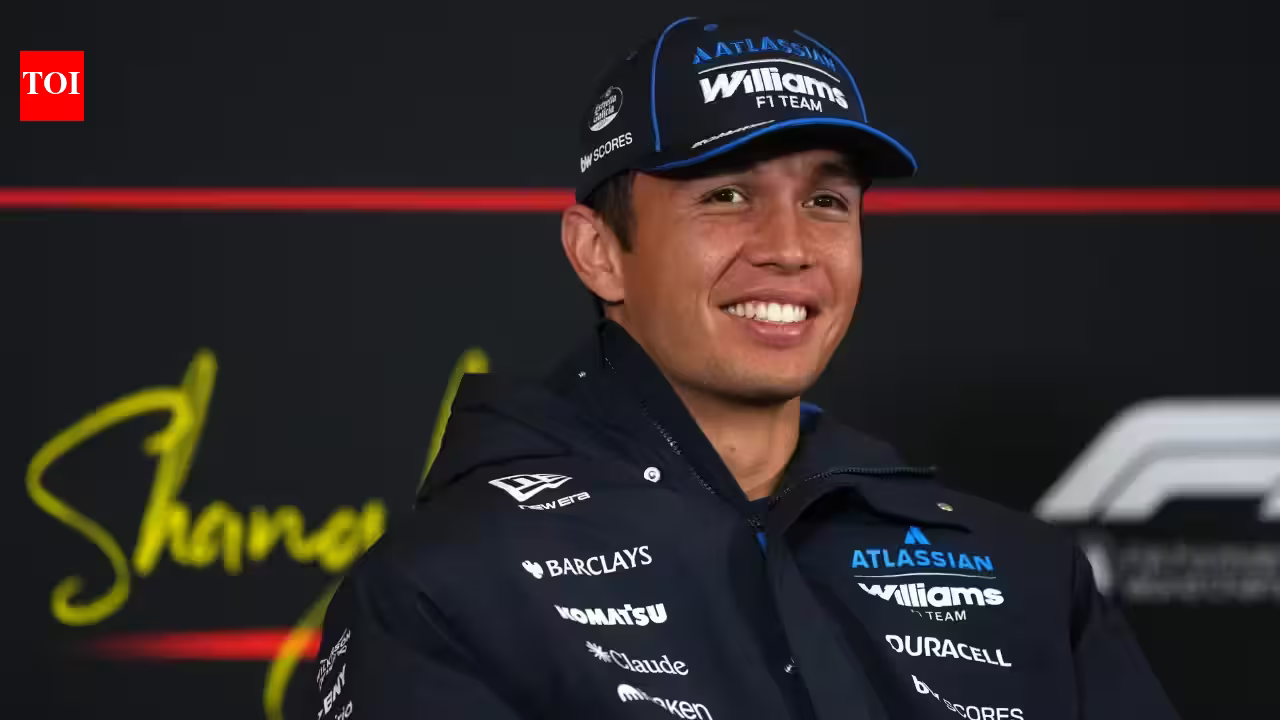
Alexander Albon has long been a standout figure on the Formula 1 grid, but as he prepares for the 2026 season’s 16th round at the iconic Sepang International Circuit, the Williams driver is reflecting on more than just lap times and championship points. For Albon, who competes under the Thai flag, the upcoming weekend in Malaysia represents a homecoming—a tangible manifestation of his deep-rooted connection to Southeast Asia.
As the paddock prepares for the race in Malaysia, Albon is embracing the rare luxury of feeling at home in foreign territory. With a family heritage that ties him directly to Thailand and a career that has seen him become a beacon for motorsport across the continent, Albon views his role as a representative of the region with profound gratitude.
“It’s lovely to kind of be able to say that I have two home races, which are Singapore and Malaysia,” Albon noted during a roundtable interaction ahead of the weekend. “In the end, my goal would be to have three, which is obviously Thailand as well. I feel like I get very embraced by Southeast Asian fans in general. I feel very lucky.”
The Expanding Footprint of Southeast Asian Racing
Albon’s ambition of a third home race is not merely a daydream; it is a project gathering significant momentum. Recent reports confirm that Thailand has officially approved a $1.23 billion bid to host a high-stakes Formula 1 street race in Bangkok. If the proposal proceeds as planned, the circuit would span 5.7 kilometers, weaving through the heart of the capital between the Krung Thep Aphiwat Central Terminal Station and the vibrant Chatuchak Park.
The proposed initial five-year contract, stretching from 2028 to 2032, would place a third Southeast Asian stop on the F1 calendar, alongside the established fixtures in Singapore and Malaysia. For Albon, this development is a natural evolution of the sport’s growth in the region. He describes the Southeast Asian nations as a “big family,” noting that the cultural and geographical proximity between Thailand and Malaysia creates a unique atmosphere for drivers and fans alike.
“In terms of my identity, more than anything, [my heritage] just gives me more exposure,” Albon explained. “I feel especially Malaysia and Thailand have a very strong connection, very strong relationship.”
The Technical Evolution of an F1 Veteran
While the prospect of a Thai Grand Prix excites him, Albon’s focus for the immediate future remains firmly fixed on the development of the Williams challenger. Now a seasoned presence on the grid—having made his debut in 2019 and returned to prominence with Williams in 2022—Albon has evolved into a critical voice in the team’s engineering department.
His role has shifted from simply piloting the car to becoming an architect of the team’s long-term technical direction. “I feel more and more involved in the process and the projects leading into next year’s cars,” Albon shared. “With experience, you take on more accountability and also you develop a trust with the engineers. They can believe in what you say and the direction that you want the car to go in.”
Albon is quick to highlight that the strength of the Williams team currently lies in the synergy between its drivers. He argues that having two experienced operators behind the wheel is a prerequisite for navigating the complexities of modern F1 development.
“I think it’s very fortunate for us that we have two drivers that are experienced. It allows us to be able to lean on each other, lean on the team and push the development forward,” he said, contrasting this with the steep learning curve faced by teams carrying a lineup of rookies. “If you have two rookies, it’s a lot harder to understand what the weak points of the car are.”
Maturity Beyond the Cockpit
The nuances of Formula 1, according to Albon, extend far beyond the friction of rubber on asphalt. The real work of a lead driver, he suggests, is the quiet, high-stakes communication conducted in team meetings and technical debriefs.
“The biggest difference is actually the maturity as a driver to speak to the relevant people within the team, to go directly to them and to discuss how to get better as a group,” Albon noted. “These are areas I feel like every year I’ve become more and more involved in, which I enjoy. It’s a part of Formula One that doesn’t get talked about a lot, but the driver has a big involvement in the way the car gets developed.”
Looking Ahead: The Triple Threat
As the lights prepare to go out at the 5.543-kilometer Sepang circuit—a track renowned for its punishing humidity, long straights, and unpredictable weather—Albon heads into the weekend with the weight of regional support on his shoulders. With qualifying set for Saturday and the 56-lap Grand Prix on Sunday, the Malaysian round serves as the second leg of his “home” circuit.
Following the festivities in Malaysia, the F1 circus will head to the Marina Bay Street Circuit for the Singapore Grand Prix from October 9-11. It is a grueling, high-intensity stretch of the calendar, but for Albon, it is a period of professional pride. He is a man who knows his identity, values his heritage, and is actively campaigning for his home country to earn its place among the pinnacle of global motorsport.
For now, the two-home-race reality is a privilege. But as the engines roar in Sepang, the vision of a future with three home races remains the ultimate ambition for one of F1’s most thoughtful competitors.
Disclaimer: This content is auto-generated for informational purposes only.
Source: Read Original News