








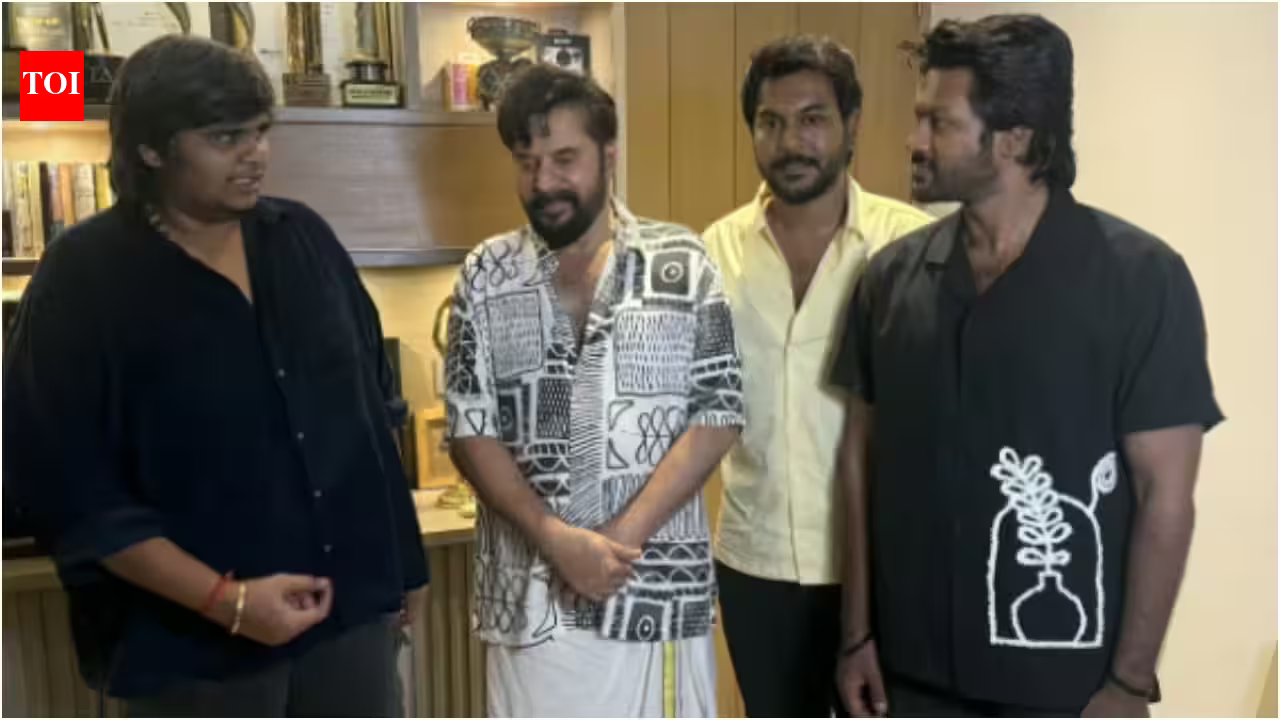
In the high-stakes world of modern Indian cinema, few filmmakers command the same level of auteur-level respect as Karthik Subbaraj. Known for his jagged, unconventional narratives and penchant for bending genre expectations, Subbaraj has officially hit a career milestone with his tenth directorial venture, Dorothy. But the validation of a milestone isn’t just measured by the numbers on a trade spreadsheet; it’s measured by the company you keep. This week, that validation arrived in the form of a glowing endorsement from none other than the “Mega Star” himself, Mammootty.
The legendary Malayalam actor, whose own career continues to reach new heights of artistic experimentation, recently sat down to watch Dorothy. Following the screening, the veteran icon met with Subbaraj and key members of the cast, offering his personal appreciation for the film’s gravity and execution. For a director who has long balanced dark, gritty storytelling with mainstream sensibilities, the nod from a titan like Mammootty serves as a career-defining accolade.
Subbaraj was quick to take to social media to express his reverence, posting a message that resonated with fans across the industry: “Thank you Mammootty sir for your wishes, time and appreciation for Dorothy. You always inspire.” It was a rare, humble moment for a filmmaker who usually lets his stylized visuals do the talking.
A Decisive Shift in Subbaraj’s Filmography
Dorothy is more than just a notch on a director’s resume; it represents a significant artistic pivot. Moving away from the high-octane, neon-drenched crime thrillers that defined his early career, Subbaraj has crafted a period piece set in the rural landscape of early 1990s Tamil Nadu. The film, which first turned heads with its premiere at the Toronto International Film Festival, trades fast-paced violence for an introspective look at the societal fractures of the time.
The narrative anchors itself on the bond between two childhood friends, Karthi and Subbu—portrayed by Rishikanth and Sananth, respectively. Against a backdrop of rigid patriarchal traditions, caste-based friction, and the looming shadows of social inequality, their friendship becomes the crucible through which the audience experiences the harsh realities of the era. It is a slower, more deliberate burn than what Subbaraj’s regular audience might expect, yet it retains that trademark precision in character study.
The Heart of the Story: Keerthy Suresh
The film’s emotional center—and its titular force—is Keerthy Suresh. As Dorothy, she serves as the catalyst who arrives to disrupt the boys’ narrow worldview. Suresh, an actor known for her ability to inhabit roles that require extreme emotional vulnerability, delivers a performance here that feels both ethereal and grounded.
Her presence is the pivot point upon which the film’s more tragic elements turn. As the narrative progresses, the once-unshakeable friendship between Karthi and Subbu is put to the ultimate test. The plot evolves into a haunting quest, with one friend forced to track down the other years after their lives have diverged. Themes of guilt, the weight of the past, and the preservation of human dignity are front and center, culminating in what critics and early audiences are calling a “groundbreaking” climax—a finale that demands silence from the audience as the credits roll.
A Milestone Collaboration
A major talking point surrounding Dorothy has been the marriage of Subbaraj’s visual aesthetic with the legendary musical sensibilities of Ilaiyaraaja. For his tenth film, the director secured his first collaboration with the Maestro, a pairing that many had hoped for since Subbaraj’s debut days.
Ilaiyaraaja’s score does not merely support the film; it breathes through the rural landscape. By grounding the 90s setting in authentic, atmospheric soundscapes, the music elevates the internal struggles of the protagonists. It’s a marriage of craft that suggests Subbaraj is moving into a phase of his career where the “feeling” of a scene is just as critical as the plot mechanics. The praise from Mammootty, a man who has worked with the greatest composers in history, likely stems from this seamless synergy between the director’s vision and the maestro’s score.
The Box Office Reality
While the critical reception has been glowing, the box office performance of Dorothy tells the story of a film finding its footing in a crowded market. According to data from Sacnilk, the film has clocked in an India net collection of ₹9.15 crore, with a total worldwide gross hovering around ₹10.61 crore.
Starting with an opening of ₹90 lakhs on September 25, the film saw an expected growth spurt over its first weekend, peaking at ₹1.40 crore on its third day. What is perhaps most impressive is the film’s “hold”—maintaining consistent daily earnings throughout its second week despite the challenges inherent in a non-commercial, niche drama. While the Tamil version accounts for the lion’s share of the earnings at ₹8.94 crore, the film has also managed to make a small footprint in the Telugu-speaking regions, signaling that the “Karthik Subbaraj brand” remains a potent draw outside of his home state.
Looking Ahead
As Dorothy continues its theatrical run, the conversation surrounding the film has shifted from its commercial viability to its long-term legacy. In an era where Indian cinema is often obsessed with “pan-India” spectacle and massive franchise tentpoles, Dorothy stands out as an act of defiance. It is a film that demands to be felt rather than just watched.
By securing the approval of Mammootty and delivering a project that experiments with both narrative structure and sonic atmosphere, Karthik Subbaraj has reaffirmed his status as one of the most vital voices in South Indian cinema. As for the audience, the film serves as a reminder that the best cinema doesn’t always roar—sometimes, it just whispers a truth so profound that it lingers long after you leave the theater.
Disclaimer: This content is auto-generated for informational purposes only.
Source: Read Original News