






Sheikh Hasina Criticizes Bangladesh’s “Immature” Decision to Skip BRICS Summit
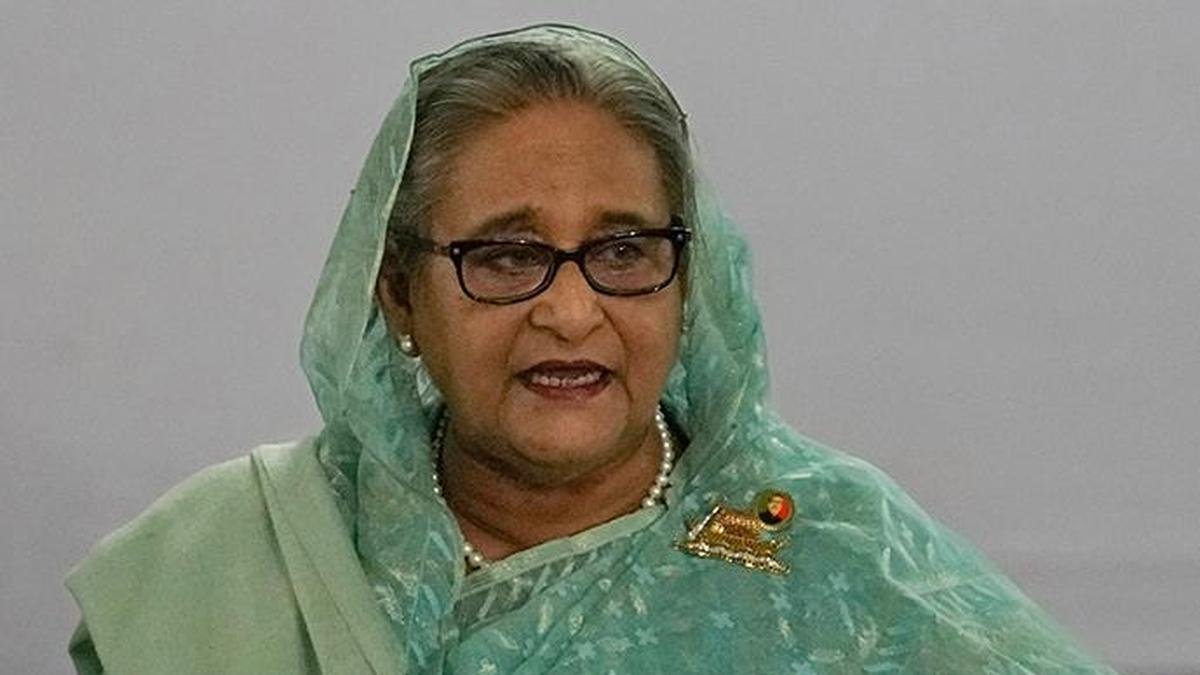
Former Bangladesh Prime Minister Sheikh Hasina has launched a scathing critique of the current administration’s foreign policy, labeling the decision by Prime Minister Tarique Rahman to skip the recent BRICS summit in New Delhi as “immature” and detrimental to national interests.
In an exclusive interview, the former leader emphasized that foreign policy should be anchored in long-term economic and social prosperity rather than short-term political posturing. She argued that the BRICS summit, held on September 12-13, represented a vital platform for engagement with major emerging economies, and that Bangladesh’s absence effectively squandered a significant opportunity for development.
A Question of Diplomatic Maturity
New Delhi had extended an invitation to Tarique Rahman in his capacity as the current chair of the Bay of Bengal Initiative for Multi-Sectoral Technical and Economic Cooperation (BIMSTEC). Addressing speculation that her presence in India influenced the decision to abstain, Hasina remarked that such a personal consideration would be deeply unfortunate.
“Relations between two countries cannot be determined by personal considerations or political sensitivities involving one individual,” she stated. Drawing a historical parallel, she recalled that even during the military-backed government of Ziaur Rahman, who came to power through an unconstitutional process, diplomatic protocols were maintained. She noted that when Ziaur Rahman visited New Delhi in 1979, she was residing there, yet the state visit proceeded unimpeded.
Balanced Foreign Policy and Economic Growth
Reflecting on her own tenure, Hasina highlighted the importance of a “mature, balanced, and confident” foreign policy. During her years in office, she maintained that Bangladesh successfully cultivated robust partnerships with India, China, Japan, and the West simultaneously.
“Friendship with one country never required hostility towards another,” she asserted. She warned that the current government’s tendency to leverage anti-India rhetoric for domestic political gain is counterproductive and undermines the national interest. She reaffirmed her commitment to the guiding principle of her father, Sheikh Mujibur Rahman: “Friendship to all, malice to none.”
A Nation in Crisis
Beyond foreign policy, Hasina described the current situation in Bangladesh as a “grave national crisis.” She cited the erosion of democratic space, citing the weaponization of the judiciary for political vendettas, restrictions on media freedom, and the persecution of political opponents.
“Millions of supporters have been denied normal political rights. A country cannot return to stability by excluding such a large section of its own people,” she noted, adding that the marginalization of the Awami League has created a vacuum that allows extremist forces to flourish.
The Path Ahead
Despite facing a death sentence handed down by a local court—a verdict she dismissed as a politically motivated travesty of justice—the 78-year-old leader remains resolute in her intention to return to Bangladesh. She framed her potential homecoming not as a personal pursuit, but as a critical step toward restoring the rule of law, democracy, and the integrity of the electoral process.
“My return is part of the struggle to restore democracy, voting rights, and the rule of law,” Hasina concluded. “The people of Bangladesh must be allowed to decide their own future through a free, fair, and inclusive election.”
Disclaimer: This content is auto-generated for informational purposes only.
Source: Read Original News