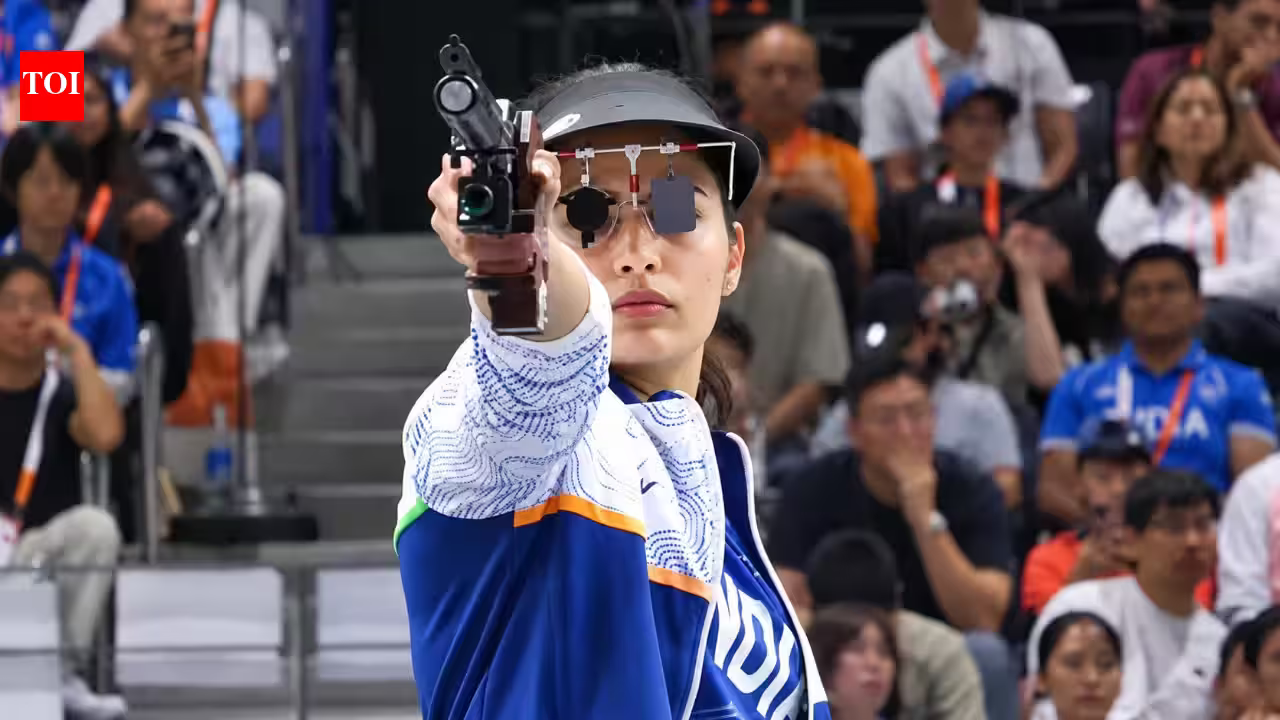







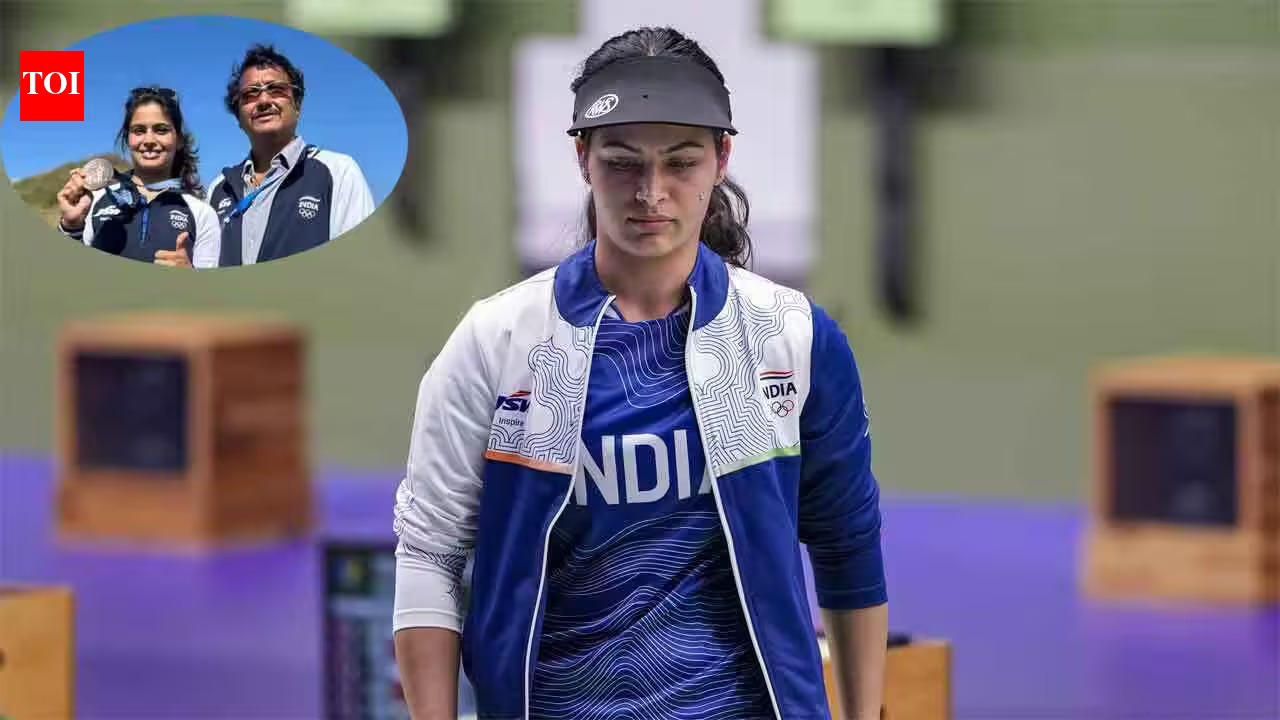
NAGOYA: The weight of expectation hung heavy in the air at the shooting range, but for Manu Bhaker, the pressure of the competition was eclipsed by the profound absence of a mentor who had shaped her career. Finishing fifth in the women’s 10m air pistol event with a score of 181.1, the 24-year-old Indian shooting star found herself navigating a landscape that felt markedly different from the triumphant highs of previous campaigns.
While the fifth-place finish mirrored her standing from the last edition of the Asian Games, the internal reality for Bhaker had shifted entirely. In Hangzhou, she had stood tall as part of a gold-medal-winning trio, bolstered by the presence of her long-time coach and guiding force, Jaspal Rana. This time, in Nagoya, the podium remained elusive, and the man who had been the architect of her technical and mental framework was gone, having passed away in June.
A Legacy Beyond the Range
As Bhaker navigated the post-event mixed zone, her composure was fragile. When the conversation naturally shifted to the legacy of Rana—a titan of the sport who amassed eight Asian Games medals, including four golds—the athlete could no longer contain her grief. Tears streamed down her face as she reflected on the deep bond the two had shared.
“We were really looking forward to Japan,” Bhaker said, her voice catching as she briefly stepped away to compose herself. “I remember what he said, not once or twice, but all the time. It just stays with you. When a person has been a big part of your life, it just stays. It’s very natural.”
For Bhaker, Rana’s influence transcended mere marksmanship. He was a relentless advocate for the integrity of effort. “Of all the things he said, what I remember the most is about the process,” she explained. “He was just so adamant about the process—that at any given point in your life, you have to be able to give your best performance and follow your process.”
The Unpredictability of Life
The loss of Rana, compounded by the recent passing of her grandmother, has forced the young Olympian to confront a harsh reality far removed from the cold precision of target practice. The intensity of the grief has provided a sobering perspective on her professional ambitions.
“Life is just very unpredictable,” she mused. “So, live your life to the fullest, be kind to everyone.”
Despite the emotional turmoil that has characterized her last few months, Bhaker refused to lean on her personal circumstances as an excuse. She acknowledged the palpable expectations of her supporters and expressed a raw, unfiltered disappointment in her own result. “I genuinely tried my best,” she stated. “I am really sorry that I was not able to make it to the podium. I hope that I will be able to do better.”
A Rollercoaster Performance
The mechanics of the final itself served as a microcosm of the turbulence Bhaker has faced off the range. It was a performance defined by dramatic peaks and valleys. She began with a steady hand, occupying the third spot after the opening set, which suggested that a medal might indeed be within reach. However, an uncharacteristic 8.9 sent her plummeting to seventh place, threatening an early exit.
True to the grit that has defined her career, Bhaker clawed her way back into contention. A series of high-pressure shots—including a clutch 10.8—temporarily resurrected her podium hopes, propelling her back into third place. Yet, the consistency required to secure a medal proved fleeting; a 9.6 in the subsequent series effectively extinguished her chances, locking her into the fifth-place finish.
Her current coach, Jelena Arunovic, noted that while the result was disappointing, it reflected a marginal improvement over the high-stakes practice sessions conducted in Bhopal. “During our training in Bhopal, finals-like practice sessions were organised,” Bhaker shared. “Compare the performance from there to here, it’s slightly better. This is what my coach told me as well.”
As she eventually exited the venue, the small, cheerful panda pimple patch on her left cheek stood in sharp, ironic contrast to the somber mood of the afternoon. For Manu Bhaker, Nagoya represents a difficult chapter in a career that has already seen its share of tests, but as she continues to process the loss of Jaspal Rana, her commitment to the “process”—the very philosophy her mentor instilled in her—remains the guiding light for her future endeavors.
Disclaimer: This content is auto-generated for informational purposes only.
Source: Read Original News