




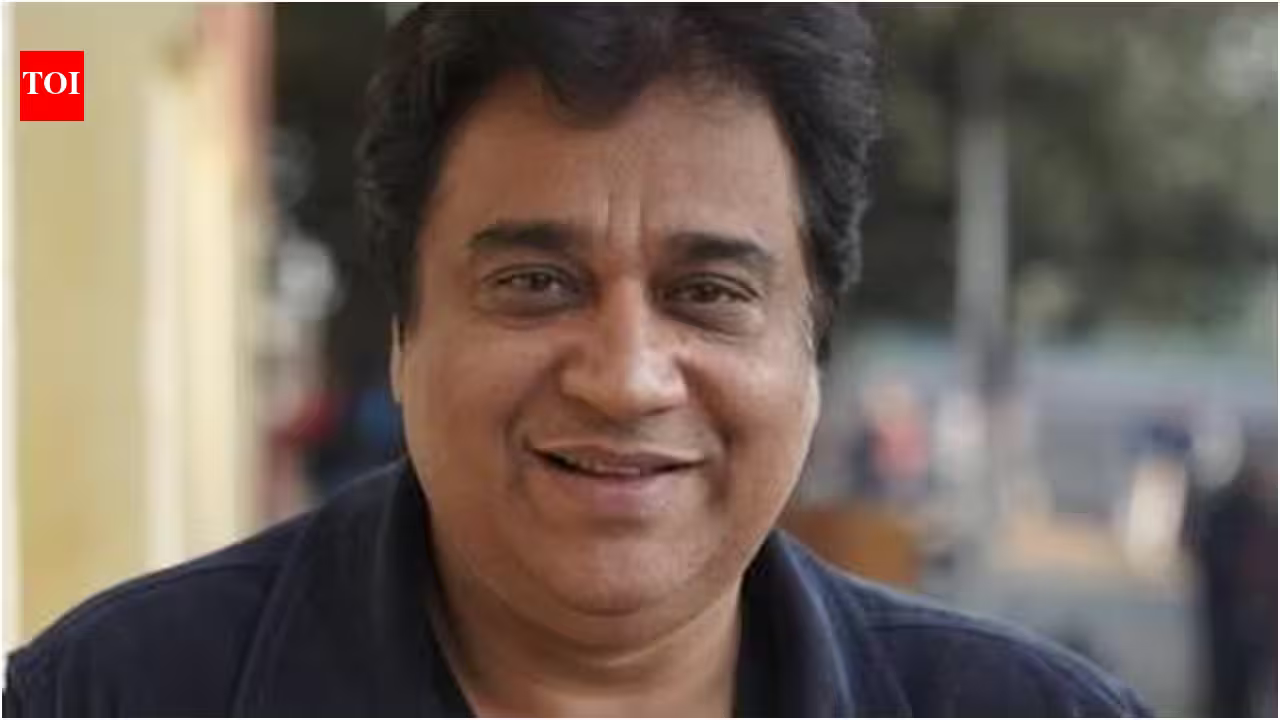
Renowned actor Manu Rishi Chadha has recently taken on the challenging and controversial role of General Pervez Musharraf in the compelling new series, ‘Operation Safed Sagar’. This series delves into the events surrounding the 1999 Kargil War, portraying Musharraf, who would later ascend to the presidency of Pakistan, as the principal architect of the aggression that ignited the conflict. Chadha’s portrayal has, predictably, elicited a diverse range of responses from the audience, oscillating between fervent admiration for his acting prowess and outright disdain for the character he embodies.
Chadha candidly shared his experiences regarding the public’s reaction, noting a fascinating dichotomy in the feedback he has received. He revealed in an interview with Hindustan Times that his social media direct messages are overflowing with comments. One particular message encapsulated the paradox perfectly: “Someone wrote that he wants to slap me for the act and hug me for my work. I was like… please don’t slap as if others too feel the same it will be too much (laughs). I feel that the hate is also love which means the work was appreciated.” This sentiment underscores the effectiveness of his portrayal, where the audience’s strong negative feelings towards the historical figure are so well-incited that they spill over, albeit playfully, onto the actor.
The actor acknowledged that he anticipated this complex reception from the very beginning of the project. He recounted a common message he’s been receiving: “Manu bhai jitni nafrat thi (Musharraf) woh double ho gaya par aapse pyar ho gaya! I want ki woh nafrat bahi rahe.” This illustrates that while viewers might harbor resentment for Musharraf due to his actions during the conflict, their appreciation for Chadha’s dedication to his craft overrides that feeling. Embodying the persona of Musharraf was no simple feat, and Chadha deliberately opted against excessive reliance on existing footage of the former general. He explained, “I just saw 1-2 videos but then I decided not to, otherwise it will become caricaturish. Initially, my first question was how do I look like him? Also, hero ki duniye mein villain banna and that too a real person was a challenge. But, my director Oni Sen and creators Abhijeet Parmar and Kushal Srivastava were confident.” This deliberate artistic choice allowed him to build a performance that was deeply rooted in the character’s psychology rather than merely a superficial imitation.
During his preparation, Chadha sought guidance from fellow actor Nawazuddin Siddiqui, who is renowned for his intense and nuanced performances. Chadha recounted, “I was wondering how to prepare and I got a message from Nawaz(uddin Siddiqui, actor) that let’s meet for lunch. I asked him how he played (Saadat Hasan) Manto in the film and he was like there was no reference of him except his photo and work so created and worked on his human side – right or wrong! So, I decided that I will just follow my director and creators’ vision.” This advice proved pivotal, guiding Chadha to focus on the human complexities and motivations of Musharraf, rather than merely his public image. The production team ensured physical accuracy, but they granted Chadha complete artistic freedom to construct the character’s inner world. He stated, “Kahin mimick na ho jaye – yeh dar bhi rakha aur jimmedari bhi rakhi! As Indian, I can hate him but as actor I can’t! My process was that after wearing uniform I will become true to it and Pakistan. I started believing that I am Musharraf who is very loyal and honest to his country, his extreme hatred (for India) and his (Kashmir) mission. My nervous energy helped me focus.” This introspection allowed him to inhabit the character authentically, understanding Musharraf’s perspective, even if inherently flawed and driven by an extreme ideology.
To maintain the intensity and focus required for such a demanding role, Chadha intentionally distanced himself from casual conversations and social interactions on set. This deliberate isolation helped him remain immersed in Musharraf’s mindset. He elaborated, “I used to switch off when I used to see Indian wadiyan and meet amazing people. Naseer(uddin Shah) bhai always used to talk about switching on and off but for the first time in my career I actually learnt this,” he reflected, adding, “People know me for improvising on my characters but I did not do it at all in this project.” This rigorous dedication to his craft, even foregoing his usual improvisational style, speaks volumes about the depth of his commitment to portraying General Pervez Musharraf with such chilling authenticity.