









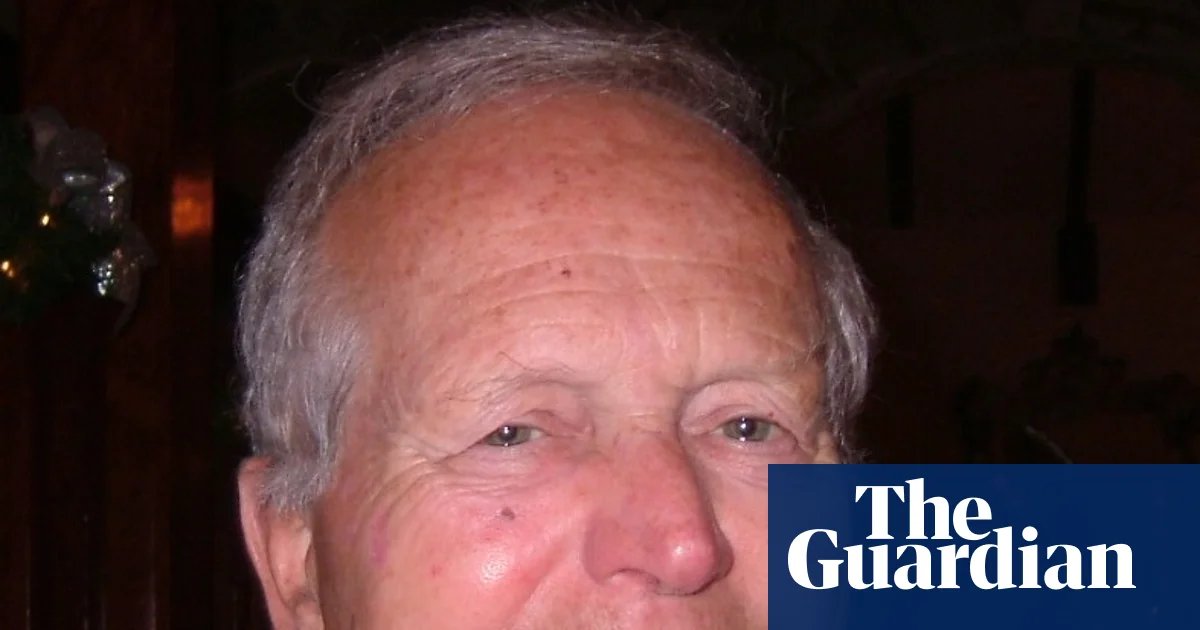
Iain Thornton: Pioneering Scientist Who Shaped Modern Environmental Geochemistry
Iain Thornton, a visionary scientist whose decades of research transformed our understanding of how the natural and industrial world impacts human health, has died at the age of 91. A foundational figure in the field of environmental geochemistry, Thornton’s work bridged the gap between soil science and public health, fundamentally changing how governments monitor toxic pollutants.
Born in South Shields, Tyne and Wear, the son of a delicatessen owner and a housewife, Thornton’s career began after he earned a degree in agricultural sciences from King’s College, Durham. Following a stint as a soil scientist in The Gambia, he joined Imperial College London in 1964, a move that would define his lifelong contribution to science.
Mapping the Earth’s Chemistry
Thornton’s early career at Imperial was marked by a transformative partnership with John Webb. Together, they embarked on a monumental project to map the chemical composition of soils and sediments across the United Kingdom. This effort culminated in the 1978 publication of the Wolfson Geochemical Atlas of England and Wales. The Atlas was a global milestone, providing a blueprint for systematic geochemical mapping that served mineral exploration industries and public health officials alike.
When Thornton took the helm of the Applied Geochemistry Research Group (AGRG) in 1979, he pivoted his focus toward the potential dangers of heavy metals. This shift led to one of his most notable public investigations: the study of cadmium levels in the village of Shipham, Somerset. While intense media speculation had sparked fears of a health crisis, Thornton’s rigorous scientific investigation concluded that the levels, while elevated, did not pose a conclusive threat to residents, effectively quelling a potential moral panic.
A Legacy of Public Health Reform
Beyond the headlines, Thornton’s work led to undeniable improvements in public safety. His team’s investigations into urban lead contamination were instrumental in the scientific evidence-based push to remove lead additives from petrol in the UK and internationally. The result was a dramatic and lasting decline in blood lead concentrations in urban children, a victory for environmental health policy that stands as a core part of his legacy.
In 1988, reflecting the evolution of his work, the AGRG was renamed the Environmental Geochemistry Research Group, and Thornton was appointed as a professor in the Centre for Environmental Technology at Imperial.
A Lasting Impact
Thornton’s influence extended far beyond the laboratory. He was a founding member of the Society for Environmental Geochemistry and Health in 1970, serving as its president from 1985 to 1987. His international reputation earned him membership in the Norwegian Academy of Science and Letters, among numerous other global honors.
Colleagues remember him not only as an academic powerhouse but as a man of great warmth. An avid fly-fisherman, Thornton was known to carry his rod on his travels across the globe, frequently delighting those around him with Geordie songs from his youth.
Iain Thornton is survived by his wife, Lyn Foley, a midwifery tutor, his two daughters from his first marriage, Diana and Katharine, and seven grandchildren. His life’s work serves as a reminder of the critical importance of the ground beneath our feet and the profound responsibility of those who seek to understand its hidden dangers.