








India and Uzbekistan Elevate Ties to Comprehensive Strategic Partnership, Targeting $5 Billion in Trade
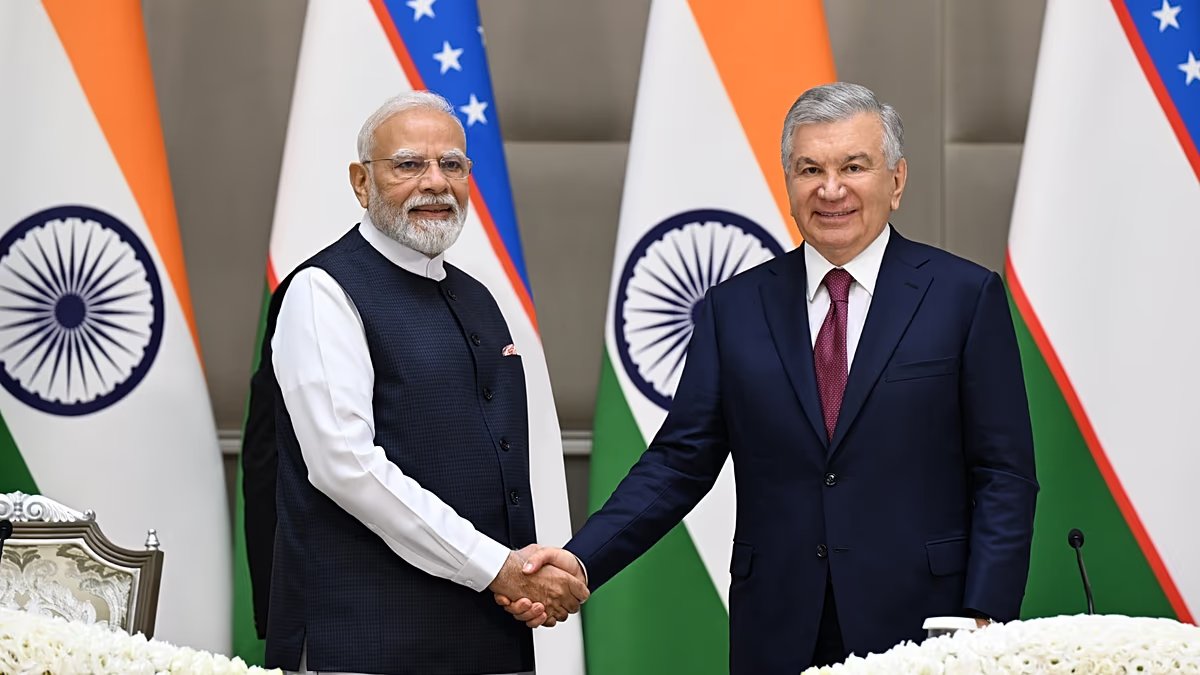
TASHKENT – In a significant move to reshape Central Asian geopolitics and bolster energy security, India and Uzbekistan have officially upgraded their diplomatic relationship to a “Comprehensive Strategic Partnership.” The announcement came during Prime Minister Narendra Modi’s state visit to Tashkent, where the two nations outlined an ambitious roadmap for economic, energy, and security cooperation.
Central to the visit is a bold vision to increase bilateral trade to $5 billion (€4.29 billion) by 2030, a substantial leap from the $1.3 billion recorded last year.
Securing Energy and Critical Minerals
Energy cooperation took center stage as New Delhi and Tashkent moved closer to finalizing a new, long-term uranium supply agreement. India, which is aggressively pursuing an expansion of its nuclear power capacity to 100 GW by 2047, relies on international partners to fuel its civilian reactors under International Atomic Energy Agency (IAEA) safeguards.
While India currently imports uranium under a 2019 contract—having received 600 metric tonnes of the 1,100-tonne commitment as of March 2025—the new memorandum on mining and geological resources signals a deeper, long-term commitment. This pact is expected to secure stable access to critical minerals, bolstering India’s energy independence.
A Digital Bridge and Economic Integration
To facilitate the ambitious $5 billion trade target, the two governments are establishing a dedicated working group to identify and dismantle non-tariff barriers. The leaders also committed to advancing a potential Preferential Trade Agreement (PTA), aiming to streamline manufacturing and supply-chain logistics between the two nations.
In a move to modernize commerce, India’s NPCI International Payments Limited signed a commercial agreement with Uzbekistan’s National Interbank Processing Centre. This partnership will introduce India’s UPI-enabled payment systems to Uzbekistan, allowing Indian travellers to make seamless digital payments—a rollout expected to be completed within the next year.
Furthermore, both nations pledged to enhance multimodal transport connectivity to lower freight costs for the landlocked Central Asian state, ensuring smoother transit for goods and services.
Security and Geopolitics
The diplomatic upgrade includes a new foreign minister-level mechanism to oversee the partnership and an elevation of the Intergovernmental Commission to ministerial rank. Defence cooperation, currently anchored by the “Dustlik” joint military exercises, is set to expand with new collaborative opportunities between the two nations’ defence industries.
Amid rising regional tensions, both leaders reaffirmed a “zero-tolerance” stance toward terrorism, calling for intensified intelligence sharing and counter-terrorism coordination. Uzbekistan also formally signaled its support for India’s long-standing bid for permanent membership in a reformed UN Security Council.
Deepening People-to-People Ties
Beyond the high-level policy shifts, the visit emphasized the cultural and educational bridges connecting the two nations. With approximately 16,000 Indian students—largely in the medical field—currently studying in Uzbekistan, the two governments adopted a tourism cooperation program for 2026–2028. This follows a 30-day visa-free regime for Indian citizens and the expansion of air links to 14 flights per week.
During the ceremony, Prime Minister Modi was awarded the Oliy Darajali Do‘stlik Order, the highest honor Uzbekistan bestows upon foreign leaders.
Reflecting on the milestone, which marks 15 years of formal strategic relations, Prime Minister Modi stated, “A stronger India-Uzbekistan partnership will be a powerful force for peace, progress and prosperity in Central Asia.”
As the two nations navigate an increasingly complex global landscape, this Comprehensive Strategic Partnership stands as a testament to their shared interest in stability, economic growth, and regional integration.