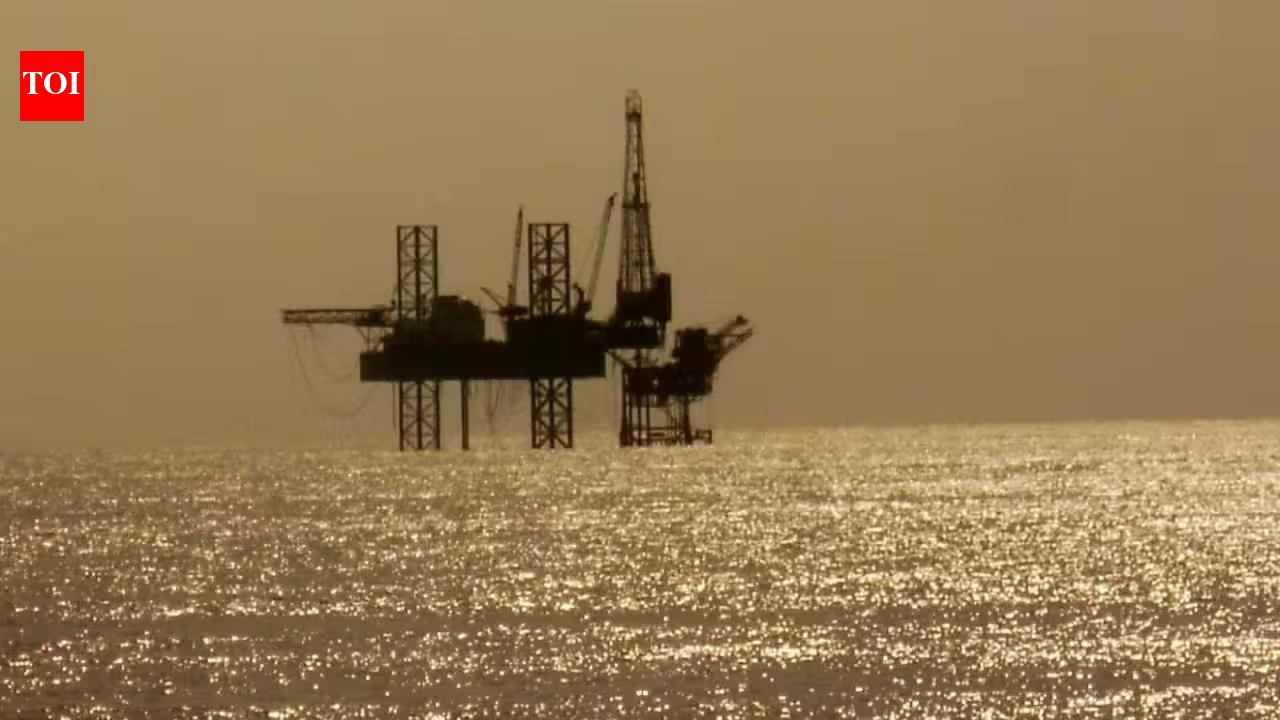









India Fortifies Energy Security: New Strategic Petroleum Reserves Planned for Bina, Bikaner, and Mangalore Expansion
NEW DELHI: India is actively pursuing a robust expansion of its strategic petroleum reserves, with ambitious plans for new facilities in Madhya Pradesh and Rajasthan, alongside a significant capacity boost in Karnataka. This proactive strategy aims to insulate the nation from global supply disruptions and bolster its energy independence.
is bolstering its energy security by planning strategic reserves of crude oil
(representative image)
The government-owned Indian Strategic Petroleum Reserves Ltd (ISPRL), a specialized vehicle tasked with managing these critical assets, is spearheading these initiatives. According to a recent parliamentary committee report, ISPRL has completed a feasibility study for underground caverns in Bikaner, Rajasthan, and is in the final stages of its review. Similarly, a pre-feasibility study for a new facility in Bina, Madhya Pradesh, has been successfully concluded, with a detailed feasibility report slated for commencement shortly.
These new projects complement the ongoing expansion efforts at Mangalore, Karnataka, where a substantial 1.7 million tonne (MT) storage facility is being planned adjacent to its existing Phase-I operations. ISPRL has already completed the feasibility study for this expansion, acquired a significant 155 acres of land, and is actively pursuing Special Economic Zone (SEZ) notification for 66 acres of the site. The construction of this crucial facility will be undertaken by the Oil and Natural Gas Corporation (ONGC).
Current Reserves and Phase-II Progress
India currently maintains strategic oil reserves totaling 5.3 MT. These existing facilities, developed under Phase-I, are strategically located at Mangalore and Padur in Karnataka, and Visakhapatnam in Andhra Pradesh. Managed by ISPRL, these reserves are designed to act as a crucial buffer against global supply chain disruptions, currently capable of meeting approximately 9.5 days of the country’s crude oil requirement.
In a further commitment to energy resilience, the government is actively implementing its Phase-II expansion plan, which will add an additional 6.5 MT to the national reserves. This includes 2.5 MT at Padur and a substantial 4 MT at Chandikhol in Odisha. Both projects received government approval in July 2021. Significant progress has been made at Chandikhol, where 400 acres of land have been acquired, and the Request for Proposal (RFP) is currently under review. At Padur-II, ISPRL formalized its commitment by signing the concessionaire agreement with the selected bidder in October 2025, with financial closure now underway.
Parliamentary Scrutiny and Future Outlook
These significant developments have been highlighted in the latest action-taken report by the parliamentary standing committee on petroleum and natural gas. The committee has underscored the importance of timely project completion and urged the Ministry of Petroleum and Natural Gas to work towards achieving the global benchmark of maintaining 90 days of crude oil storage.
Specifically, the committee has implored the petroleum ministry to ensure the prompt finalization of RFPs, SEZ notifications, and financial closures within the stipulated timelines. Furthermore, it stressed the need for optimal utilization of funds while relentlessly pursuing the global standard of 90 days of crude oil storage within the country as soon as practically feasible.
In light of ongoing global geopolitical uncertainties, the committee has also advised the ministry and oil companies to proactively explore additional cavern sites in areas exhibiting suitable geological conditions. This recommendation underscores a strategic long-term vision to further fortify India’s energy security and resilience against unforeseen disruptions.
This comprehensive expansion of strategic petroleum reserves represents a critical step for India in safeguarding its economic stability and ensuring a consistent energy supply for its growing demands, reflecting a proactive approach to national security in an unpredictable global landscape.