









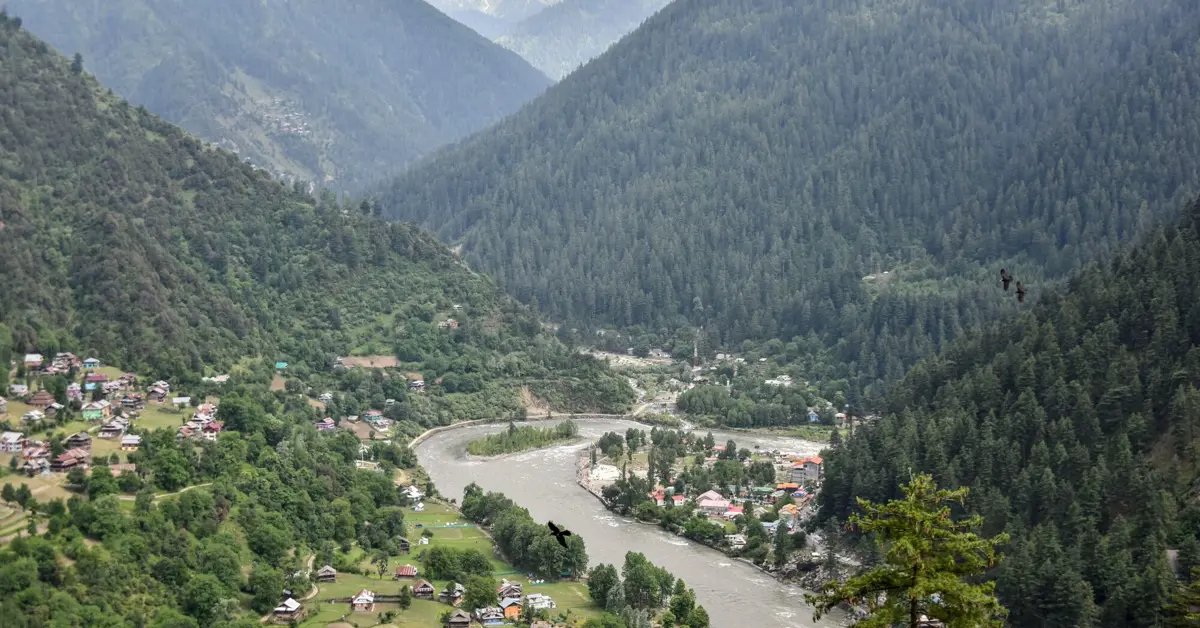
International Tribunal Rules India Must Uphold Indus Waters Treaty, Curb Kashmir Hydropower Project
THE HAGUE – In a significant legal development that threatens to escalate regional tensions, the Permanent Court of Arbitration in The Hague issued a ruling on Monday reaffirming the legal standing of the 1960 Indus Waters Treaty. The tribunal’s decision mandates that India must adhere to the decades-old agreement and limit construction on a contested hydropower project in the Kashmir region, directly challenging New Delhi’s recent attempts to bypass the pact.
The landmark ruling serves as a major victory for Islamabad, which has long relied on the World Bank-brokered treaty to secure its vital water supplies. The tribunal explicitly rejected India’s assertion that the agreement could be placed “in abeyance,” confirming that the treaty remains in full force and effect despite the heightened hostilities between the two nuclear-armed neighbors.
A Fractured Agreement
The Indus Waters Treaty has long been regarded as one of the world’s most successful water-sharing agreements, having survived multiple wars and decades of geopolitical instability. It allocates the rights of six rivers flowing through the region: India holds rights to three eastern rivers, while Pakistan maintains access to the western Indus, Jhelum, and Chenab systems.
India initiated a move to suspend the treaty following a military standoff last year, sparked by a deadly attack on tourists in Indian-administered Kashmir. New Delhi blamed Pakistan for the violence—allegations Islamabad has consistently denied—and subsequently declared that its obligations under the water-sharing pact were no longer binding.
India Rejects Ruling
New Delhi has responded to the tribunal’s decision with defiance. In an official statement, the Indian government reiterated its stance that the arbitral body lacks legitimacy.
“India has consistently maintained that the very establishment of this alleged arbitral body constitutes a grave violation of the Indus Waters Treaty,” the statement read. “Accordingly, India has never appeared before this body and has refused to take any cognizance of its earlier pronouncements. Its pronouncements, now or in the future, will have no effect on India’s actions in connection with the projects being undertaken by India.”
The ruling specifically impacts the ongoing development of infrastructure on the western rivers. While the treaty permits India to build certain hydroelectric projects on these waters, it imposes strict design and operational regulations to protect the flow to Pakistan, which is heavily dependent on these basins.
Impact on Pakistan’s Economy
For Pakistan, the stakes are existential. Approximately 90% of the country’s population resides within the Indus River basin, and more than 90% of its agricultural output—including staples such as wheat, rice, and cotton—relies on the water system. With agriculture accounting for roughly a quarter of Pakistan’s gross domestic product, any reduction in water flow could have catastrophic economic consequences.
Pakistan’s Foreign Minister, Ishaq Dar, hailed the court’s unanimous decision on social media, describing it as a triumph for international law.
“The award vindicates Pakistan’s consistent position that a binding international treaty cannot be unilaterally suspended or set aside,” Dar wrote on X. “India must fully comply with its obligations under the treaty.”
Future Uncertainty
As India continues its hydropower projects in the Kashmir region despite the ruling, the divide between the two nations appears set to widen. The intersection of water security, national sovereignty, and regional security remains a volatile flashpoint, with the international community now watching to see if diplomatic pressure can force compliance from New Delhi or if the long-standing treaty faces its most perilous chapter to date.