









India Pushes to Revitalize 15-Year-Old Trade Pact with Japan to Address Growing Deficit
NAGOYA, JAPAN – The Indian government has formally reiterated its call for a comprehensive review of the 15-year-old Comprehensive Economic Partnership Agreement (CEPA) with Japan. As New Delhi seeks to modernize the agreement, officials are aiming to rectify long-standing imbalances that have hindered Indian exporters from fully benefiting from the bilateral partnership.
Union Minister of Commerce & Industry Piyush Goyal, currently on a diplomatic visit to Japan, signaled a renewed momentum in negotiations. This push comes on the heels of a breakthrough last month, during which the Prime Ministers of both nations agreed that the decade-and-a-half-old framework requires an urgent update to reflect contemporary global trade realities.
Addressing the Trade Imbalance
The urgency for the review is underscored by widening trade deficits. Current figures place bilateral trade at $27.5 billion, with India’s exports accounting for only $6 billion. This has resulted in a trade deficit of $15.5 billion—a significant jump from the $11 billion deficit recorded in 2022-23.
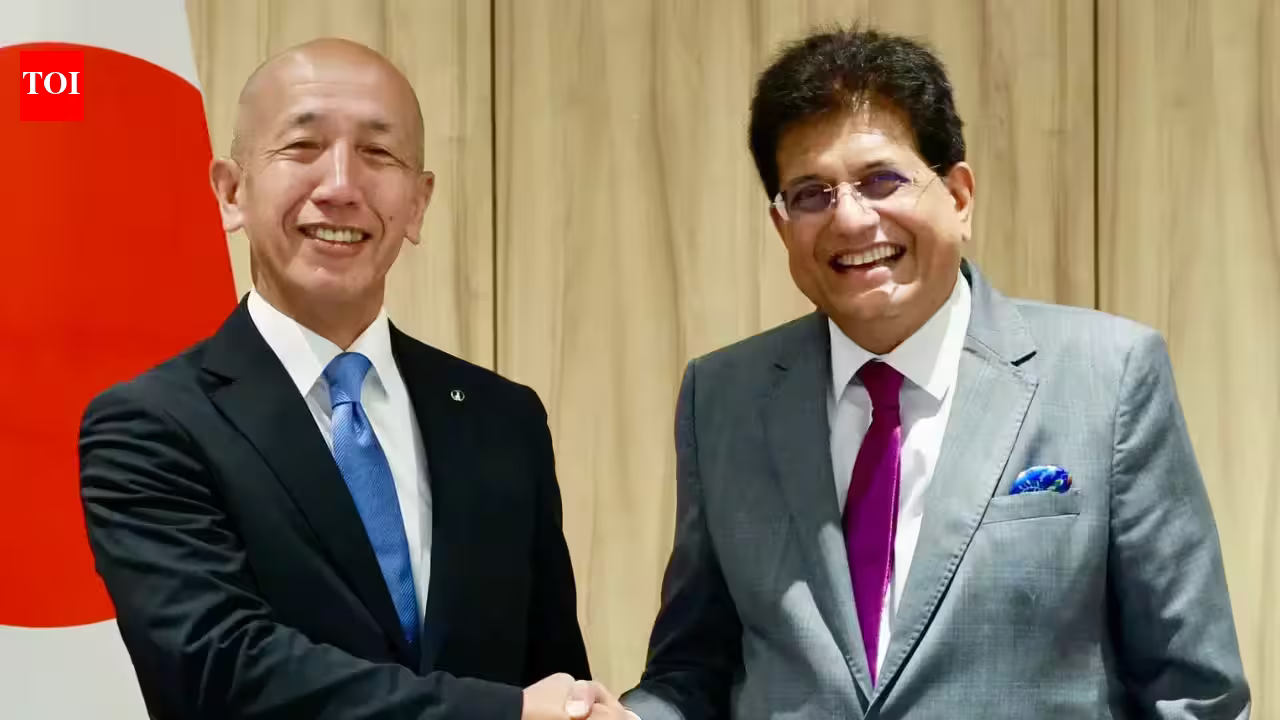
“I have discussed this with my counterpart, and we are hoping to work towards further expanding the scope and providing new opportunities for this relationship to grow,” Minister Goyal stated following his meeting with Japan’s Minister of Economy, Trade and Industry, Akazawa Ryosei.
While the two nations have yet to finalize the formal terms of reference for the review, both sides appear committed to finding a “give and take” middle ground. Goyal acknowledged that while Japan is unlikely to relinquish existing concessions, there is a mutual interest in strengthening a strategic partnership that has become increasingly vital.
Removing Regulatory Roadblocks
A primary grievance from Indian industry stakeholders is the “cumbersome” certification and registration requirements imposed by Japanese authorities, which have effectively acted as non-tariff barriers. During the visit, FICCI President Anant Goenka highlighted the plight of the Indian pharmaceutical sector, noting that the stringent registration process in Japan makes market entry nearly impossible for many domestic firms.
In response, Minister Goyal confirmed that the Commerce Department is actively assisting Indian exporters in navigating these regulatory hurdles. He has urged domestic industries—particularly pharma—to prioritize global registrations, including in the Japanese market, to ensure their products meet the necessary international standards.
“Many times these challenges are more about process, language, and time,” Goyal noted, adding that Indian diplomatic missions in Japan are now fully prepared to support businesses in overcoming these operational obstacles.
Investment Milestones
Beyond trade in goods, the investment landscape between the two nations remains robust. The countries have set an ambitious target of $67 billion in Foreign Direct Investment (FDI). Of this, $10 billion has been realized over the past 10 months, with the financial services sector emerging as the primary destination for Japanese capital.
As the two nations move toward formalizing the scope of the trade pact review, the focus remains on creating a more equitable, transparent, and dynamic economic environment that reflects the strategic depth of the India-Japan relationship.