





Protests Erupt Nationwide as ‘Cockroach Janata Party’ Targets Electoral Integrity
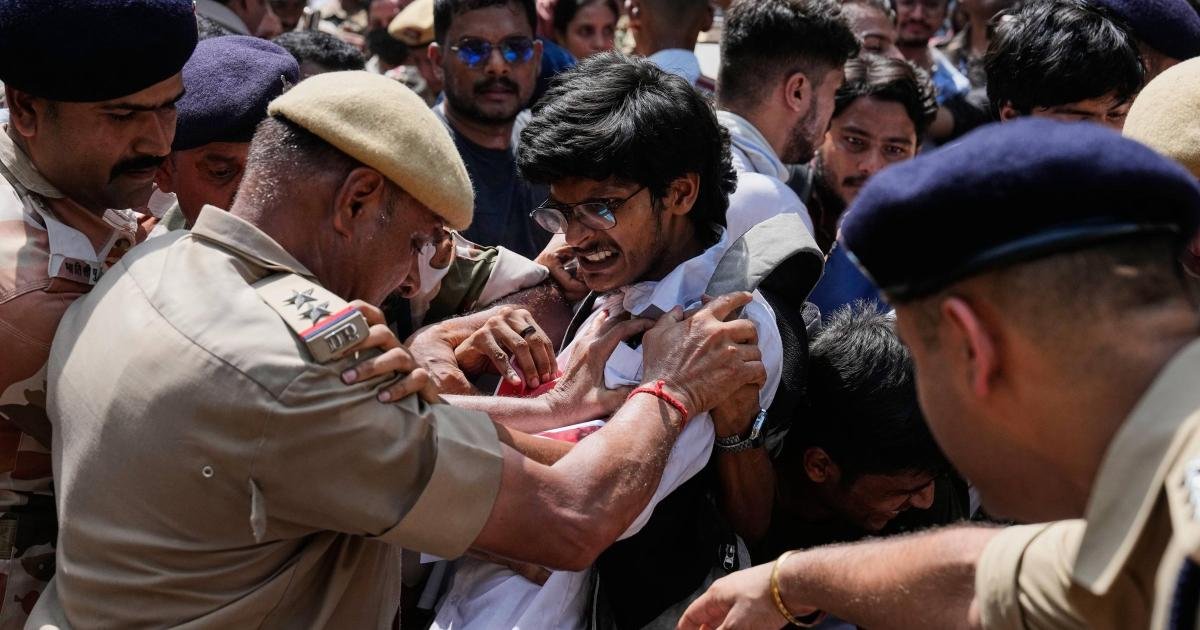
A burgeoning youth-led political movement, now identifying as the “Cockroach Janata Party,” has launched a fresh wave of nationwide demonstrations, intensifying scrutiny on India’s electoral processes. Following a successful campaign that forced the resignation of the education minister in July, the group is now mobilizing to challenge what it describes as systematic attempts to undermine democratic institutions.
Demonstrations scheduled in Mumbai this Friday mark the beginning of a broader, country-wide protest strategy. Simultaneously, in New Delhi, a coalition of student organizations and civil society groups have converged at Jantar Mantar, the capital’s central protest site, to echo the movement’s growing list of demands regarding transparency and government accountability.
Mounting Pressure on the Election Commission
At the heart of the unrest is the Election Commission of India (ECI), which currently faces serious allegations of bias. Critics, including major opposition parties, claim the commission is manipulating voter registrations to favor the ruling Bharatiya Janata Party (BJP), led by Prime Minister Narendra Modi. Both the government and the election authorities have firmly denied these accusations, asserting that all procedural updates are strictly administrative.
The controversy centers on a process known as the Special Intensive Revision (SIR), which was first introduced in Bihar last year and has since expanded across most states and territories. The ECI maintains that the initiative is necessary to purge duplicate or ineligible names from voter rolls. However, activists argue that the stringent documentation requirements are deliberately obstructive.
Data from the Election Commission itself suggests that these revisions could lead to a 30% reduction in voter lists in certain regions. Opponents of the process warn that these bureaucratic hurdles may disenfranchise millions of legitimate voters, effectively stripping them of their right to participate in the democratic process.
Internal Dissent and Allegations of Bias
Public skepticism has been fueled by recent reports in the Indian Express, which revealed that two of the three election commissioners raised formal objections regarding the commission’s recent conduct. According to the report, these commissioners questioned the legality of several decisions—ranging from voter roll management to the deployment of digital systems.
Under Indian law, the three-member commission is mandated to operate via majority consensus. Despite the dissent from his colleagues, Chief Election Commissioner Gyanesh Kumar reportedly disregarded the objections and proceeded with the proposed changes. While the ECI has publicly disputed these reports, characterizing the tension as mere “deliberations” rather than formal dissent, the narrative has significantly emboldened the protest movement.
From Student Grievances to Political Force
The “Cockroach Janata Party” trace their origins to a grassroots digital campaign born out of systemic frustration among India’s youth. Initially galvanized by soaring unemployment rates and widespread anger over leaked national examination papers, the group has evolved from a single-issue protest faction into a notable political entity.
Under the leadership of activist Abhijeet Dipke, the movement gained significant momentum earlier this year, culminating in the high-profile resignation of the education minister—a rare and major political defeat for the Modi administration. Having successfully held the government to account on education policy, the group is now signaling its intent to influence the national discourse on institutional governance and electoral fairness, setting the stage for a tense period of political agitation ahead.
Disclaimer: This content is auto-generated for informational purposes only.
Source: Read Original News