








India’s Political Playbook Shifts as Modi Targets Gen Z While Clamping Down on Dissent
MUMBAI, India — For twelve years, Prime Minister Narendra Modi’s government has operated with a predictable, top-down digital strategy, utilizing the Bharatiya Janata Party’s (BJP) massive IT infrastructure to dominate the narrative on Facebook, X, and WhatsApp. But a summer of student-led unrest has signaled a tectonic shift: for the first time, the ruling party finds itself in a reactive scramble, attempting to woo a tech-savvy youth generation while simultaneously deploying heavy-handed state machinery to silence them.
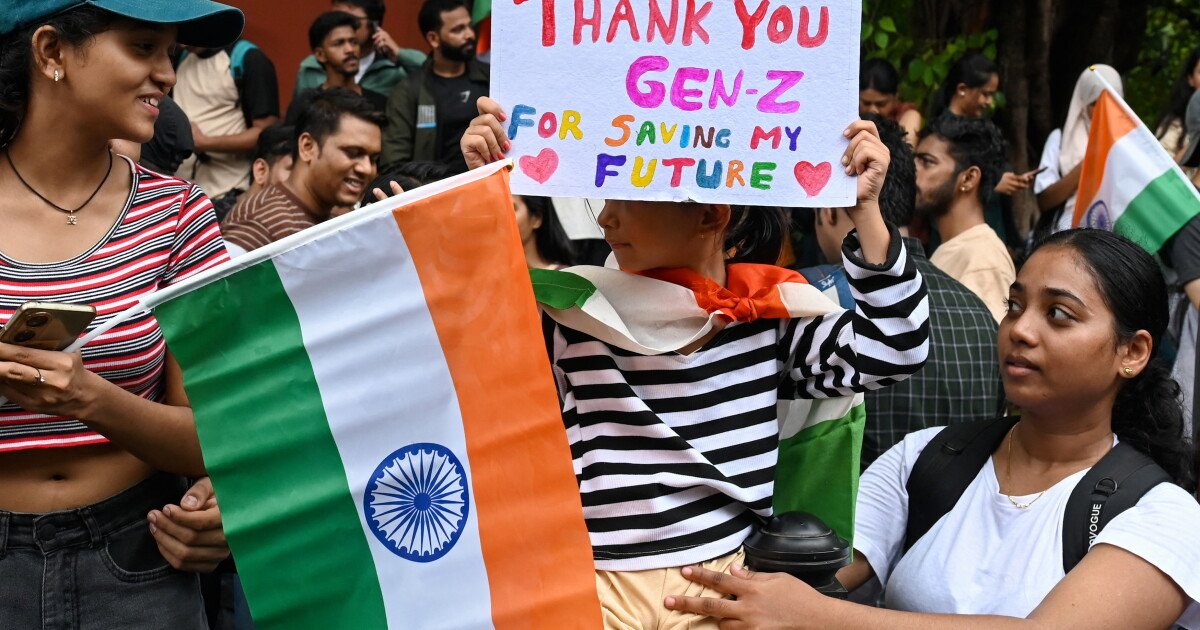
The catalyst for this shift is the “Cockroach Janta Party” (CJP), a grassroots movement birthed from internet memes. Born out of frustration over corruption in India’s examination systems, the CJP quickly mobilized tens of thousands of students to the streets of New Delhi, successfully ousting the education minister and forcing the 75-year-old Prime Minister into an uncharacteristic digital charm offensive.
The Instagram Pivot
Last month, weeks after protests began, Modi finally addressed the demonstrations. He did not issue a formal policy address or hold a press conference; instead, he posted a “chin-first” Instagram reel at midnight.
The move backfired initially, sparking a wave of parodies from the very youth he was trying to reach. Undeterred, the Prime Minister doubled down, frequently posting to his “friends” on social media. The trend soon trickled down, with Cabinet ministers suddenly adopting slang-heavy rhetoric and increasing their post frequency. Finance Minister Nirmala Sitharaman even publicly chided state-run banks for not being “cool” enough, urging officials to adopt a more youth-oriented aesthetic.
Experts, however, warn that the “dad on the dance floor” approach may be failing. “The BJP realized it needs a new playbook,” says Rajat Sethi, a visiting fellow at the India Foundation. “But they are making the mistake of imagining that trying to be like young people is enough to win votes.”
A Tale of Two Responses
While the government attempts to rebrand on social media, the ground reality for protesters tells a starkly different story. According to reports from the Software Freedom Law Centre, the government has engaged in unprecedented censorship, systematically blocking posts critical of the leadership.
The intimidation extends far beyond the digital realm. In July, security forces utilized batons, tear gas, and pellet guns to disperse crowds—actions Amnesty International described as “state-sanctioned violence masked as crowd control.”
Individual stories of harassment have become defining features of the movement. Rhiya Ahir, a model whose image of blocking a police van went viral, reports being targeted with coordinated online abuse and rape threats. Similarly, a 15-year-old girl in Noida was forced to move homes multiple times after a viral video of her protesting led to legal threats and harassment by “unruly elements.”
Legal Victories and Ongoing Friction
The struggle reached a turning point this Tuesday when India’s Supreme Court ordered the government to drop criminal charges against student protesters. The CJP hailed the ruling as a “big victory,” yet the victory remains fragile.
Government data indicates a staggering escalation in suppression, with nearly 200,000 blocking orders issued to platforms like Meta and YouTube between March and July—an average of one request per minute. For activists like Shrey Gupta, a software engineer who created a website to document police brutality, the crackdown is personal. After his site, The Unbadged, went live, he was detained and interrogated by police for hours.
“The officer said, this is a repercussion for you posting,” Gupta recalled.
The ordeal has only hardened his resolve; he is now developing an AI tool to identify and expose the very Hindu nationalist bots that have been central to the BJP’s long-standing online influence.
As the government continues to navigate the divide between its aging parliamentary leadership and a youthful, rebellious electorate, the question remains: can the ruling party genuinely pivot, or will its attempt to “reel in” Gen Z be forever overshadowed by the heavy hand of censorship? For now, the students of the Cockroach Janta Party remain, at the very least, a persistent force that the government can no longer ignore.