







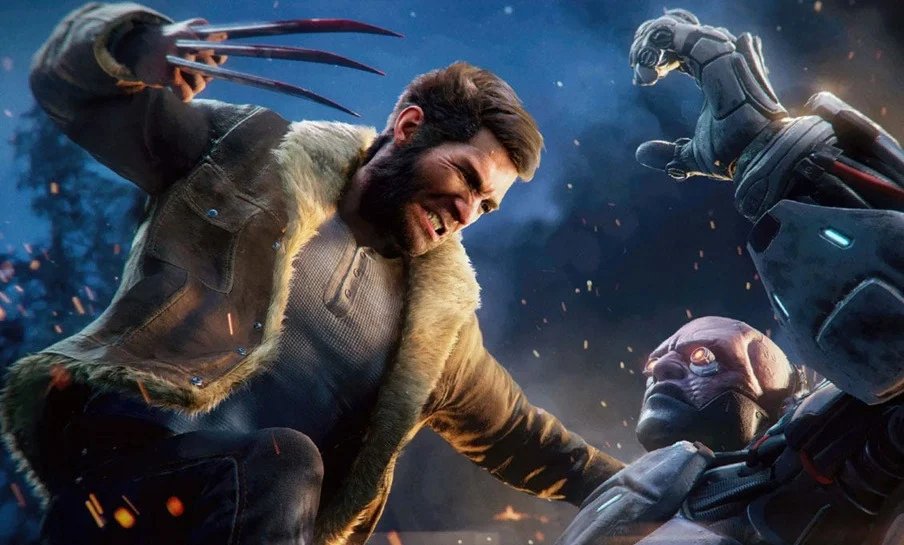
In the wake of exclusive press previews for Marvel’s Wolverine, Sony’s premier first-party title of the year, a significant online backlash has emerged, prompting an Insomniac staff member to speak out. Unlike Insomniac’s prior Spider-Man installments, Marvel’s Wolverine is confirmed to adopt a more linear, action-oriented gameplay style, reminiscent of classic hack-and-slash adventures. Despite detailed written accounts from the previews, the internet’s response has been largely characterized by memes and negative commentary, leading to widespread "misery."
James Stevenson, Insomniac’s community and marketing director, expressed his dismay at the online climate, stating, “I think the wild way this algorithm amplifies and forces negativity upon you has me reconsidering my philosophy on telling devs to look or post here.” He further described the experience as a “relentless onslaught that I cannot believe is good for anyone’s mental health nor representative.” His remarks highlight a growing concern within the gaming industry regarding the toxic nature of social media feedback.
Following the preview event, online critics quickly honed in on perceived weaknesses. Posts circulated widely, spotlighting elements that aligned with modern AAA game stereotypes, particularly concerning difficulty. One specific instance that garnered significant attention was a Sentinel encounter, which some likened to a boss fight from the early 2000s. These critical posts have reportedly accumulated millions of views, according to X’s metrics, amplifying the negative sentiment.
Many had anticipated an open-world experience for Logan’s latest adventure, fueled by Insomniac’s established track record and even a leaked build of the game. However, the final product is a more traditional, level-to-level hack-and-slash game. This design choice, while perhaps a departure from recent trends, aligns with the formula of some of the most acclaimed Wolverine games to date.
It’s unlikely that the core of these criticisms stems solely from the game’s old-school design sensibilities. In an era where physical media faces challenges and social media platforms are often described as a "hater’s paradise," these environments inherently favor rapid, often ill-intentioned, critiques. This dynamic allows minute details, such as facial features, to become disproportionately magnified, capturing significant attention. In recent years, the preemptive dismissal of an upcoming game has transformed into an event in itself. A prime example from 2026 was the "sinking" of Highguard, a live-service shooter that was widely criticized despite appearing generic, largely because it had received a considerable amount of attention from figures like Geoff Keighley.
Stevenson’s observation about the negative feedback loops on major platforms accurately identifies a significant contributor to the ongoing fervor surrounding not just gaming, but virtually every public discourse. The extent to which a first-party developer should engage with or draw attention to this phenomenon remains a delicate balance. Nevertheless, identifying the source of such intense online torment as a predictable algorithmic amplification, rather than an unknown "x-factor," at least provides clarity on the challenge at hand.