






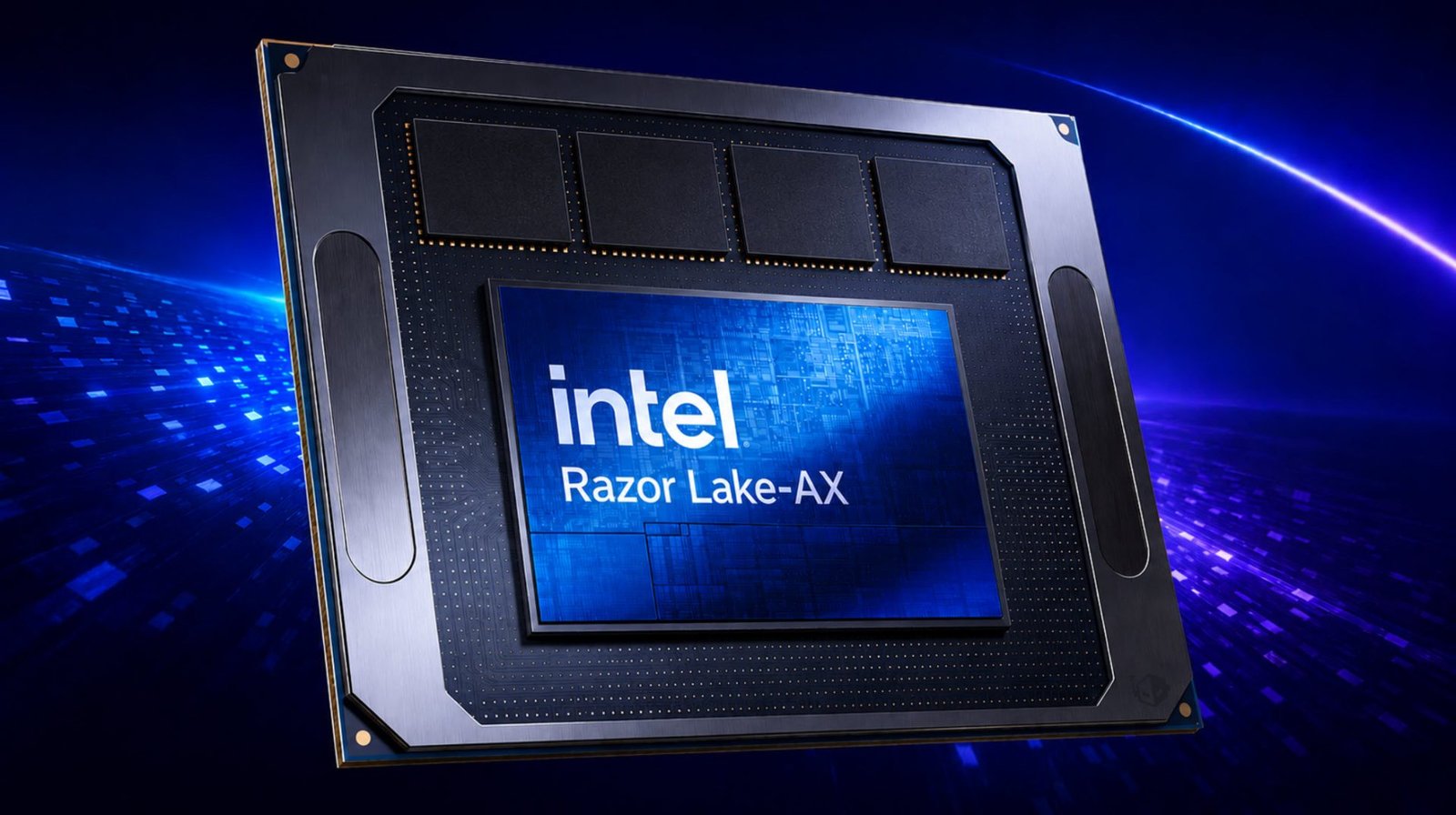
Intel has officially outlined its roadmap for the next generation of computing hardware, with senior leadership confirming the arrival of the Nova Lake and Razor Lake-AX architectures. During the “Semiconductors Powering Humanoids” seminar held in South Korea, Intel Senior Vice President Cho Min-sung provided critical details regarding these upcoming Systems-on-Chip (SoCs). The revelation highlights a significant shift in Intel’s strategy, moving toward specialized platforms designed to handle the massive computational requirements of modern artificial intelligence.
Evolution of AI Compute Power
The most striking revelation from the seminar is the performance target for Intel’s upcoming chips. The company has set its sights on reaching 700 trillion operations per second (TOPS) for artificial intelligence tasks. This figure represents a massive leap in capability when compared to Intel’s current market offerings. For context, the existing Panther Lake “Core Series 3” processors achieve approximately 180 TOPS. By jumping to 700 TOPS with the Razor Lake-AX platform in 2028, Intel is aiming for a 3.88x performance increase in AI compute power over a relatively short development cycle.
This surge in performance is designed to position Intel as a direct competitor to high-end edge AI solutions. The 700 TOPS threshold is specifically targeted at surpassing existing industry benchmarks, such as NVIDIA’s Jetson AGX Orin platform, which offers 275 TOPS. By achieving a 2.5x increase over this established competitor, Intel is signaling its intent to dominate the hardware space for sophisticated, localized AI processing.
Understanding the Razor Lake-AX Architecture
The Razor Lake-AX SoC is not a traditional CPU intended for standard desktop computing. Instead, it mirrors the design philosophy seen in platforms like AMD’s Ryzen Halo, focusing on a highly integrated architecture. These chips will feature a complex arrangement of multiple processing cores, powerful integrated GPUs, and significantly expanded memory capabilities.
The shift toward these integrated SoCs suggests that Intel is moving away from modular design in favor of a unified architecture. By consolidating the CPU, GPU, and dedicated AI acceleration logic into a single package, Intel aims to reduce latency and improve bandwidth efficiency—both of which are critical for the rapid data processing required by Physical AI and autonomous robotics.
The Return of On-Package Memory
A key technical detail mentioned in the roadmap is the return to on-package memory (MoP) designs. Intel previously explored this architecture with the Lunar Lake “Core Series 2” chips, and the company plans to refine and implement this technology once again for the Razor Lake-AX series.
In the context of artificial intelligence, memory bottlenecks are a primary constraint. As AI models grow in complexity and parameter count, they require massive, high-speed data access. By moving memory directly onto the chip package, Intel removes the physical distance between the processor and the volatile memory, allowing for much higher data transfer rates and lower power consumption. This design choice is fundamental to the high-performance targets Intel has set for the 2028 launch.
Impact on Physical and Agentic AI
The primary use-case for these upcoming SoCs is the burgeoning field of Physical AI. This domain involves AI systems integrated into physical hardware, such as humanoid robots and autonomous machines that must process sensor data in real-time to navigate and interact with the world. Unlike standard generative AI that processes data in the cloud, Physical AI demands localized “edge” computing power to ensure safety and instantaneous response times.
Intel’s move to create dedicated Agentic and Physical AI chips indicates that the company perceives this as the next major growth vector for the semiconductor industry. As humanoid robotics and automated systems become more prevalent in industrial and commercial sectors, the need for chips that can perform hundreds of trillions of operations per second at low power profiles will become the standard. Intel’s Nova Lake and Razor Lake-AX are designed specifically to meet these rigorous, high-stakes requirements.
Competition and Market Positioning
The competitive landscape for AI hardware is intensifying. With NVIDIA introducing its own high-end platforms like the Jetson Thor T3000—capable of 865 TFLOPS of FP4 AI compute—and AMD’s continued focus on the Ryzen AI MAX+ Halo, the market is quickly splitting into specialized segments. Intel’s announcement confirms that it is no longer willing to treat AI as a secondary feature of its CPUs.
By aligning its product roadmap with the specific needs of robotics and AI-driven agents, Intel is transitioning from a general-purpose processor provider to a foundational partner for the next generation of autonomous technology. The industry’s transition toward these high-compute, low-latency SoCs marks a departure from the traditional clock-speed-based competition that dominated the previous decade. As we approach the 2027 and 2028 rollout windows, the success of Nova Lake and Razor Lake-AX will likely serve as the primary indicator of Intel’s ability to remain relevant in an AI-first hardware ecosystem.
Disclaimer: This content is auto-generated for informational purposes only.
Source: Read Original News