









The NMPF requires that OWF development avoid, minimize, or mitigate significant impacts on fisheries and promote coexistence, defined as multiple activities operating in the same area or at the same time.
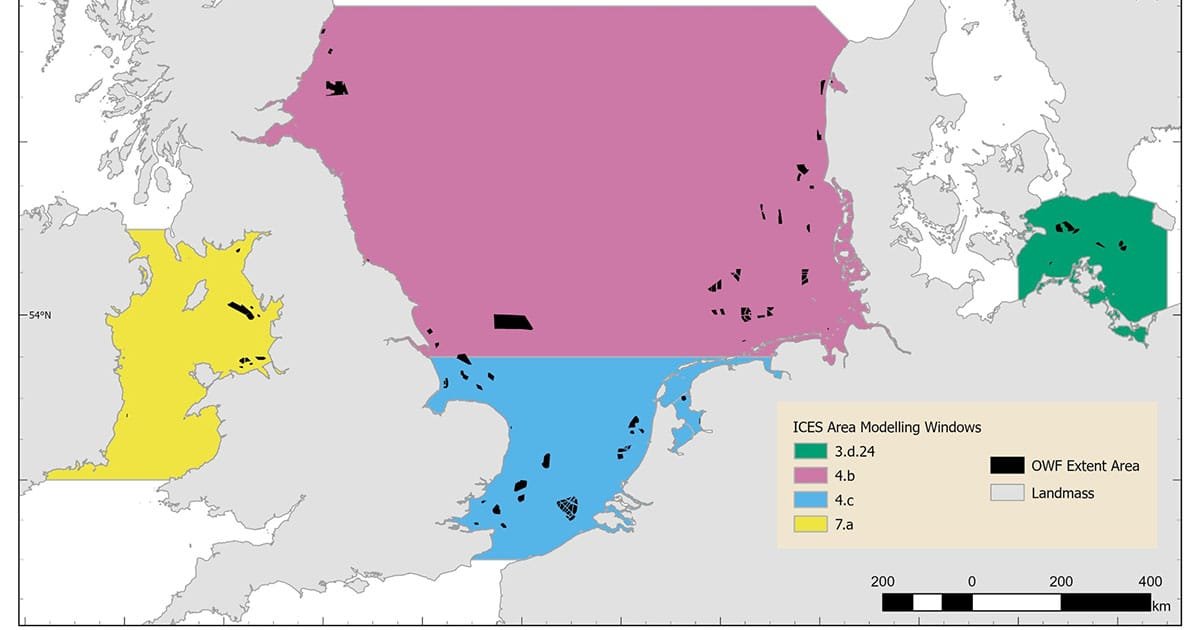
Drawing on a 12-year dataset covering 88 OWFs, BIM, and Atlantic Technological University (ATU), Galway applied a spatiotemporal modeling framework to assess how fishing effort responds to OWF development and associated policies.
The findings indicate modest reductions in static-gear fishing effort in regions where such fishing is permitted, suggesting some scope for coexistence under current OWF designs. However, uncertainties remain regarding smaller vessels and potential ecological impacts on commercial fish species.
In contrast, substantial reductions in towed-gear fishing effort were observed across all countries, including those without mandatory exclusion zones, suggesting that new infrastructure approaches may be required to enable meaningful coexistence. The report does demonstrate, however, increases in fishing effort in some UK OWF, and these certainly warrant follow-up research and collaboration between sectors around potential coexistence opportunities. Emerging codesign initiatives in the US and France may also offer pathways to improved coexistence.
The BIM study findings are consistent with two recent peer-reviewed publications on sectoral interactions. This underscores the need for evidence-based policy development to support sustainable coexistence between offshore renewable energy and fisheries.
The full report is available at www.bim.ie/publications/fisheries.