







Iran-US Conflict Escalates: Pentagon Casualties Rise as Tensions Over Strait of Hormuz Persist
August 22, 2026 — As the ongoing Iran war reaches its sixth month, the regional landscape remains volatile. New data from the Pentagon reveals the human cost of the conflict, while diplomatic tensions and economic pressures continue to mount across the Middle East.
Rising Casualties and Potential Strategic Shifts
The Pentagon’s latest update from the Defense Casualty Analysis System (DCAS) indicates that 774 US service members have become casualties since hostilities commenced in late February. This includes 18 deaths and 756 wounded personnel, with the latest figures reflecting an additional 50 injuries sustained amid a backdrop of renewed US strikes.
In response to the prolonged conflict, reports from The Washington Post suggest that the Pentagon is actively evaluating its long-term presence in the region. Military officials are reportedly considering a reduction in troop levels across the Persian Gulf once the conflict reaches its conclusion—a shift likely necessitated by the sustained targeting of US bases over the past several months.
Diplomatic Friction and the Strait of Hormuz
A critical breakthrough in regional logistics occurred Saturday, as Tehran announced it would grant passage to a select number of Iraqi oil tankers through the strategic Strait of Hormuz. The concession follows intensive negotiations during recent visits by Iraqi officials, including a high-level meeting between Iraqi leaders and the Speaker of the Iranian Parliament, Mohammad Baqer Qalibaf.
While the move aims to stabilize Iraqi oil exports, the situation remains precarious. Iraqi President Nizar Amedi, speaking at the Baghdad Dialogue conference, characterized the issue of export routes as “complicated.”
Simultaneously, a humanitarian standoff has emerged between Iran and Qatar. Tehran is demanding that Doha transfer several detained Iranian pilots to medical facilities on land, alleging they are being held in "poor physical condition" on water. Qatar has denied holding the pilots, maintaining that the individuals in question violated Qatari airspace earlier this year.
A Path to Peace or Further Sanctions?
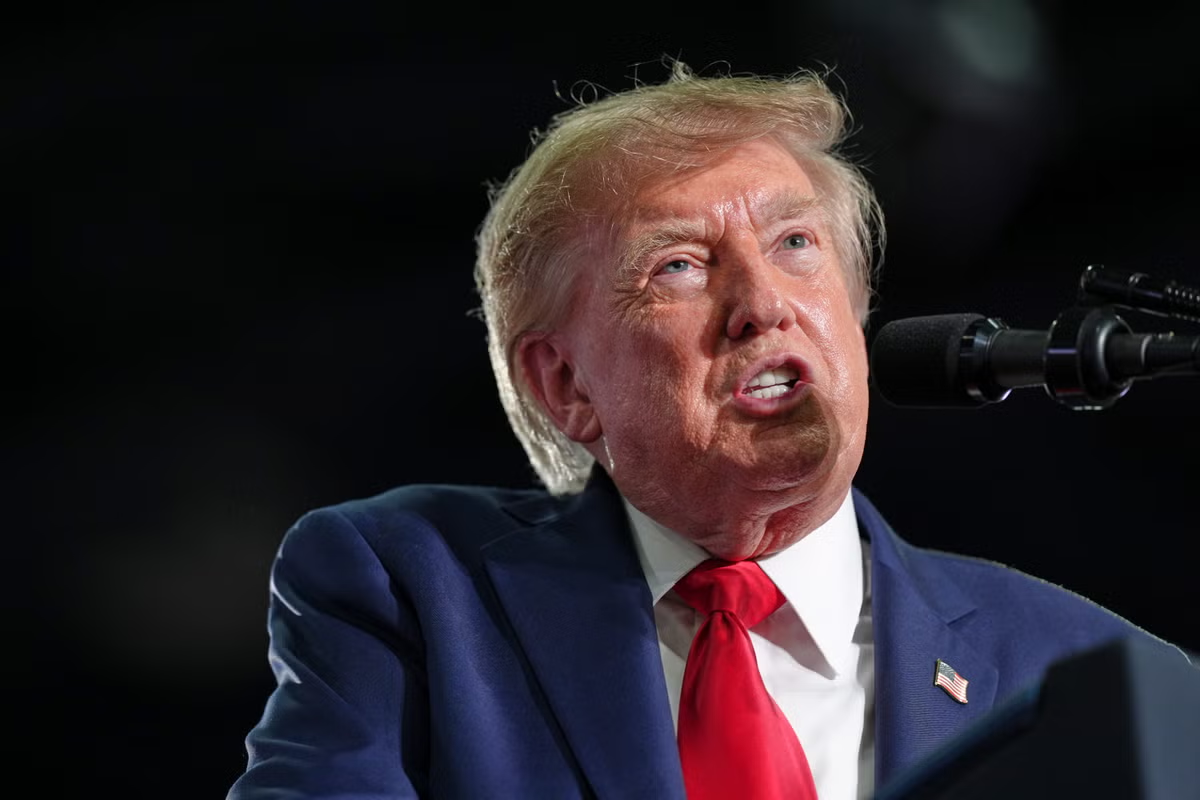
The rhetoric between Washington and Tehran remains combative. President Donald Trump, who has threatened strict economic consequences for any nation providing a "lifeline" to Tehran, is expected to announce a new round of sanctions. Iran’s foreign ministry spokesperson, Esmaeil Baghaei, denounced the move as an "assertion of extraterritorial sovereignty" that lacks foundation in international law.
Despite the bluster, internal voices in Iran are beginning to reflect the strain of the war. While the Iranian military has promised "devastating responses" to threats, President Masoud Pezeshkian has publicly advocated for a diplomatic resolution.
"It would be better to end the war today, when we are powerful and have dignity," Pezeshkian stated, calling for a cessation of hostilities while condemning US actions against civilian infrastructure.
Domestic Economic Turmoil
Beyond the battlefield, the Iranian government is facing internal dissent. Reza Pahlavi, the exiled son of the former Shah, launched a scathing critique of Tehran’s proposed fuel price hikes. Pahlavi labeled the policy an "unforgivable mistake," arguing that the regime is placing the burden of economic mismanagement on the backs of impoverished citizens while the IRGC continues to profit from smuggling operations.
As of Saturday, international efforts to reach a lasting peace deal for Gaza—often complicated by shifting terms regarding disarmament verification—continue to stall, leaving the broader region in a state of deep uncertainty.