








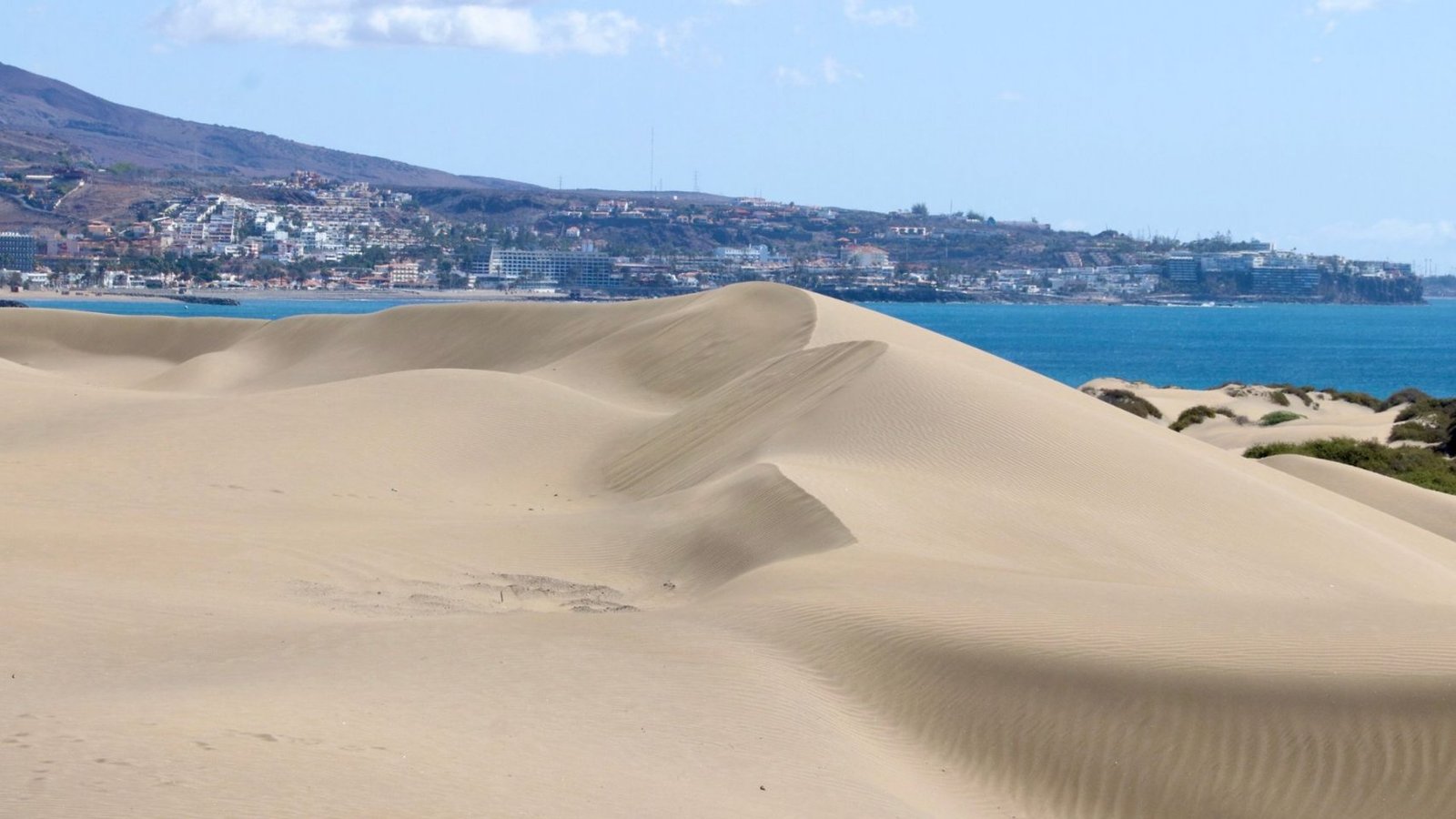
The Gran Canaria Island Council continues to advance in the digitalization and intelligent management of the Maspalomas Dunes Special Nature Reserve through the implementation of sensors, environmental information systems and security devices aimed at improving the conservation of the space and the experience of those who visit it.
The Minister of Environment, Climate, Energy and Knowledge of the Gran Canaria Island Council, Raúl García Brink, visited the actions being carried out by SODETEGC within the Impulsa Maspalomas project, financed through the Recovery, Transformation and Resilience Plan – Next Generation EU, which are part of the digitalization axis of the Tourism Sustainability Plan, and turn the Maspalomas Dunes into a pioneering space in the application of smart technologies for the environmental and tourism management of sensitive natural spaces.
The set of actions carried out by SODETEGC represents a total investment of 664.373,37 euros, intended to improve control, environmental management, safety and information offered to those who visit the Special Nature Reserve of the Maspalomas Dunes.
The project is structured around three main lines of action: intelligent signage, digital content and information screens, and sensor and security systems. It also provides the Special Nature Reserve with a network of sensors and intelligent systems that act as the “digital eyes and ears” of the natural space, providing real-time information to improve both environmental conservation and the experience of those who visit the Dunes.
“We continue to make progress in the intelligent management of the natural area, but also in something fundamental: improving information and awareness for those who visit the Maspalomas Dunes,” García Brink pointed out. “Technology should help us better protect an extremely fragile environment and, at the same time, offer a safer, more organized experience that respects the environmental values of the Reserve.”
Sensors installed along trails provide real-time monitoring of visitor flow and detect potential overcrowding in certain areas, facilitating more efficient management of the natural space’s carrying capacity. These devices operate by anonymously detecting signals from mobile devices, without identifying individuals or storing personal data, allowing for the analysis of visitor flow and movement patterns to support decision-making and reduce environmental impact.
During the visit, the SOS posts installed on trails and coastal areas of the Reserve were also shown, equipped with emergency systems, first aid materials and autonomous solar power, as well as the new smart videometry cameras located at strategic access points such as the Mirador de las Dunas.
These cameras allow for real-time analysis of occupancy and detection of unauthorized access or overcrowding, without recording or storing images, as they only process statistical data and operational alerts.
The initiative also incorporates a comprehensive system of physical and digital signage, with nearly 200 panels distributed along trails, access points, and strategic locations within the Special Nature Reserve. This new signage improves visitor orientation and provides information on permitted uses, restrictions, and conservation regulations for the protected area. Furthermore, many of the panels include QR codes that provide access to digital environmental interpretation content in several languages, with information on the dune formation, the pond, the endemic flora, and the birdlife of the protected area.
“We are incorporating tools that allow us to better manage visitor flows, anticipate situations of environmental pressure, and strengthen the protection of one of Gran Canaria’s most emblematic natural areas,” added García Brink. “The conservation of the Maspalomas Dunes also depends on improving information, awareness, and knowledge of the area for both residents and visitors.”
The project, promoted by the Cabildo and executed by SODETEGC, represents a new step towards a tourism and environmental management model based on data, technology and sustainability, aimed at reconciling the conservation of the natural space with responsible public use.
About ImpulsaMaspalomas
The overall objective of ImpulsaMaspalomas is to improve the resilience of the Maspalomas Costa Canaria tourist area in the short and medium term, primarily by enhancing the value of its existing natural heritage and the dunes as a key tourist resource. Through these actions, the green reputation of the island’s most important destination is improved by combining sustainability and digital transformation to enrich its tourism offerings.
The actions are structured around four axes: green and sustainable transition, improvement of energy efficiency, digital transition and competitiveness.