







Heartbreak struck the Indian women’s badminton contingent on Tuesday as their Asian Games campaign came to a premature end in the quarterfinal stage. Despite moments of brilliance and the grit that has defined their recent international resurgence, the Indian squad ultimately succumbed to a clinical Japanese side, falling 3-1 in a high-stakes tie that tested the limits of both temperament and technique.
While the doubles pairing of Treesa Jolly and Gayatri Gopichand provided a shimmering highlight, the singles department—traditionally India’s stronghold—found the Japanese wall insurmountable. The defeat marks a somber exit for a team that arrived in the host city with high aspirations and the tactical pedigree to challenge for the podium.
Sindhu’s Gallant Start Fades Against Yamaguchi
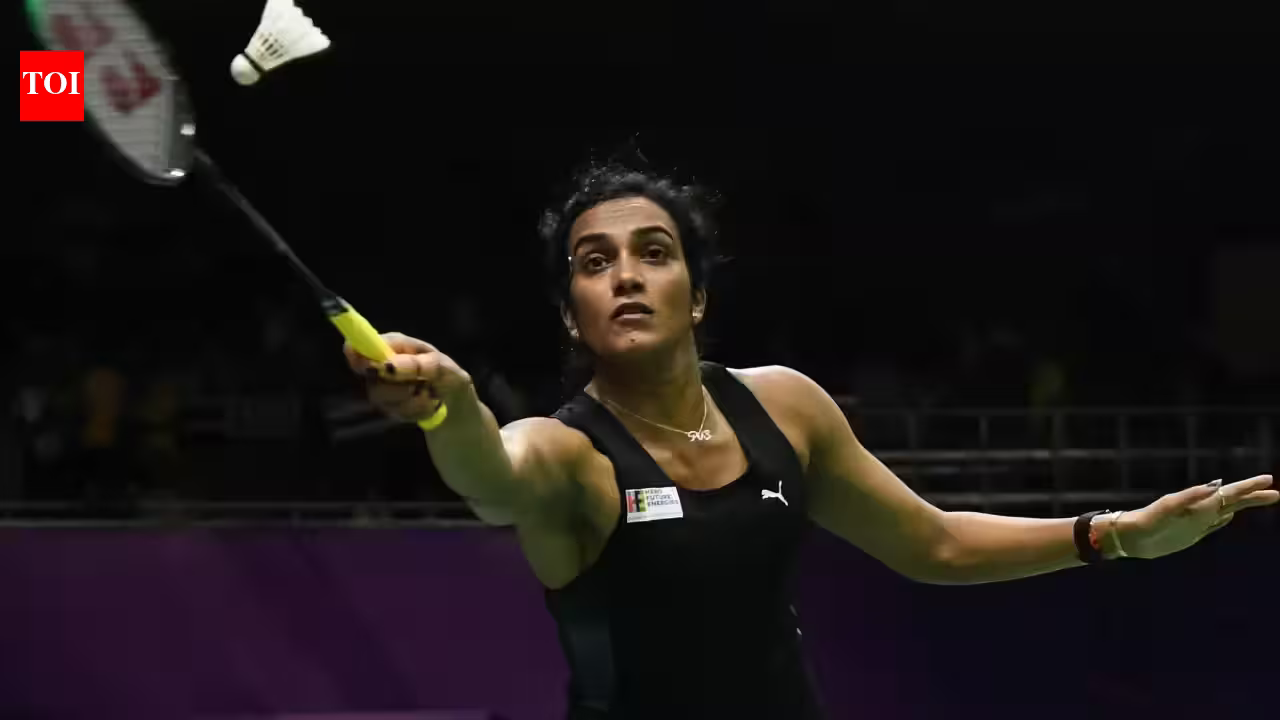
The tie began with a heavyweight collision as India’s two-time Olympic medalist PV Sindhu squared off against world No. 3 Akane Yamaguchi. The match was a microcosm of elite badminton: intense, tactical, and physically exhausting.
Sindhu entered the arena tasked with setting the tone, and for one scintillating game, she looked every bit the champion. Trailing 13-17 in the opener, the Indian ace orchestrated a masterful recovery. The match featured grueling exchanges, with rallies frequently ballooning to 35 and 36 shots, testing the aerobic capacity of both players. Sindhu showcased her trademark court coverage, pushing Yamaguchi into deep defensive pockets.
After squandering a game point due to a tight line-call judgment, Sindhu regained her composure. Capitalizing on a Yamaguchi error into the net, she secured another game point, eventually slamming home a cross-court forehand winner to take the first game 23-21.
However, the tide shifted decisively after the change of ends. Yamaguchi, renowned for her unrelenting pace and defensive stability, established a two-point cushion at the interval of the second game. Although Sindhu mounted a spirited attempt to close a 12-17 deficit, Yamaguchi’s firm defense held steady, forcing a decider with a 21-18 result. The third game proved to be a one-sided affair; a fatigued Sindhu could not stem the tide as Yamaguchi sprinted to a 14-6 lead, eventually closing the contest 21-6 to put Japan in the driver’s seat.
Miyazaki Extends Japan’s Advantage
With the pressure mounting, the onus fell on young rising star Unnati Hooda to square the tie. Standing in her way was the 2022 world junior champion, Tomoka Miyazaki. Despite her youth, the current world No. 7 displayed the poise of a seasoned professional.
Miyazaki methodically dismantled India’s defensive structure, dictating the tempo from the backcourt. Hooda struggled to find rhythm against the Japanese youngster’s aggressive play, eventually dropping the match 21-16, 21-18. The result left India staring down the barrel of a 0-2 deficit, with the team’s hopes hanging by a thread.
Treesa-Gayatri: A Beacon of Resilience
Just when it seemed the tie might result in a clean sweep for the Japanese, the World Championships bronze-winning duo of Treesa Jolly and Gayatri Gopichand rose to the occasion. Fresh from their historic success in New Delhi, the pair brought a fearless brand of attacking badminton to the court.
Facing the formidable duo of Yuki Fukushima and Mayu Matsumoto, Treesa and Gayatri played with an infectious energy that neutralized Japan’s defensive rhythm. Every smash was calculated, and their mid-court rotations were seamless. By securing a dominant 21-17, 21-16 victory, they not only avoided a shutout but also injected a spark of hope into the Indian camp. For a fleeting moment, the possibility of an improbable comeback felt tangible, with the Indian momentum surging as the tie moved into its final deciding rubber.
Okuhara Closes the Door
Ultimately, the depth of the Japanese squad proved too much to overcome. In the final match of the day, young Indian prospect Tanvi Sharma was tasked with the daunting challenge of facing former world champion Nozomi Okuhara.
The experience gap was palpable. Okuhara, playing with surgical precision, navigated the court with ease, denying Sharma any opportunity to settle into the match. The former world champion dictated the pace, securing a commanding 21-12, 21-10 victory in straight games.
With that final point, Japan sealed a 3-1 victory and punched their ticket to the semifinals. For India, the day was a mixture of pride and frustration. While the loss is undoubtedly a stinging blow to their medal prospects, the performances of Treesa and Gayatri, paired with Sindhu’s early-match tenacity, offer a blueprint for the future. As the team departs the Asian Games, they leave behind the knowledge that while they can compete with the world’s elite, the path to the podium requires even greater consistency across the board—a lesson they will undoubtedly carry into the next circuit.
Disclaimer: This content is auto-generated for informational purposes only.
Source: Read Original News