








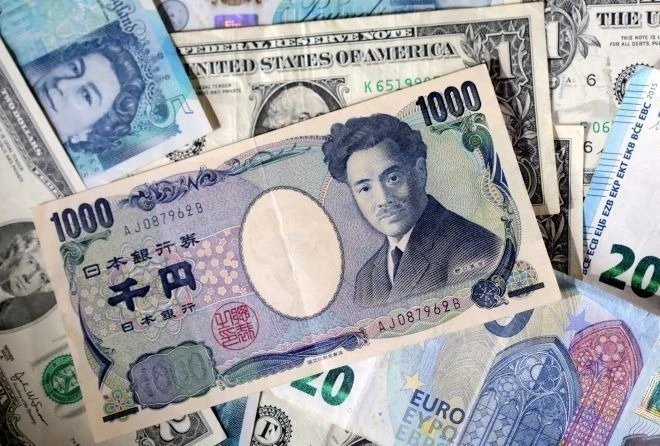
SINGAPORE—A significant shift in global capital flows has begun as Japanese investors start to pull money back home, yet a much larger, anticipated wave of repatriation remains sidelined. While the Bank of Japan (BOJ) has taken decisive steps to curb speculative bets against the yen, uncertainty regarding the trajectory of domestic interest rates is keeping trillions of dollars in overseas assets firmly parked abroad.
The BOJ’s recent rate hike, coupled with aggressive rhetoric against inflation, has successfully warded off the immediate pressure that drove the yen to nearly four-decade lows in July. However, major domestic institutional investors—the “slow-money” contingent—are hesitant to commit heavily to Japanese Government Bonds (JGBs) while yields remain in flux.
“The fast-money carry trade has already been unwound; the slow-money one has not started,” says Shoki Omori, a fixed-income strategist at Deutsche Bank in Tokyo.
The primary deterrent is a lack of clarity on where Japanese bond yields will peak. With 10-year JGB yields surging to 30-year highs above 3%, the math is shifting in favor of domestic debt. Yet, as long as policymakers offer ambiguous signals on future rate hikes and dissenting dovish votes continue to emerge, institutional investors remain wary of “catching a falling knife.”
This caution acts as a ceiling for the yen. While the currency has retreated from its record lows, it has struggled to maintain momentum, trading near 159 per dollar. The structural reality remains that Japanese pensions and households still hold vast sums of unhedged overseas assets. Analysts suggest that the era of relentless yen depreciation may have ended, but a durable, long-term strengthening trend has yet to take hold.
The landscape is further complicated by global inflationary pressures. As other major central banks also contend with the economic fallout of the Middle East conflict, interest-rate differentials remain wide, making it difficult for the BOJ to close the gap quickly.
Nonetheless, a massive catalyst for change could be on the horizon. Analysts are closely watching the $1.8 trillion Government Pension Investment Fund (GPIF). Should the fund make an official move to shift significant allocations toward domestic markets, it would likely force a cascade of similar reallocations from private life insurers and banks, which collectively manage trillions in assets.
“It’s early stage in terms of Japanese repatriating,” notes Aaron Hurd of State Street Global Advisors, who predicts that the flow may only pick up significant steam by 2027.
For now, the global markets remain in a state of high-stakes limbo. Until Japanese bond yields stabilize and the BOJ provides a clearer roadmap for the neutralization of interest rates, the massive pool of capital held by Japanese life insurers will stay offshore, leaving the yen in a precarious, wait-and-see holding pattern.
Disclaimer: This content is auto-generated for informational purposes only.
Source: Read Original News