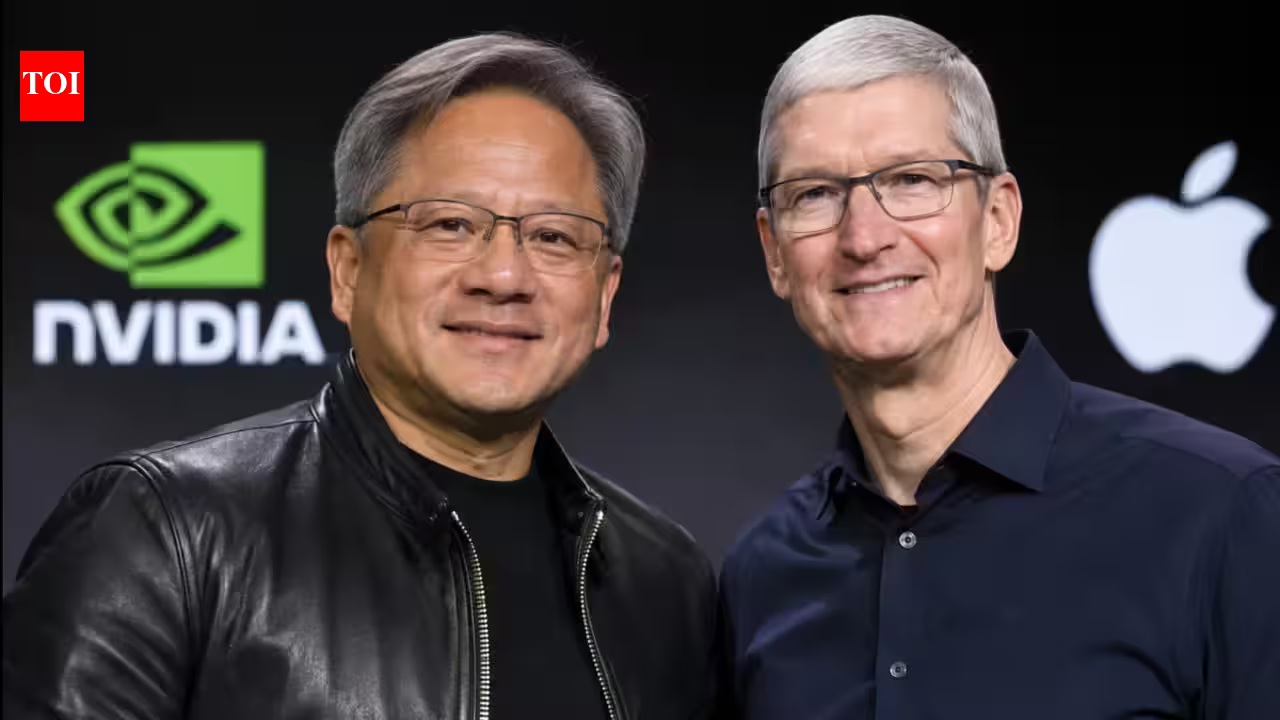





The Fragility of Tech Governance and Founder-Led Firms
The recent reports surrounding Nvidia CEO Jensen Huang serve as a potent reminder of the inherent volatility within technology giants where corporate governance and the cult of personality are deeply intertwined. Nvidia, a company that has defined the infrastructure of the artificial intelligence boom, now faces a period of profound uncertainty. When a leader is as synonymous with a company’s valuation as Huang is with Nvidia, any threat to their tenure creates immediate systemic risk. The drop in share price during after-hours trading highlights how sensitive institutional investors are to leadership stability.
Corporate governance frameworks exist specifically to mitigate the “key-person risk.” In the technology sector, this challenge is magnified. Founders often wield significant influence that extends beyond their executive duties, creating a scenario where their personal conduct directly impacts the market capitalization of the firm. The allegations concerning personal relationships, particularly those involving potential security concerns with foreign intelligence services, transition the situation from a human resources matter to a national security and geopolitical dilemma. This shift is what differentiates the current Nvidia situation from standard executive misconduct. It forces a collision between private life and the strategic interests of a company that operates at the very center of US-China technological competition.
Assessing the Impact of Leadership Transitions in AI Giants
For investors, the immediate question involves the viability of the current growth trajectory in the absence of a visionary leader. Jensen Huang is widely credited with pivoting Nvidia from a gaming hardware manufacturer into the bedrock of the generative AI revolution. His ability to anticipate market shifts and maintain tight control over the supply chain has been instrumental in the company’s recent performance.
The potential removal of a CEO during a critical cycle of technological adoption often leads to a “de-risking” phase among shareholders. Even if the firm possesses a deep bench of talent, the departure of a high-profile architect can lead to a valuation reset. The market must weigh the structural strength of Nvidia against the loss of the strategic intuition that guided its ascent. When institutional investors look at Nvidia, they are currently pricing in the difficulty of replacing a leader who essentially orchestrated an entire industry shift. Furthermore, the reliance on top-tier engineering talent and long-term supply agreements means that leadership continuity is not just a cosmetic preference; it is a vital component of the operational roadmap.
The Indian Context: Lessons in Institutional Oversight
The Nvidia situation provides a pertinent case study for the Indian corporate sector, particularly as it continues to integrate into the global technology ecosystem. India’s technology and manufacturing sectors have moved toward more rigorous corporate governance norms, mandated by SEBI and heightened investor scrutiny. However, many prominent Indian companies remain family-led or founder-centric, mirroring the structure of firms like Nvidia.
For Indian business leaders, the takeaway is clear: the separation of the individual from the institution must be absolute. As Indian technology startups mature into global enterprises, the standard for professional conduct and ethical oversight must rise in tandem with their valuation. When an enterprise reaches a scale where it becomes a national asset—much like Nvidia is to the US semiconductor industry—the personal life of an executive is no longer strictly personal. The board’s proactive decision to engage an external law firm like Wachtell, Lipton, Rosen & Katz reflects a standard of crisis management that Indian companies should emulate when faced with allegations of conflict of interest. Adopting a culture where internal policies are enforced regardless of the seniority of the individual is the only way to preserve long-term shareholder trust.
Navigating Geopolitics and Corporate Conflict of Interest
The most alarming aspect of the allegations involving Jensen Huang is the reported link to foreign intelligence. In the current global climate, semiconductor manufacturing is a strategic asset. Nvidia’s chips are the engines of the AI race, and their distribution is subject to intense scrutiny by regulators in both the US and abroad. If a CEO is compromised, or perceived to be compromised, by foreign interests, it fundamentally alters the risk profile of the entire company.
This scenario highlights the intersection of private corporate conduct and national security. Companies that operate on the front lines of defense, AI, and computing are essentially quasi-public entities in terms of the influence they wield over national capability. For a company like Nvidia, which is currently navigating strict export controls and intense global competition, any internal instability can be exploited by competitors. The board of directors is thus tasked with the delicate balancing act of conducting a transparent investigation while maintaining the operational momentum that has kept the firm ahead of its rivals.
Investor Sentiment and Market Resilience
Market reactions in the aftermath of such revelations are typically sharp, as seen with the initial 8% decline in Nvidia shares. This is often driven by a lack of clarity. Markets thrive on predictability, and the sudden prospect of a leadership vacuum creates a “wait and see” approach that drains liquidity from the stock. However, market resilience is often found in the fundamentals. Nvidia’s dominant market share, its integrated software-hardware stack, and the insatiable demand for H100 and subsequent GPUs remain the primary drivers of its valuation.
The broader tech sector, as evidenced by the S&P 500 technology index performance, appears to be holding firm. This indicates that investors are separating the performance of the company’s products from the personal troubles of its CEO. While short-term volatility is inevitable, the long-term outlook for a company with such a deep moat is usually determined by its technical output rather than the personal status of its executive. The challenge for Nvidia’s board is to manage the narrative effectively—ensuring that the market understands that the machinery of innovation remains intact regardless of the leadership outcome.
Conclusion: The Evolution of Professional Accountability
The events at Nvidia mark a critical moment for modern corporate governance. We are witnessing an era where the public interest, geopolitical strategy, and private behavior are becoming inseparable. As corporations become more influential than ever, the traditional protections of the corporate veil are becoming thinner. The ability of a firm to navigate these challenges depends entirely on the independence of its board and its commitment to established ethical policies.
Moving forward, the tech industry will likely demand more stringent checks on the lifestyles and associations of executives at the helm of mission-critical companies. For investors and stakeholders, the message is that while a visionary leader is an asset, an undisciplined one can become a massive liability. The path to resolution for Nvidia will set a precedent for how global technology giants handle crisis management, accountability, and the difficult process of succession when the stakes involve the very technology that powers the future.
Disclaimer: This content is auto-generated for informational purposes only.
Source: Read Original News