







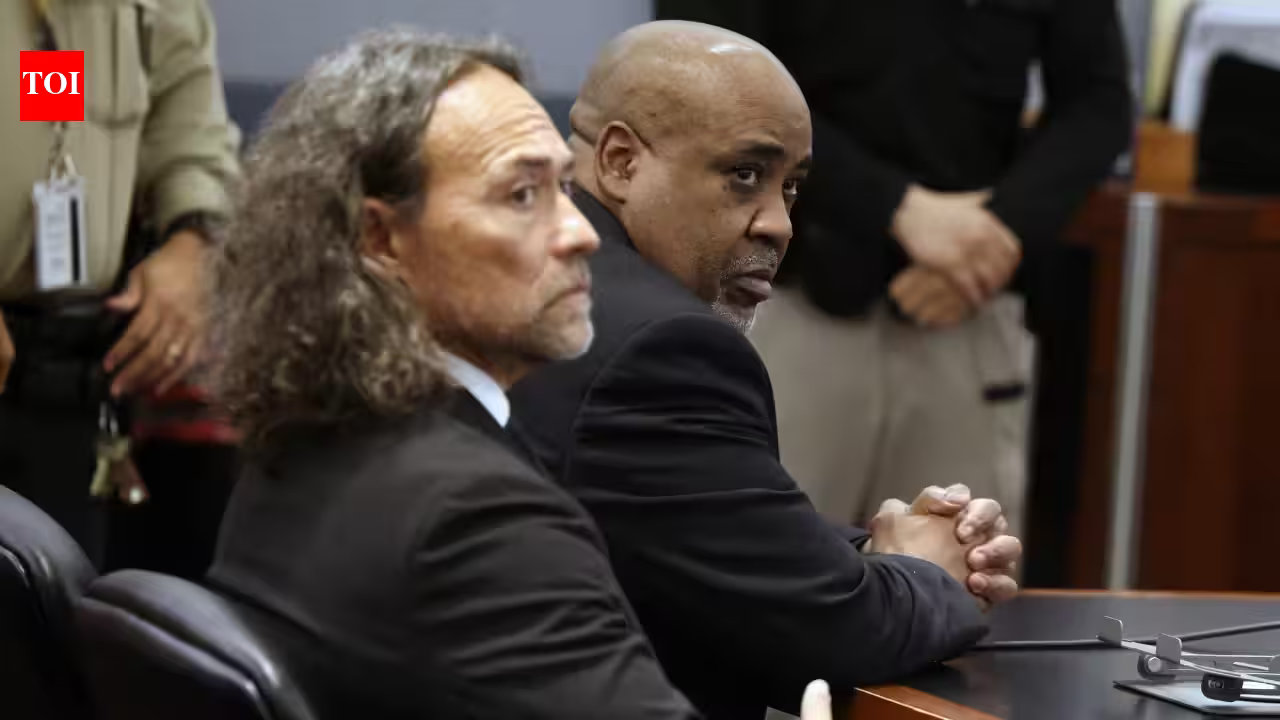
For over three decades, the death of Tupac Shakur remained the ultimate cold case—a gaping wound in the heart of hip-hop culture that fueled endless conspiracies, late-night debates, and a permanent air of mystery surrounding the Las Vegas Strip. On Tuesday, that silence finally gave way to the gavel. Duane “Keffe D” Davis, the 63-year-old former leader of the South Side Compton Crips, was sentenced to 40 years to life in prison for orchestrating the 1996 murder of the rap legend.
It is a somber, definitive end to a saga that has haunted music history since September 7, 1996. While the sentencing provides a legal resolution, for the family of Tupac Shakur, it serves as a stark reminder of the void left by a man whose life was cut short at the peak of his creative power.
The Arrogance of a Confession
The irony of the case is not lost on anyone who followed the trial. For years, the murder remained unsolved, largely due to a lack of concrete forensic evidence and a wall of silence typical of the street-level gang dynamics of the mid-90s. The breakthrough, however, was entirely self-inflicted.
Davis spent years basking in the notoriety of his own involvement, giving countless interviews and eventually documenting his role in the killing in his 2019 memoir. Prosecutor Marc DiGiacomo, speaking in court, did not mince words regarding the defendant’s hubris. “He was trying to profit off a killing that he committed,” DiGiacomo noted, arguing that Davis’s own arrogance became his downfall. While Davis stood before Judge Carli Kierny, appearing detached as he requested the return of personal items like photographs taken during his arrest, the prosecutor’s sentiment was clear: Davis is guaranteed to die behind bars.
A Life Cut Short, A Legend Still Growing
Tupac Shakur was only 25 when the black BMW he was riding in—alongside Death Row Records mogul Marion “Suge” Knight—was riddled with bullets at a red light in Las Vegas. He died six days later. Since that tragic night, his influence has only amplified. He remains, arguably, the most versatile and influential figure in the history of rap.
Beyond the chart-topping hits and the “Thug Life” persona, Tupac was a complex, contradictory artist whose work bridged the gap between raw street reportage and poetic social commentary. His music, exploring the nuances of hardship, institutional struggle, and deep-seated love, continues to find a home with new generations. To the world, he is an icon; to his family, he was a son and a brother. During the sentencing, prosecutors highlighted the pain of his siblings, Maurice “Mopreme” Shakur and Sekyiwa “Set” Shakur, who were forced to endure decades of hearing Davis brag about the killing of their loved one.
The Anatomy of a Retaliation
The narrative provided in court, and later in Davis’s own memoir, painted a picture of a senseless, ego-driven chain of events. According to Davis, the seeds of the murder were sown earlier that same day, when Shakur and his entourage beat up Davis’s nephew, Orlando “Baby Lane” Anderson, in a casino lobby.
The retaliation, prosecutors argued, was swift and calculated. Davis, who had previously struck an informal immunity deal with law enforcement decades ago, felt emboldened enough to recount his version of the night: he claimed to be in the passenger seat of the white Cadillac that pulled up next to the BMW, passing the gun to the backseat where the trigger was pulled. The trial centered on this power dynamic between the South Side Compton Crips and the Mob Piru gang, with the prosecution successfully arguing that Davis was the mastermind who provided the weapon and orchestrated the hit.
Shadows of Other Names
Despite the conviction, the sentencing did little to quiet the speculative whispers that have shadowed this case for years. Throughout the trial, the name of Sean “Diddy” Combs surfaced repeatedly, fueled by Davis’s own public allegations that Combs had offered him money to carry out the hit on Shakur and Knight.
Combs, currently facing his own legal battles and serving time for unrelated offenses, has consistently and vehemently denied any involvement in the death of the rapper. While the defense team—led by attorney Michael Sanft—attempted to paint Davis as a grifter and a liar who fabricated the details of his involvement to chase money and attention, the jury found the evidence and statements compelling enough to convict. Clark County District Attorney Steve Wolfson stated that, as of now, there is insufficient evidence to charge anyone else. However, he left the door ajar, noting that if new information surfaces, the state will reconsider its position.
The Finality of the Verdict
For the defense, the fight isn’t over; Michael Sanft has already confirmed plans to appeal the verdict, citing the decades-long delay in bringing the case to court and the perceived lack of physical evidence. But for the legal system, Tuesday’s sentencing represents a rare moment of closure.
Tupac Shakur’s death was a pivotal moment in American culture—a moment that signaled the end of a golden era and the beginning of a long, dark period of uncertainty. As Duane “Keffe D” Davis begins his four-decade sentence, the chapter on the gunman may be closing, but the legend of the man he killed remains as vibrant and unresolved as ever. The music, the poetry, and the complexity of Tupac Shakur exist far beyond the confines of a Las Vegas courtroom, even if, at long last, the man responsible for ending his life has been held to account.
Disclaimer: This content is auto-generated for informational purposes only.
Source: Read Original News