








Fresh Flood Fears Grip Nepal as Experts Warn of Potential Secondary Surge
RASUWA, Nepal – Communities along Nepal’s Bhote Koshi and Trishuli river systems are on high alert as scientists warn that a massive, unstable blockage near the Nepal-China border could trigger a devastating second round of flooding.
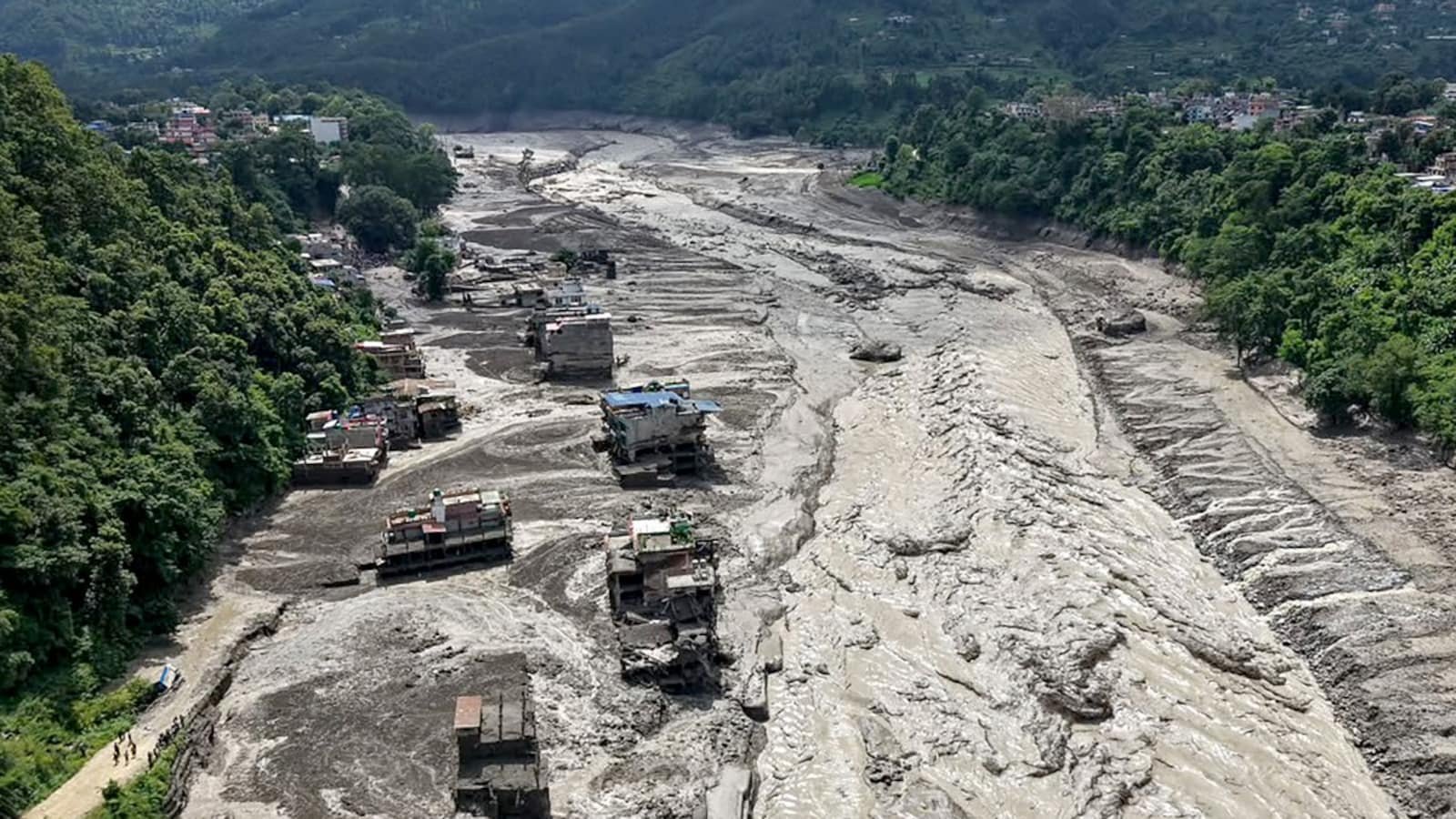
The warning was issued by the International Centre for Integrated Mountain Development (ICIMOD), an intergovernmental research organization based in Kathmandu. The alert follows a catastrophic flash flood that tore through the Rasuwa district on August 26, leaving behind a trail of destruction and raising urgent questions about the stability of the high-altitude mountain terrain.
A Cascading Disaster
The sudden deluge began at approximately 9:00 a.m. local time, sending a violent slurry of water, boulders, and sediment down the Bhote Koshi basin and into the Trishuli river. Hydrological sensors recorded the sheer power of the event: at Galchchi, water levels spiked by nine metres in just 30 minutes, while downstream at Malekhu, levels rose by seven metres in a similar window.
According to ICIMOD’s Head of Climate and Environmental Risks, Qianggong Zhang, the disaster mirrors a similar event that occurred in the same region just last year. “The same site devastated by last year’s Rasuwa flood is once again under threat,” Zhang said. “With a blockage still lodged upstream on the Nepal-China border, authorities warn a second flood is imminent.”
Investigating the Source
Scientists are currently working to identify the precise trigger for the initial surge. A leading hypothesis suggests that a massive ice-rock avalanche occurred high in the mountains, potentially crashing into the Lhende Khola tributary.
The catastrophic impact of this incident highlights the growing threat posed by the cryosphere—the planet’s frozen regions, including glaciers and permafrost. As climate change continues to destabilize these fragile environments, experts warn that “cascading hazards” are becoming increasingly common.
Researchers are also analyzing anomalous seismic signals detected by monitoring stations in Jilong and Zhangmu, which may have been caused by a slope failure or a secondary landslide. However, experts stress that a definitive causal link between these signals and the flood has yet to be established.
Call for Regional Cooperation
The disaster has reignited calls for stronger international collaboration. ICIMOD’s Senior Cryosphere Specialist, Mohd. Farooq Azam, emphasized that the speed at which these mountain hazards are evolving is outpacing current mitigation strategies.
“The increasing frequency of cryosphere hazards is now visible more than ever,” Azam said. “The pace is so fast that our ongoing efforts are not able to cope. Today’s disaster in the Lhende Khola is another cause for regional collaboration where governments should take some joint, consolidated steps.”
As evacuation orders remain in effect for vulnerable areas, including the Jilong port, downstream communities in the Nuwakot and Dhading districts are being closely monitored. While investigators continue to analyze satellite imagery and hydrological data, the immediate priority remains the safety of settlements situated along the river corridors, where a second breach of the upstream blockage could prove fatal.