






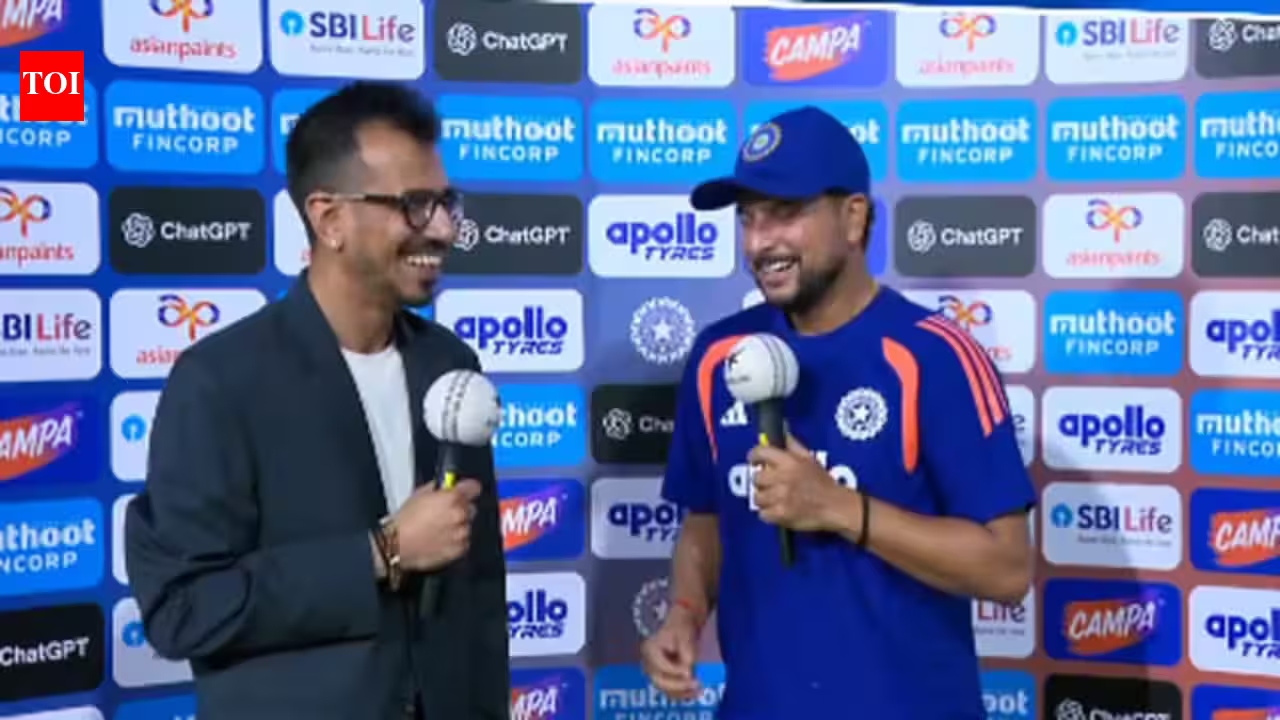
“KulCha” might have been separated by the selectors’ rotation policies and the shifting demands of international formats, but the emotional bond between India’s premier wrist-spinners remains as tightly wound as a perfectly tossed googly.
In a candid and nostalgic exchange ahead of the second T20I against the West Indies in Ranchi, Kuldeep Yadav addressed the bittersweet reality of surpassing Yuzvendra Chahal as India’s leading wicket-taker in the T20I format. The numbers are clear: Kuldeep now sits atop the charts with 97 wickets in 56 matches, edging past Chahal, who captured 96 scalps in 80 outings. Yet, for Kuldeep, this statistical ascension offers little personal satisfaction when the partner who defined his formative years in international cricket is no longer operating at the other end.
A Partnership Defined by More Than Numbers
“I’m not particularly happy about it,” Kuldeep admitted to Chahal during a heartfelt JioStar interaction. “I would have preferred it if we were playing together because we could have broken many more records together.”
The duo, affectionately dubbed ‘KulCha’ by fans and media alike, became a global phenomenon between 2017 and 2019. Their contrasting styles—Kuldeep’s left-arm wrist spin and Chahal’s right-arm leg-spin—provided captain Virat Kohli with a lethal attacking weapon capable of dismantling middle-order lineups in the middle overs of both ODIs and T20Is.
Chahal, who recently announced his retirement from red-ball cricket, has pivoted to a broadcasting role for the ongoing series. While he now watches from the commentary box, Kuldeep emphasized that the camaraderie remains unchanged. “It feels good to watch you from the other end now. Whenever you’re around, there’s always a great atmosphere while playing, and I also get to learn a lot about bowling from you. I’ll always be grateful for that.”
The Complexity of Format Transitions
Beyond the emotional sentiment, the conversation touched upon the technical rigors of modern cricket. Kuldeep, having recently returned to the T20I fold after a hiatus, opened up about the inherent difficulty of switching gears from the marathon pace of ODIs to the frantic intensity of the shortest format.
“When I last played a T20 match, my rhythm was more like that of ODI cricket,” Kuldeep explained. “In ODIs, you have the luxury of time to spin the ball and explore different variations. When you switch to T20s, that loop can become a liability if the length isn’t precise.”
The left-arm spinner admitted that his first two overs in the series showed lingering habits from the longer format, characterized by a higher loop that risked becoming fodder for aggressive hitters. However, his ability to adjust in real-time proved his maturity. “I think I showed better control in my last two overs and pushed my lengths back a little. Those are the small adjustments you have to make. I’m sure I’ll keep making them going forward.”
Defusing the West Indian Power-Game
Facing a West Indian batting lineup renowned for explosive bat speed and boundary-hitting prowess requires more than just talent; it requires a disciplined mental map. Kuldeep revealed that his strategy against the Caribbean power-hitters remains simple, though difficult to execute: control the length to starve them of hitting room.
“We’ve played a lot of matches together, and our discussions have always revolved around one thing: hitting the right length and not giving the batters a chance to free their arms,” Kuldeep said. “Against players with such high bat speed, even a slightly overpitched delivery can disappear over the boundary. The goal is to keep the ball in areas where they can’t swing freely.”
Eyes on the Milestone—With a Nod to the Past
As Kuldeep stands on the precipice of his 100th T20I wicket, the playful nature of the duo’s long-standing friendship shone through. When asked by Chahal if he planned to commemorate his century of wickets with a signature pose—a tribute to Chahal’s famous celebratory style—Kuldeep didn’t hesitate.
“Absolutely, I’ll do my best to pose like you if I get those wickets!” he laughed.
However, the levity quickly gave way to the professional focus that has defined his resurgence in the Indian side. While the milestone of 100 wickets is a significant individual achievement, Kuldeep insisted that his sights are set squarely on the team’s objectives.
“Reaching a milestone is definitely important, but I’m not focusing too much on it,” he concluded. “I just want the match to go well for our team and to bowl well. That’s the priority.”
As India continues its search for the perfect T20I balance, the synergy between Kuldeep and the rest of the bowling attack will be tested. Whether or not he claims his 100th wicket in Ranchi, the legacy of ‘KulCha’—a partnership that redefined spin bowling in the modern era—remains etched in the memories of those who watched them hunt in tandem. For now, the student continues to carry the torch, guided by the lessons learned alongside his former mentor.
Disclaimer: This content is auto-generated for informational purposes only.
Source: Read Original News