








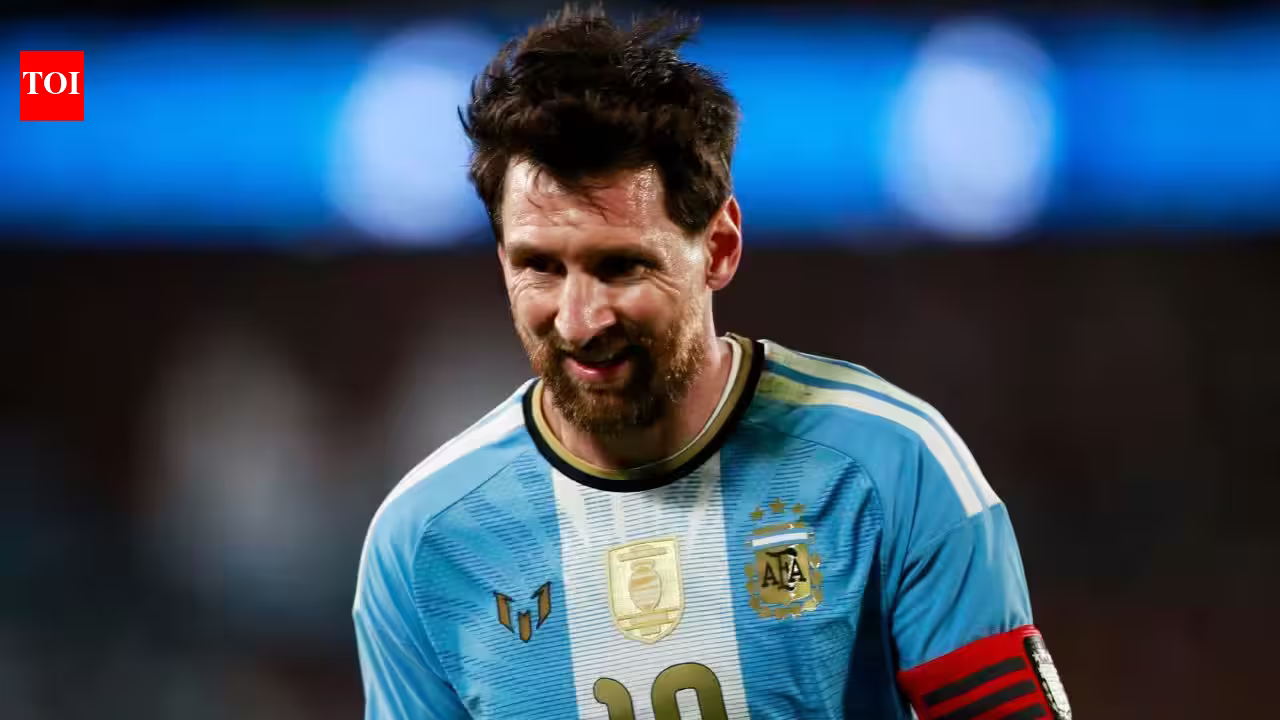
BUENOS AIRES — The scoreboard at the Estadio Monumental flashed 3-0 in favor of the world champions, but for the thousands watching from over 5,000 miles away in the streets of Cotonou, the result was a secondary detail in the grand tapestry of sporting history. On a humid Tuesday night, the football world stood still to witness the final international bow of Lionel Messi, the eight-time Ballon d’Or winner, who brought the curtain down on a two-decade-long career in the blue and white stripes of Argentina.
While the 80,000 spectators in Buenos Aires were privileged enough to witness the legend in person, the fervor in Benin proved that the impact of the Argentine icon transcends borders and time zones. As the match kicked off at midnight local time in Cotonou, the city became a landscape of glowing screens, makeshift fan zones, and thousands of supporters willing to endure the late hour just to say they were there for the end of an era.
A Midnight Vigil for the GOAT
In the neighborhoods of Cotonou, the scene was one of communal devotion. From busy restaurants to quiet street corners, supporters gathered around televisions, desperate for a glimpse of the man they consider the greatest to ever lace up a pair of boots.
“We’re looking for a screen, even if we have to stand,” remarked one young worker amidst the bustle, a sentiment echoed by thousands of others who refused to let the midnight start time dampen the significance of the occasion. The atmosphere was paradoxically split; while there was a sense of national pride in seeing the Beninese “Cheetahs” face off against the titans of world football, the gravity of Messi’s farewell overshadowed the competitive nature of the friendly match.
For the people of Benin, being the final opponent on Messi’s international ledger has become a badge of honor that will likely be discussed for generations. “It’s an honour that Benin is the last team Messi faces,” said 34-year-old security guard Sylvestre Dagbedji, his eyes fixed on the screen. “We’ll always remember that it was against Benin that he retired from international football.”
The Complexity of Fandom
The match presented a unique psychological challenge for the Beninese supporters. There was the natural instinct to cheer for their compatriots as they pushed against the Argentine defensive line, but every time the ball drifted toward the feet of the 39-year-old maestro, the allegiances shifted.
The crowd in Cotonou erupted in applause every time Messi touched the ball, a testament to the respect commanded by his storied career at FC Barcelona and later at Inter Miami. For many, like motorcycle taxi driver Armand Folly, the match was a moment of bittersweet reflection. “It’s going to be tough for us Beninese. Messi is a great player. I’m so proud of him for his career,” Folly noted, capturing the collective sentiment of a fan base that seemed to be mourning the retirement of a global hero as much as they were celebrating his final match.
A Final Act of Brilliance
The match itself served as a microcosm of Messi’s entire career—clinical, creative, and inevitable. He dictated the tempo of the game, orchestrating two assists before taking center stage once more in the 71st minute. When the referee signaled for a penalty, the collective breath of the footballing world was held.
As Messi stepped up and confidently buried the ball into the back of the net, the scenes in Benin were electric. The cheering that erupted from the crowds in Cotonou was not merely for a goal scored, but for a career punctuated. To those watching, it was the final masterpiece from a player many have dubbed the “god of football.”
“Messi is a god of football, the best player in the world,” said 17-year-old Destin Avere, who has grown up in a world where Messi was already the gold standard of the sport. “He performed so well throughout his entire career, from Barca to Inter Miami.”
The End of an Era
As the final whistle blew at the Estadio Monumental, cementing the 3-0 victory for Argentina, the overarching feeling was one of profound transition. For Toussain Kpadonou, a craftsman who spent the night huddled with a hundred others in front of a giant screen, the reality of a footballing landscape without Messi was beginning to sink in.
“I’m sad because Messi won’t play anymore,” Kpadonou admitted. “He was excellent at Barca; I don’t know who will be able to play like him again.”
The match against Benin will go down in the record books as a routine win for the Albiceleste, but for the fans in West Africa and beyond, it will be remembered as the night the light dimmed on a generation. Messi’s international journey, which began two decades ago, found its quiet, dignified conclusion against the Cheetahs—an opponent that, in defeat, found pride in being the final witness to the closing chapter of the greatest story in modern football.
Disclaimer: This content is auto-generated for informational purposes only.
Source: Read Original News