








NEW DELHI: The luxury of choice is often a double-edged sword in international cricket. For India’s T20I skipper Shreyas Iyer, the depth of his squad—featuring the seasoned reliability of Sanju Samson and the explosive, raw potential of 15-year-old prodigy Vaibhav Sooryavanshi—presents an enviable tactical dilemma. However, as the T20I series against Afghanistan kicked off at the Arun Jaitley Stadium this Sunday, that “luxury” began to look more like a strategic bottleneck, leaving onlookers questioning the consistency of India’s vision for the future.
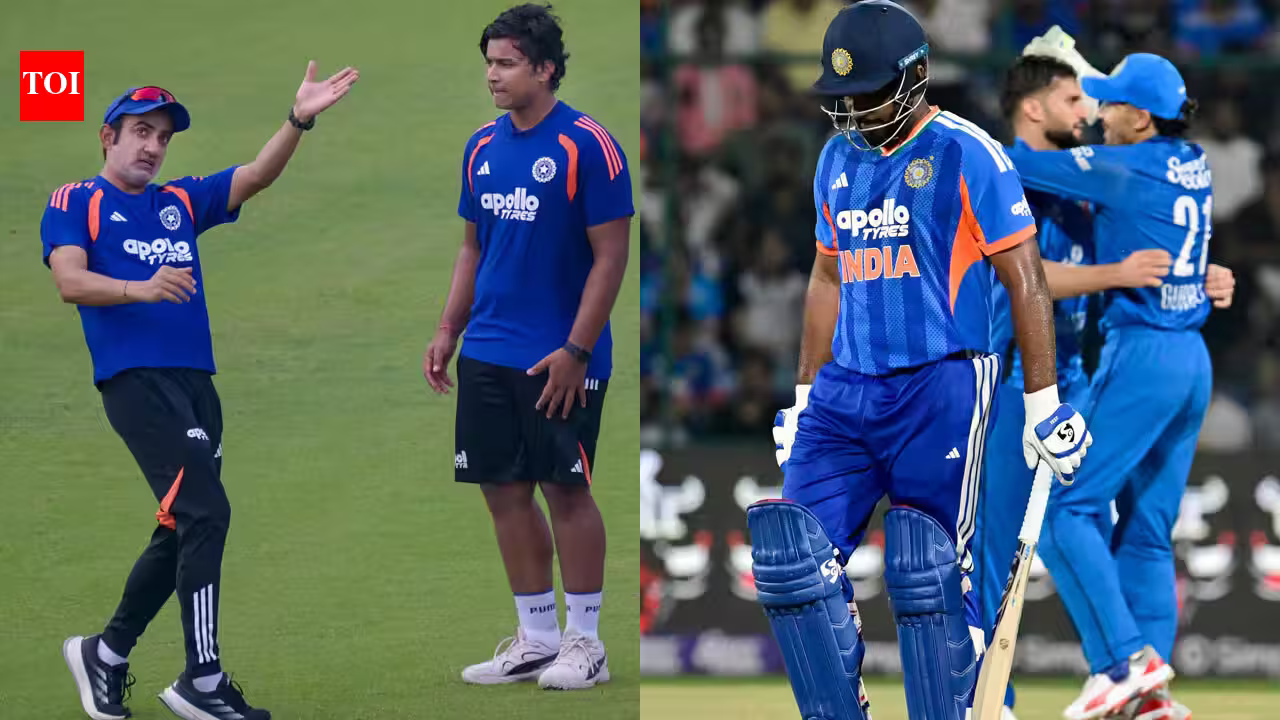
The atmosphere in the lead-up to the match was thick with anticipation. During practice sessions, the contrast between the two camps was visible: Sanju Samson worked closely with head coach Gautam Gambhir, focusing on his wicketkeeping mechanics, while Sooryavanshi, brimming with youthful energy, took rigorous aerial catches. Yet, when the team emerged from the huddle, both players found themselves relegated to the dugout, keeping poker faces as the reality of the playing XI rotation settled in.
The Selection Conundrum
The mystery surrounding the team composition deepened at the toss. When asked by Sanjay Manjrekar to explain the exclusion of key talents—including the young sensation Sooryavanshi and all-rounder Washington Sundar—Iyer’s response was, at best, opaque. “That is more difficult, I feel, but I would say if Vaibhav is not playing, then Washington is not playing and there are two more which you’ll get to know,” Iyer stated, offering little insight into the long-term blueprint for these specific selections.
Ultimately, the decision to favor experience over the high-ceiling potential of the youth backfired in the early stages. Sanju Samson, entrusted with a spot in the XI, managed only 10 runs off eight balls. His stay was brief, ending when he chipped a delivery from Azmatullah Omarzai straight into the hands of Darwish Rasooli at deep square leg. In a game where patience was a prerequisite, Samson failed to capitalize on the opportunity, leaving the door open for critics to question why a player with his tenure is still struggling to solidify his role in the middle order.
The Abhishek Sharma Masterclass
While the debate over the wicketkeeping slot continues to dominate headlines, the sheer dominance of the rest of the lineup provided a stark reminder of India’s white-ball firepower. Abhishek Sharma, who has been in scintillating form, showcased the exact brand of cricket India has been striving to cultivate. His masterful 82 off 32 balls provided the explosive catalyst India needed, proving that the team’s top order has the capability to dismantle any bowling attack.
Reflecting on the match, Sharma emphasized the shift in mindset that occurred two years ago. “We decided we want to play a certain way and dominate all teams,” Sharma noted. “As openers, you want to give a good start.” His sentiment was echoed by spinner Varun Chakaravarthy, who lauded the aggression of his own teammates. “If you bowl spin against our batting line-up, they are just going to smack it left, right and center. We are so used to playing spinners,” Chakaravarthy added, highlighting that India’s top eight are essentially built to dismantle the very craft he practices.
The Case for Sooryavanshi
Despite the emphatic seven-wicket win over Afghanistan, the elephant in the room remains the treatment of Vaibhav Sooryavanshi. The teenager was fast-tracked into the national setup at 15 for one reason: his generational talent. During the tour to Zimbabwe, where he was granted a run of games, he responded with 151 runs across three matches at a staggering strike rate of 196.10.
To bring him into the fold, only to bench him in favor of a hesitant Samson, feels like a regression. While Samson brings wicketkeeping versatility and the left-right opening combination, it is difficult to ignore the tactical ceiling that is being lowered by excluding the Abhishek-Sooryavanshi partnership.
A Vision Incomplete
As the calendar fills up with T20Is against Japan, the Asian Games, and upcoming tours against the West Indies, New Zealand, and Sri Lanka, the urgency to define a clear identity becomes paramount. If the intention behind Sooryavanshi’s inclusion was to groom him for the future, the current approach of inconsistent selection does him—and the team—a disservice.
Talent of that magnitude requires a runway, not a recurring seat on the bench. For India to truly dominate the format, they must decide whether they are playing for the comfort of experience or the chaos of innovation. Right now, the hesitation to commit to the latter is leaving their bold T20I vision looking, at best, incomplete.
Disclaimer: This content is auto-generated for informational purposes only.
Source: Read Original News