








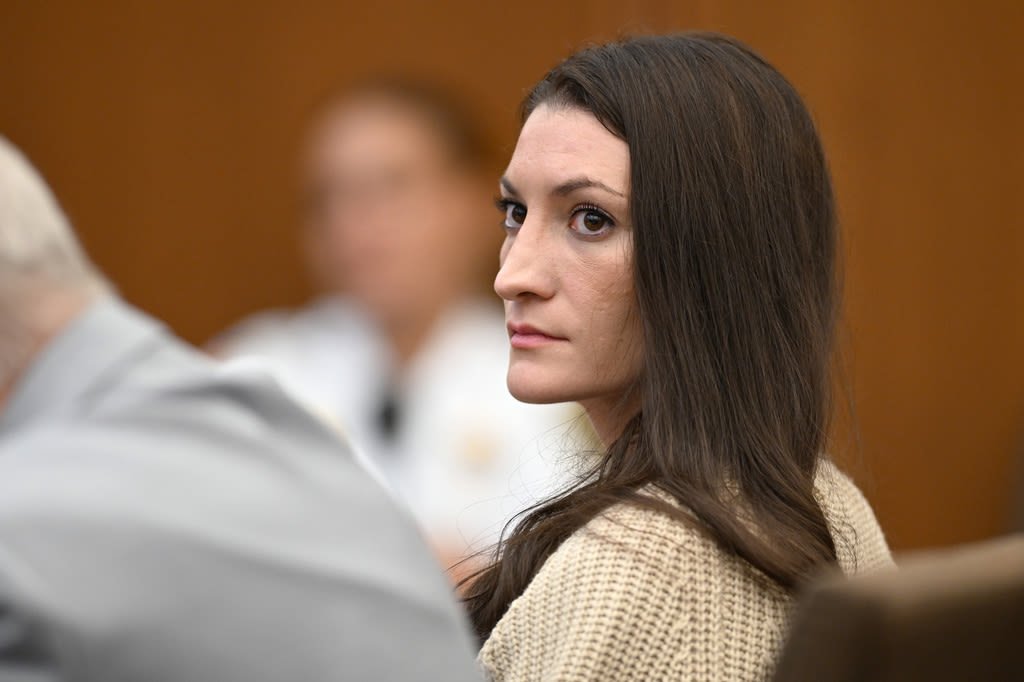
The high-profile murder trial of Lindsay Clancy, the Massachusetts mother accused of killing her three young children while suffering from an alleged episode of postpartum psychosis, has reached a sudden and dramatic impasse. Judge William Sullivan declared a mistrial on Tuesday after the jury of nine women and three men reported they were hopelessly deadlocked after more than six days of deliberations.
The declaration came after the jurors expressed their “deepest regrets” to the court, stating they were unable to reach a unanimous verdict on any of the charges. However, in an unusual procedural turn, Judge Sullivan paused the finalization of his ruling, granting the defense a one-hour window to file an appeal.
Clancy’s attorney, Kevin Reddington, immediately objected to the mistrial declaration and is now racing to meet the judge’s deadline.
The proceedings, which have captivated the nation and sparked intense debates regarding maternal mental healthcare and postpartum psychosis, centered on the events of January 2023. Clancy, 36, has admitted to strangling her children—5-year-old Cora, 3-year-old Dawson, and 8-month-old Callan—with exercise bands in the basement of their family home while her husband, Patrick Clancy, was out running errands. She subsequently attempted to take her own life.
While Clancy has admitted to the killings in a separate civil proceeding, she has pleaded not guilty to the criminal charges, with her defense team arguing that she was suffering from severe postpartum psychosis and bipolar disorder at the time. Under Massachusetts law, the burden fell upon the prosecution to prove beyond a reasonable doubt that Clancy was legally sane when the crimes were committed.
The trial provided a grueling look at the final months of Clancy’s life, detailing a desperate search for medical relief. Testimony revealed that Clancy, a labor and delivery nurse, had struggled with anxiety following the births of her children and had been prescribed a rotating regimen of medications, including Zoloft, Ativan, and Buspar, in the lead-up to the tragedy. The defense argued that her mental state deteriorated rapidly despite her attempts to seek help, while the prosecution raised questions about her honesty with healthcare providers regarding her medication compliance.
Jurors were tasked with considering five possible legal outcomes: first-degree murder, which carries a mandatory sentence of life without parole; second-degree murder; manslaughter; not guilty by reason of insanity; or a full acquittal.
As the legal teams scramble to address the judge’s order, the case remains in a state of high-stakes uncertainty. For now, the question of whether justice will be served through a criminal conviction or a mental health-based acquittal remains unanswered, leaving the community and the public waiting on the outcome of the eleventh-hour appeal.
Disclaimer: This content is auto-generated for informational purposes only. It has been rewritten and paraphrased from the original source.
Source: Read Original News