









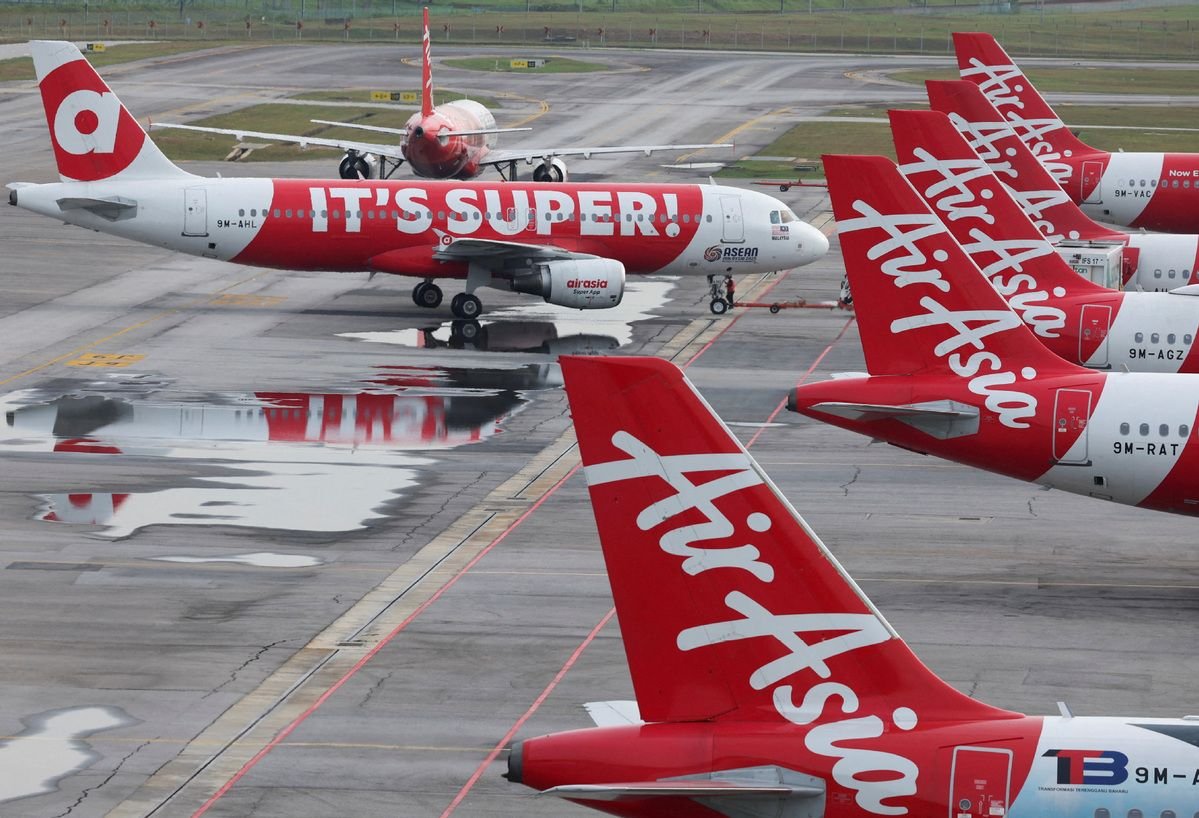
KUALA LUMPUR/HONG KONG — The Malaysian government is currently engaged in high-level contingency planning regarding the financial stability of AirAsia, the region’s largest low-cost carrier. Sources familiar with the matter indicate that officials have held urgent discussions with competitors, including Malaysia Airlines and Batik Air, to determine if they possess the capacity to absorb AirAsia’s significant share of the domestic aviation market should the airline face further operational disruptions.
## Mounting Financial Pressures on the Low-Cost Giant
AirAsia is navigating a turbulent period defined by severe macroeconomic headwinds. The airline reported a staggering net loss of RM831 million for the second quarter, exacerbated by a 66% spike in jet fuel costs and substantial foreign exchange losses. With current liabilities reaching RM18.4 billion as of June 30, the carrier is reportedly behind on payments to Malaysia Airports Holdings Berhad (MAHB), with sources suggesting the debt for landing and parking fees exceeds RM500 million.
The airline’s financial strain has drawn the direct attention of the Ministry of Finance, which has hired Alton Aviation Consultancy to assess the firm’s funding requirements. While AirAsia is actively pursuing a capital-raising strategy—targeting approximately US$1 billion from international debt markets and RM700 million in local credit—industry experts estimate that a total of US$3 billion may be necessary to stabilize the company’s long-term position.
## Scenario Planning and Market Disruption
The potential for a vacuum in Malaysia’s aviation sector has triggered government-led scenario planning. AirAsia currently commands roughly 40% of the country’s total aviation market and 60% of domestic flight capacity. In recent discussions, the government probed whether rival carriers could step in to bridge this gap.
However, both Malaysia Airlines and Batik Air have indicated significant logistical hurdles to such an intervention. Representatives for these carriers informed the government that they would prefer to expand their operations organically rather than through a forced takeover. Crucially, they noted that acquiring routes without the corresponding aircraft leases would be inefficient, signaling that any major transition would require a complex restructuring of existing lease agreements.
## The Role of Tech and Financial Data in Market Stability
As the government weighs its options, the crisis has highlighted the importance of real-time data analytics and financial modeling in the aviation and transportation sectors. Much like the tech industry’s reliance on AI-driven forecasting to predict supply chain disruptions, the Malaysian government is utilizing specialized consulting firms to run simulations on how a major airline failure could ripple through the broader economy.
These sophisticated modeling tools are being used to assess everything from fuel price volatility to the socioeconomic impact of potential job losses. By leveraging granular data, the Ministry of Finance aims to avoid the pitfalls of reactive policymaking, instead opting for a proactive strategy that balances protecting the national interest with the realities of a competitive, market-driven environment.
In response to the speculation, AirAsia’s leadership has maintained a focused stance on business continuity. “We continue to see strong underlying demand across our network,” said Farouk Kamal, deputy group CEO of AirAsia Group. The airline maintains that it is working closely with all stakeholders to manage its operational requirements and that its financing targets are sufficient to meet its current debt restructuring goals.
For now, the government continues to monitor the situation, maintaining a delicate balance between providing support to a critical national asset and ensuring that the country’s connectivity remains robust, regardless of the financial outcome for any individual carrier. MAHB has stated it remains in constructive dialogue with all its airline partners, focusing on route development and filling potential capacity gaps as they arise.
Disclaimer: This content is auto-generated for informational purposes only.
Source: Read Original News