








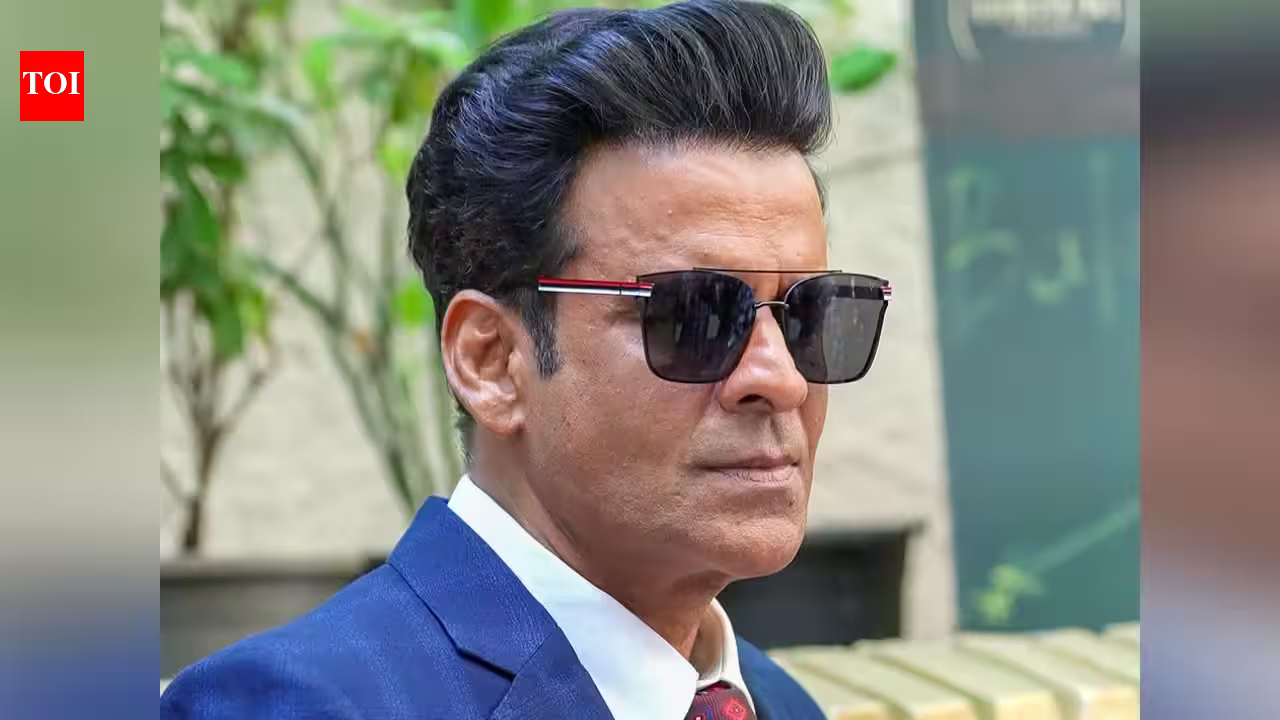
The glitter of Bollywood has long been polished to a blinding sheen, curated by PR machines and award-show montages that paint an image of a singular, harmonious “film family.” But for Manoj Bajpayee, one of Indian cinema’s most formidable actors, that narrative is not just a fairy tale—it is a dangerous, soul-crushing lie.
In a recent, unvarnished interview that has sent shockwaves through the industry, the Gulmohar actor didn’t just pull back the curtain; he tore it down. For a man who has spent over three decades navigating the treacherous waters of Mumbai’s film circuit, Bajpayee’s message is stark: Stop looking for allies, stop waiting for validation, and for heaven’s sake, stop believing that the industry is a fraternity.
The Myth of the “Film Family”
The term “fraternity” has become a buzzword, often used to soften the edges of a cutthroat corporate landscape. But Bajpayee, with his trademark no-nonsense delivery, calls it exactly what it is: an illusion.
“The biggest illusion is that the industry is a fraternity. It isn’t like a family,” he declared. To hear it from someone of his stature is refreshing. He points to the physical and professional isolation that defines the current landscape. Offices are siloed, production houses are in constant, quiet competition, and there is a pervasive, if often unspoken, lack of joy when a peer achieves success.
“Nobody parties with anyone, nobody calls anyone when they like their film,” he explained. In his view, the industry is not a collective, but a collection of lonely soldiers, each manning their own foxhole, waiting for the next project, and hoping to come out on the other side with a paycheck and their dignity intact.
The “Bullsh*t” Reality of Validation
One of the most profound takeaways from Bajpayee’s commentary is his radical detachment from external opinion. In an age where an actor’s worth is often quantified by social media metrics and critical consensus, Bajpayee remains stubbornly autonomous.
“If you are criticizing me, then please stay at your home,” he noted, echoing the sentiment that the “noise” of public opinion is secondary to the work itself. This isn’t arrogance; it’s survival. Bajpayee recognizes that in an industry that fluctuates between fawning praise and brutal dismissal based on a Friday release, tethering one’s emotional well-being to the industry’s fickle tongue is a recipe for disaster.
He argues that the industry is “bullsh*t” because it demands loyalty while offering none. His advice to aspiring artists is blunt: You arrived alone, and you will eventually depart alone. Do the work, get the check, and go home to the people who actually matter. It is a pragmatic, perhaps even cold, philosophy, but it is one born from the harsh reality of a system that views talent as a commodity rather than a community.
The Van Culture and the Death of Human Connection
Beyond the psychological isolation, Bajpayee identifies a concrete, systemic shift that is stripping the soul out of filmmaking: the rise of the vanity van and the digital wall.
He paints a vivid, nostalgic picture of the “good old days,” where actors would mingle on set, share meals, and engage in the kind of spontaneous, human exchange that arguably bleeds into the quality of performance. Today, he argues, the hierarchy of the set is reinforced by the walls of the vanity van, while the social media obsession acts as a buffer against real-life interaction.
“The phone and the hierarchy is killing the interaction,” Bajpayee laments. He notes that the obsession with digital presence has replaced the chemistry of the craft. When the cameras stop rolling, the modern star retreats into a digital cocoon, leaving the collaborative magic of cinema to wither. For an actor who prides himself on the “angst” of his craft, this detachment is not just annoying—it’s a detriment to the art form itself.
Discipline as a Shield
While many of his contemporaries rely on charisma, luck, or the chaotic flow of the industry to climb the ladder, Bajpayee remains an outlier in his commitment to discipline. He acknowledges that he is the “wrong person” to ask for advice on building relationships within the industry because he prioritizes his process over networking.
“There are many actors who aren’t disciplined, and they are praised and earn good money as well; I’m not talking about anybody else. I am talking about myself, I like to be disciplined,” he stated. This discipline is not just about showing up on time; it is a shield against the erratic nature of show business. By holding himself to a high standard, he remains independent of the very “fraternity” he finds so lacking. He has essentially opted out of the rat race of social posturing to focus on the only thing that can’t be taken away: his skill set.
The Path Forward: A Call for Radical Equality
Bajpayee’s frustration is not just destructive; it contains the blueprint for a better set culture. His call for “equality on every set,” including the basic request that everyone should eat the same food, speaks to a deeper desire to dismantle the toxic hierarchy that often permeates film production.
He remains an outlier, someone who keeps his doors open and maintains a level of accessibility that is increasingly rare for a star of his vintage. By fostering connections with new filmmakers and refusing to hide behind a wall of managers and intermediaries, he proves that you can be a part of the industry without necessarily being “of” its toxic culture.
Ultimately, Manoj Bajpayee’s candid admissions serve as a necessary slap in the face to a industry currently obsessed with its own PR reflection. He reminds us that movies are made by people, and when those people stop talking to each other, when they stop valuing truth over optics, the magic dies. Whether the industry listens or continues its slow march into the isolation of the vanity van is another story—but for now, at least one man has had the courage to tell the truth.
Disclaimer: This content is auto-generated for informational purposes only.
Source: Read Original News