









The Strategic Imperative for Domestic Manufacturing
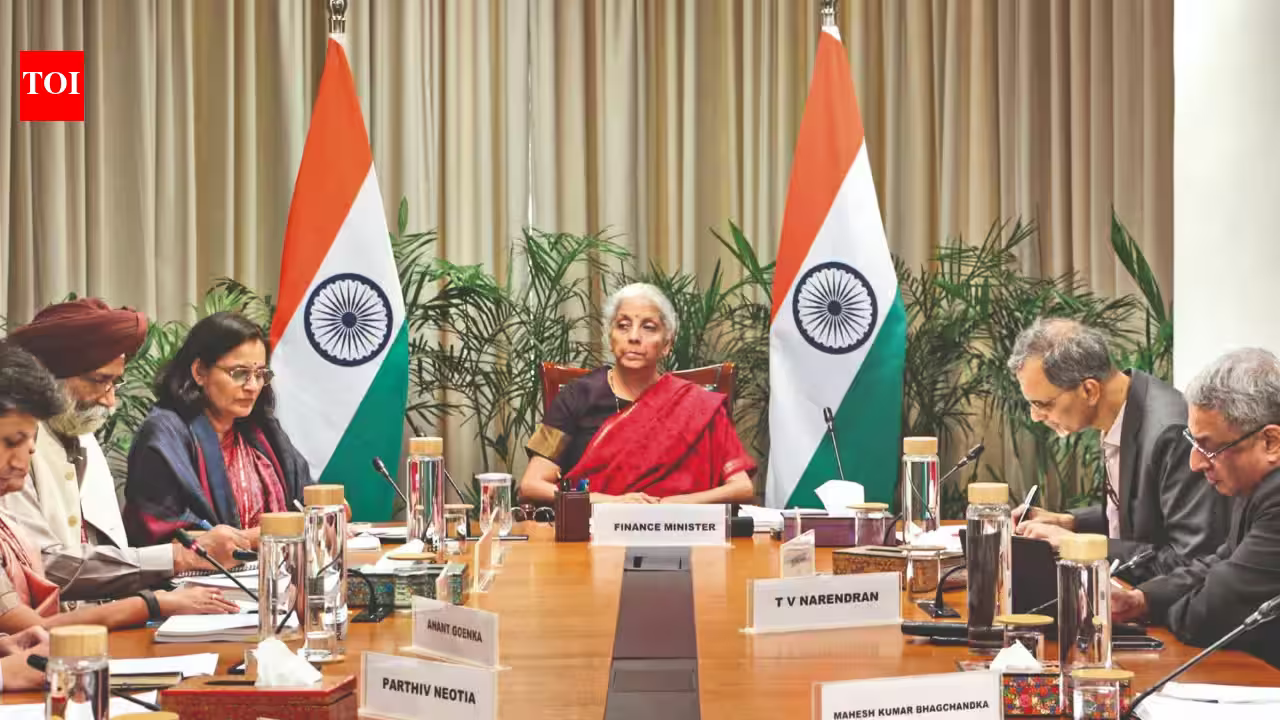
The recent pre-budget consultations between the Union Finance Minister and major industry bodies, including the Confederation of Indian Industry (CII) and the Federation of Indian Chambers of Commerce and Industry (FICCI), signal a decisive shift in India’s industrial roadmap. As the nation aims to transition into a global manufacturing powerhouse, the discourse has moved beyond broad policy frameworks toward targeted fiscal measures and specific sector-based support. The current economic environment requires a blend of capital investment, tax rationalization, and human capital development to sustain the growth momentum in an increasingly competitive global landscape.
At the core of these discussions is the recognition that India’s manufacturing sector must move up the value chain. While the Production Linked Incentive (PLI) schemes have laid the groundwork for large-scale assembly and localized production, industry leaders are now advocating for deeper structural reforms. These include accelerated depreciation on new plant and machinery to encourage immediate capital formation and a recalibration of capital gains tax structures. By incentivizing the modernization of industrial infrastructure, the government aims to reduce the overhead costs that currently render some domestic products less competitive against international imports.
Navigating the Capital Expenditure and Fiscal Landscape
For India to maintain its status as one of the fastest-growing major economies, sustained public spending is vital. Industry bodies have explicitly suggested that the central government earmark three percent of the national GDP toward capital expenditure. This fiscal allocation is viewed as a catalyst for crowding in private investment, which has historically trailed behind public spending in recent years. By focusing on infrastructure, logistics, and power, the government creates an enabling environment that lowers the cost of doing business, thereby improving the overall profitability of the manufacturing sector.
However, the fiscal math remains complex. The demand for rationalized long-term capital gains tax on listed shares and requests for specific corporate tax benefits for job creation reflect the pressure on the exchequer. The challenge for policymakers lies in balancing these fiscal incentives with the need for a stable and predictable tax regime. The suggestion to create a new Development Financial Institution (DFI) to support manufacturing indicates that the industry is seeking specialized credit channels. As traditional commercial banking is often risk-averse regarding long-gestation manufacturing projects, a dedicated DFI could fill the critical funding gap, providing the long-term, low-cost capital required to nurture capital-intensive industries.
Focusing on Foundation Sectors and Import Substitution
A critical component of the ongoing budget deliberations is the push for self-reliance in “foundation sectors.” FICCI has identified basic chemicals, plastics, and synthetic rubber as vital areas where India currently suffers from heavy import dependence. Reducing this reliance is not merely an economic objective but a strategic necessity to protect domestic industries from global supply chain volatility. By proposing a “Strategic Manufacturing Capacity Development Programme,” industry representatives are advocating for targeted interventions that mirror the success of existing PLI frameworks.
The cost disadvantage faced by Indian manufacturers—particularly in emerging areas like advanced chemistry cell components—is a significant barrier. Industry data suggests that Indian manufacturers face a 30 to 50 percent cost disadvantage compared to imports from China. To bridge this gap, the industry has proposed a dedicated financial outlay of approximately 12,000 crore rupees to scale battery manufacturing. This is a clear indicator that the industry is looking for government backing to overcome the “first-mover disadvantage” in high-tech sectors where scale and integration are essential for global competitiveness.
Human Capital and the R&D Ecosystem
Technical expertise is the bridge between aspiration and execution. The proposal to attract skilled Indian professionals back from overseas to strengthen the R&D ecosystem in biotechnology, artificial intelligence, and semiconductors marks a sophisticated approach to industrial policy. This initiative seeks to move beyond traditional recruitment by providing comprehensive support for relocation, technology-intensive entrepreneurship, and single-window documentation. Such measures are necessary to build a knowledge-based economy that can sustain high-value manufacturing rather than just low-end assembly.
Furthermore, the focus on inclusive growth through enhanced tax deductions for companies hiring women is a noteworthy social and economic strategy. Beyond tax breaks, the industry is calling for practical infrastructure such as worker accommodation, hostels, and childcare facilities within industrial parks. Integrating these facilities into the industrial landscape addresses the logistical hurdles that often prevent a significant portion of the workforce from participating in the formal manufacturing economy. These interventions underscore a growing understanding that human productivity is intrinsically linked to the social infrastructure provided within industrial zones.
Future Outlook and Policy Cohesion
The synergy between the government’s identification of 120 key products for domestic manufacturing and the industry’s demand for specialized incentives suggests a alignment of goals. As various government wings work to refine the operational details of these proposals, the focus will likely shift toward long-term sustainability. The government has already demonstrated a willingness to foster innovation through the recent one-lakh-crore-rupee fund for R&D; therefore, future policy will likely favor collaborative research and development rather than pure tax-based incentives.
Looking ahead, the success of these initiatives will depend on the speed of implementation and the ability of the regulatory environment to adapt to rapidly changing global trade conditions. India’s manufacturing strategy is increasingly moving toward a model of “co-creation” between the state and the private sector. If the government incorporates even a fraction of these industry proposals—specifically the dedicated DFI, the focus on foundation sectors, and the incentivized recruitment of global talent—it will significantly enhance the robustness of the Indian manufacturing sector. As the budget process nears, the focus remains on transforming these high-level discussions into actionable policy that can translate into tangible economic output, job creation, and industrial resilience.
Disclaimer: This content is auto-generated for informational purposes only.
Source: Read Original News