








The Evolution of India-US Trade Diplomacy
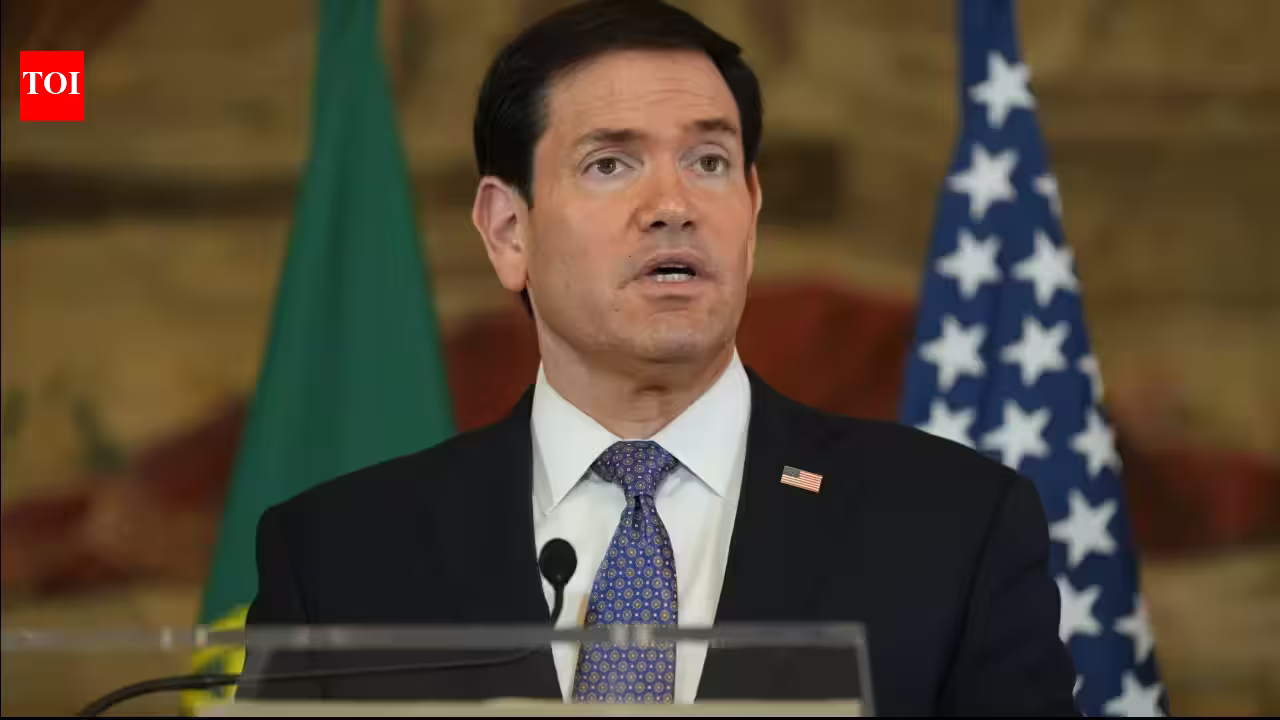
The recent statements from US Secretary of State Marco Rubio underscore a significant shift in the trajectory of India-US economic relations. As Washington moves toward finalizing a long-anticipated trade deal with New Delhi, the dialogue has moved beyond traditional market access discussions into the complexities of global energy security. For years, the two nations have navigated a relationship defined by a “strategic partnership,” yet the current momentum suggests a transition toward a more integrated, pragmatic economic framework that acknowledges the geopolitical realities facing both countries.
The finalization of this trade agreement represents a critical milestone. For India, it is an opportunity to solidify its position in the global supply chain, particularly as multinational corporations look to diversify their manufacturing bases away from over-concentrated markets. For the United States, cementing a trade deal with India serves the dual purpose of strengthening a key democratic ally in the Indo-Pacific region and securing an emerging economic partner capable of mitigating long-term supply chain vulnerabilities. As Commerce and Industry Minister Piyush Goyal noted, the agreement is now in the critical legal drafting phase, indicating that the technical, often contentious, aspects of trade protectionism are being reconciled in favor of a larger, long-term synergy.
Energy Security and the Pragmatism of Sanctions
A defining feature of modern geopolitics is the tension between punitive economic measures and the requirement for stable global commodity prices. The US administration’s recent pause on the implementation of the Lindsey O. Graham Sanctioning Russia and Iran Act serves as a prime example of this pragmatic approach. By choosing a 60-day window to analyze the potential fallout of blanket tariffs on Russian oil consumers, the US has signaled that its economic foreign policy is no longer viewed through a purely ideological lens.
For India, a country heavily reliant on affordable energy imports to fuel its rapid industrial expansion, this nuance is vital. The realization in Washington that “geography is real”—as explicitly stated by Secretary Rubio—marks an acknowledgment of the logistical hurdles India faces in diversifying its energy mix. Sudden, drastic shifts in energy procurement patterns could have led to domestic inflationary pressures that would have destabilized the Indian economy, a risk the US currently seems unwilling to force upon a key partner. By acknowledging that India has already taken voluntary steps toward diversification while maintaining the necessity of Russian supplies, the US has demonstrated a sophisticated understanding of the structural limits of energy diplomacy.
The Intersection of Trade and National Security
The US-India relationship is increasingly viewed through the lens of integrated national security. Historically, trade agreements were confined to the domain of tariffs, market access, and labor standards. Today, however, the economic partnership is inseparable from broader security concerns, including maritime stability in the Strait of Hormuz, the impact of regional conflicts on global oil infrastructure, and the necessity of secure technology supply chains.
The proximity of the upcoming meetings between Secretary Rubio and External Affairs Minister S. Jaishankar in Mumbai, combined with a visit to the Jamnagar refinery—a facility critical to global energy architecture—signals that the US is actively viewing India’s energy infrastructure as an asset to global stability. The ability of Indian refineries to process diverse crude oil streams and output refined products for the global market plays a stabilizing role in energy pricing. By engaging directly with these nodes of industry, the US administration is effectively mapping how an economic deal can reinforce its own national security objectives. This represents a departure from traditional diplomacy toward a model of industrial integration.
Strategic Diversification and the India Advantage
As global trade patterns undergo a structural transformation, India stands at a unique vantage point. The Indian government has actively pursued a “Make in India” initiative, seeking to boost the share of manufacturing in its GDP. An impending trade deal with the US would serve as a catalyst for this ambition. By gaining competitive advantages over peer nations, India is positioning itself to be a primary beneficiary of the “China-plus-one” strategy adopted by many Western firms.
However, the path to finalizing these trade contours is not without hurdles. The legal drafting phase mentioned by Minister Goyal involves intricate negotiations over agricultural standards, digital trade, and intellectual property rights. The challenge for both nations lies in creating a framework that is flexible enough to accommodate India’s growth needs while addressing US concerns regarding market access. The current focus on a “first tranche” approach suggests a modular strategy—one that delivers quick wins to build momentum, thereby fostering the trust necessary to tackle more complex, long-term trade barriers.
Future Outlook: A Mutually Beneficial Framework
Looking ahead, the success of the burgeoning India-US economic relationship will depend on the ability of both administrations to maintain this pragmatic equilibrium. The current US administration’s willingness to pause tariffs and prioritize energy stability highlights a growing recognition that global economic health is a prerequisite for security. For India, this provides the necessary policy space to continue its development journey while maintaining its autonomous foreign policy stance.
The scheduled visit to Jamnagar and the high-level discussions in Mumbai confirm that the relationship has moved from a theoretical partnership to a project-specific engagement. As the 60-day review period for the Graham bill progresses, the international community will be closely watching the outcome. A successful trade deal, concluded alongside a thoughtful approach to energy sanctions, would provide a blueprint for how two major powers can manage divergent interests without undermining their shared goal of a stable, multipolar world order.
Ultimately, the alignment of US national security goals with India’s energy and development requirements is the most significant development in this bilateral relationship in recent decades. If the current trajectory holds, the resulting trade architecture will likely facilitate a deep, long-term synergy that transcends mere trade volumes, anchoring India firmly as an indispensable component of the global economy and a primary pillar of US strategy in the Eastern hemisphere. The transition from negotiation to operationalization will be the true test, but the foundational work being conducted now suggests a level of maturity in the partnership that was previously absent.
Disclaimer: This content is auto-generated for informational purposes only.
Source: Read Original News